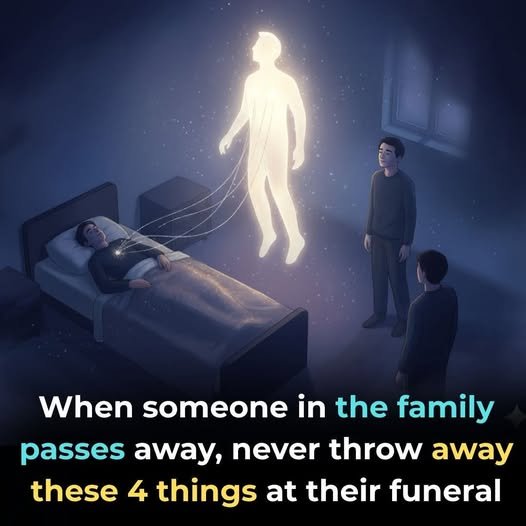
When a loved one passes away, families often have to make difficult decisions while dealing with grief. Among the most emotional choices is deciding what to keep, donate, or discard from the person’s belongings. There is no universal religious or cultural rule that says four specific objects must never be thrown away at a funeral. However, certain possessions can have enormous sentimental, practical, or historical value, making it wise to pause before disposing of them. Photographs, handwritten letters, important documents, and meaningful personal items can preserve memories that cannot be replaced once lost.
One of the most valuable things to preserve is family documentation. Birth certificates, marriage records, property papers, identification documents, insurance information, financial records, photographs, diaries, letters, and other personal papers may become important for legal or family-history reasons. Clothing, jewelry, watches, tools, books, or other objects personally associated with the deceased can also carry powerful memories. A simple handwritten note may mean more to relatives years later than an expensive possession. Before clearing a home, it can be helpful for close family members to review belongings together and separate items into categories such as legal documents, family keepsakes, charitable donations, recycling, and disposal. This gives everyone an opportunity to identify something meaningful before it disappears.
The most important principle is don’t make permanent decisions while emotions are overwhelming. Families may feel pressure to empty a room or dispose of belongings immediately, but there is usually value in taking time to decide what should be preserved. Consider scanning photographs and letters, safely storing important documents, and asking relatives whether they would like particular keepsakes. If religious customs are important to the family, consult a trusted religious authority about any specific funeral or mourning practices rather than relying on viral social-media claims. Disclaimer: This article is for general educational, cultural, and practical information only. There is no universal rule requiring four particular items to be preserved after a death; customs and religious practices vary considerably. Always verify specific funeral traditions through reliable religious or cultural sources and seek appropriate legal advice regarding important documents or estates.
Leave a Reply