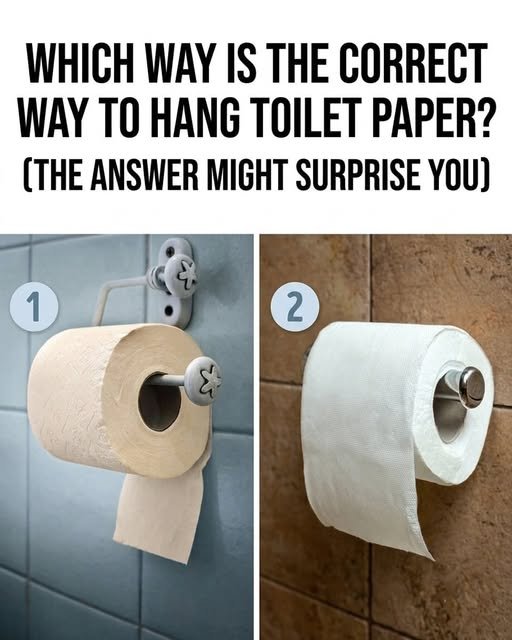
The classic toilet-paper debate has a surprisingly practical answer. Hanging the roll “over,” with the loose sheet coming down from the front, is generally the more convenient choice. It makes the end easier to see, grab, and tear, while also keeping your hand farther from the wall or surrounding bathroom surfaces. The original 1891 patent illustration for perforated toilet paper also showed the roll in the “over” position.
From a hygiene and convenience perspective, the over position has a few practical advantages. When the loose paper hangs toward you, you can usually pull it without reaching behind the roll or brushing your knuckles against the wall. That matters because frequently touched bathroom surfaces can collect microorganisms, and reducing unnecessary surface contact is a sensible hygiene practice. Experts have therefore suggested that the over orientation may offer a slight practical hygiene advantage. However, it would be misleading to claim that hanging toilet paper under is automatically dangerous or that the over position guarantees protection from germs. Current discussions emphasize that bathroom cleaning and proper handwashing are far more important than the direction of the roll itself. There is also a perfectly reasonable argument for the under position: it can make the roll harder for young children or pets to pull apart, reducing accidental unrolling.
So, if you want the most practical default, place the toilet paper over the top, with the loose end facing outward. It is easier to locate, generally easier to tear, and can reduce unnecessary contact with nearby surfaces. But if your household prefers the under position—or you have a curious toddler or pet—there is no need to panic or treat it as an unhealthy habit. The bigger priorities are keeping the toilet and surrounding surfaces clean, washing your hands thoroughly after bathroom use, and storing toilet paper where it remains dry and clean. In other words, the “over” position may win the convenience debate, but good bathroom hygiene and sanitation matter much more than winning the toilet-paper argument.
Disclaimer: This article is intended for general educational and informational purposes only. Toilet-paper orientation is largely a matter of convenience and personal preference, and hygiene claims should not be interpreted as guaranteed medical facts. Information may be general or unauthenticated and should be verified through reliable sources and qualified professionals where appropriate.
Leave a Reply