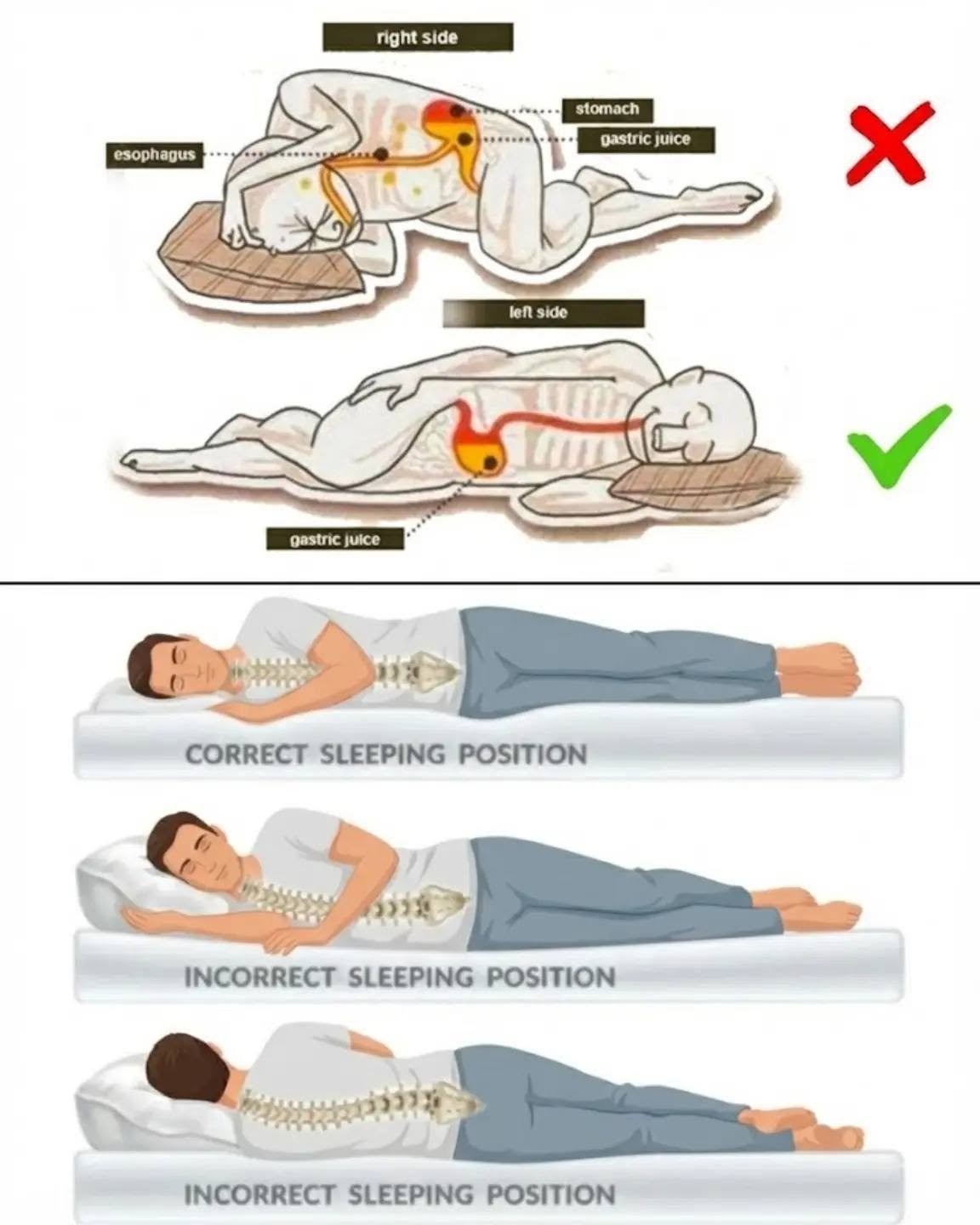
Sleeping on your left side is generally safe and comfortable for many people, and it may offer some specific advantages depending on your health and sleep habits. One of the best-known potential benefits involves acid reflux. Because of the position of the stomach and esophagus, lying on the left side may reduce nighttime reflux for some people compared with lying on the right side. (pubmed.ncbi.nlm.nih.gov) This can be particularly helpful for people who experience heartburn after meals or when lying down. Side sleeping can also help keep the upper airway more open than sleeping flat on the back in some people, potentially reducing snoring and symptoms of obstructive sleep apnea. However, sleep position alone is not a treatment for sleep apnea, and persistent loud snoring, gasping, or breathing pauses should be medically evaluated. (mayoclinic.org)
For pregnancy, side sleeping is often recommended, particularly later in pregnancy. The American College of Obstetricians and Gynecologists notes that sleeping on either side is generally appropriate, while pillows can be used to support the abdomen, knees, or back for comfort. (acog.org) Although the left side has traditionally received special attention, current guidance does not require pregnant people to remain exclusively on the left side all night. For most adults who are not pregnant, there is no strong evidence that sleeping on the left side is universally healthier than sleeping on the right. Your comfort, medical conditions, and ability to maintain good-quality sleep are more important than forcing yourself into a particular position.
There can also be drawbacks. Sleeping on one side for long periods may put pressure on the shoulder, hip, or jaw, potentially causing stiffness or discomfort. A supportive pillow that keeps your neck aligned with your spine and another pillow between the knees can make side sleeping more comfortable. People with certain shoulder or musculoskeletal problems may find one side more comfortable than the other. If left-side sleeping consistently causes chest discomfort, severe shortness of breath, significant pain, dizziness, or other concerning symptoms, don’t assume the sleeping position is responsible—seek medical advice. Disclaimer: This article is for general educational and health information only and does not constitute medical diagnosis, treatment, or personalized medical advice. Left-side sleeping is not a cure for reflux, sleep apnea, or other conditions, and individual recommendations may vary. Always verify health information through reliable medical sources and consult a qualified healthcare professional about persistent or concerning symptoms.
Leave a Reply