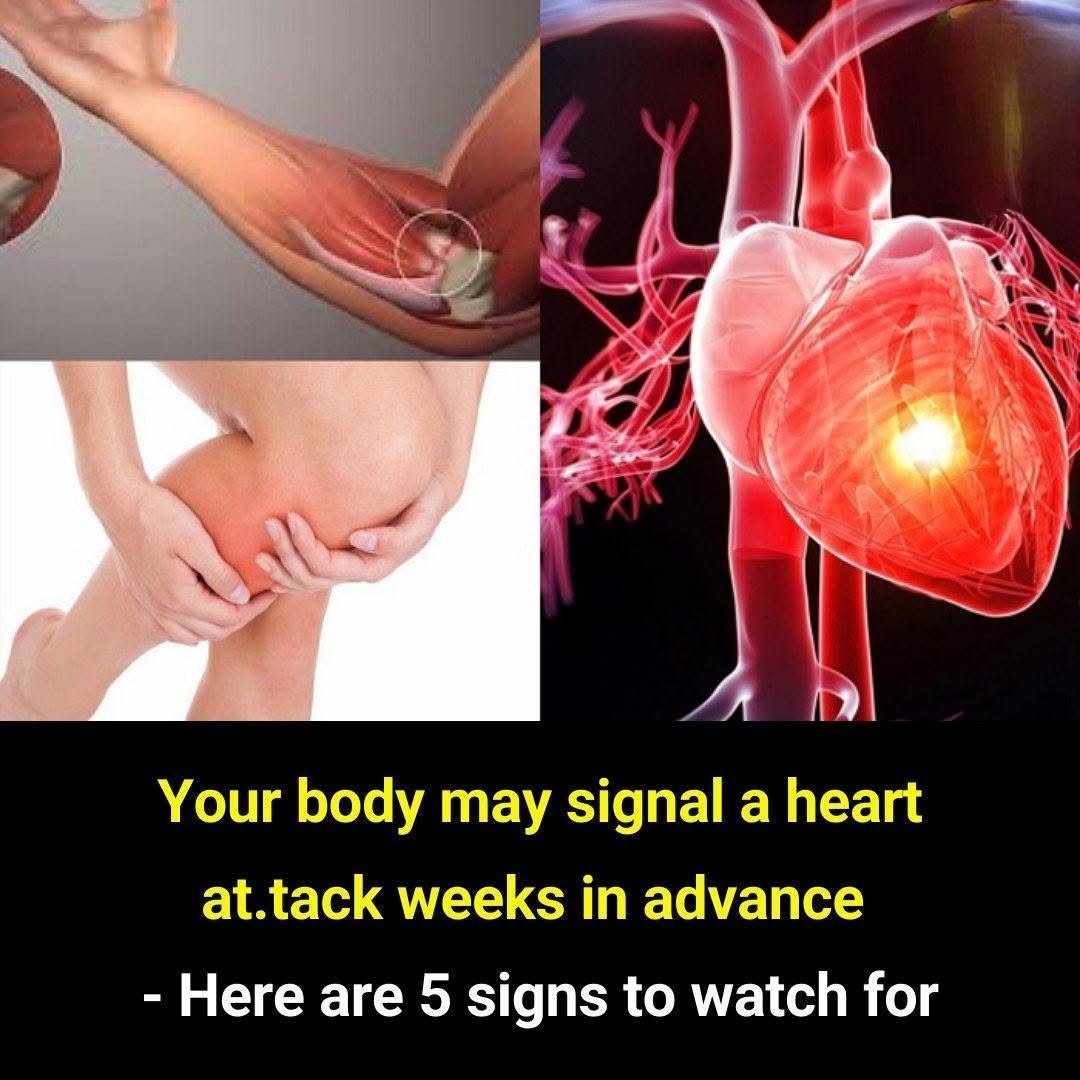
A heart attack does not always arrive without warning. According to Mayo Clinic, some people experience symptoms hours, days, or even weeks beforehand, although this is not true for everyone. One important early warning can be recurring chest discomfort or pressure, particularly when it happens with activity and improves with rest. Other possible warning symptoms include unusual shortness of breath, unexplained fatigue, lightheadedness, nausea, or discomfort involving the arms, back, neck, jaw, or upper abdomen. (mayoclinic.org) These symptoms can have many causes that are unrelated to the heart, so experiencing one does not mean a heart attack is inevitable. However, a new or recurring pattern—especially in someone with cardiovascular risk factors—deserves medical attention rather than being automatically blamed on stress, aging, indigestion, or lack of sleep.
Five warning signs worth knowing are recurring chest pressure or discomfort, unusual breathlessness, unexplained fatigue, discomfort spreading to the upper body, and nausea or lightheadedness. The American Heart Association lists chest discomfort, discomfort in the arms, back, neck, jaw or stomach, shortness of breath, cold sweats, nausea, and lightheadedness among important heart-attack symptoms. (heart.org) Women, older adults, and people with diabetes may sometimes experience less typical symptoms, meaning the absence of dramatic chest pain does not necessarily rule out a serious cardiac problem. (mayoclinic.org) Persistent or unexplained symptoms should be discussed with a qualified healthcare professional, particularly if they are becoming more frequent, occurring with physical activity, or appearing alongside other warning signs. Recognizing a pattern early can provide an opportunity for appropriate evaluation and risk management.
Most importantly, do not wait for a future appointment if symptoms suggest an active heart attack. Chest pressure or pain lasting more than a few minutes, shortness of breath, cold sweating, nausea, or pain spreading into the arm, back, neck, or jaw can require emergency treatment. The American Heart Association recommends calling emergency medical services immediately when heart-attack warning signs are present. (heart.org) Prompt treatment can reduce heart damage, so attempting to “sleep it off” or waiting for symptoms to disappear can be dangerous. Disclaimer: This article is for general educational and informational purposes only and does not constitute medical diagnosis, treatment, or personalized health advice. Not everyone experiences warning symptoms before a heart attack, and the symptoms listed can have many other causes. Some online health claims may be general or unauthenticated, so important information should be verified through reliable medical sources and qualified healthcare professionals. If you think you or someone else may be having a heart attack, seek emergency medical help immediately.
Leave a Reply