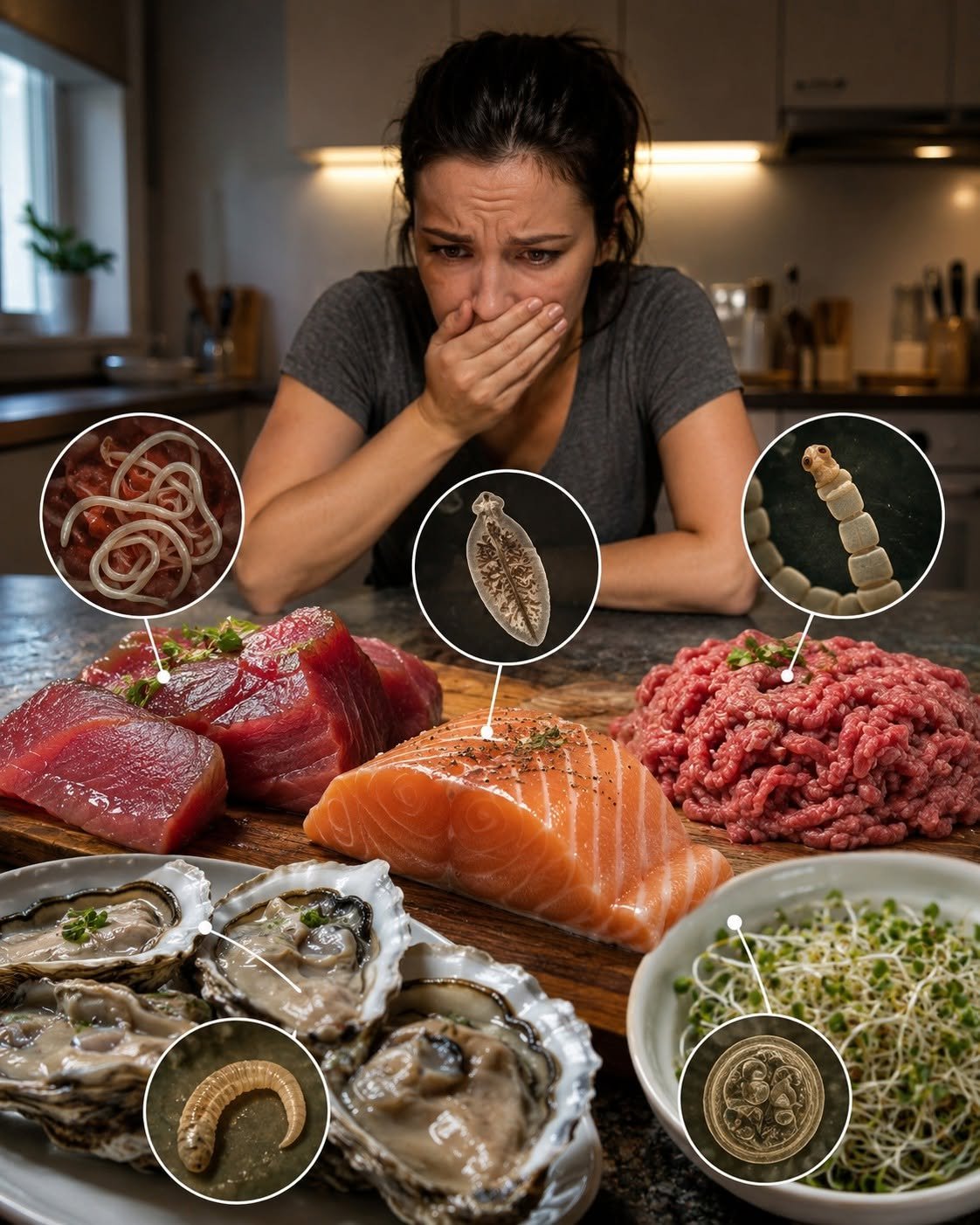
Some of the foods people love most can occasionally carry parasites when they are eaten raw, undercooked, or contaminated during growing and handling. However, it is important not to confuse potential foodborne risk with the idea that a food itself is “full of parasites.” The CDC identifies several food categories associated with parasitic infections, including undercooked fish and shellfish, undercooked meat, raw aquatic plants such as watercress, and vegetables contaminated by unsafe water or animal or human fecal matter. Five popular foods worth knowing about are raw fish used in sushi, undercooked beef or pork, raw shellfish, raw watercress, and unwashed leafy vegetables. These foods can still be nutritious and enjoyable when sourced and prepared safely. The concern is mainly about contamination and preparation methods, not about avoiding every food on the list.
Raw or undercooked fish and shellfish can potentially transmit parasites such as Anisakis, while inadequately cooked meat can carry certain parasitic infections. The CDC recommends cooking fish to at least 145°F (63°C), while whole cuts of beef, pork, lamb, and veal should reach at least 145°F followed by a three-minute rest; ground meat should reach 160°F (71°C), and poultry 165°F (74°C). Raw aquatic plants such as watercress are another category associated with parasitic transmission in areas where contaminated water is present. Unwashed fruits and vegetables can also become contaminated through soil, water, animals, or poor handling. Fortunately, practical food-safety habits can significantly reduce risk: purchase food from reputable sources, wash fresh produce under running water, prevent cross-contamination between raw and cooked foods, and cook meat and seafood thoroughly. People at higher risk of serious foodborne illness, including adults over 65 and those with weakened immune systems, should take extra precautions.
The key takeaway is that you do not need to fear these foods—you need to prepare them safely. Sushi-grade or properly handled seafood may be subject to safety controls, while thoroughly cooked fish, meat, and shellfish provide a safer option for people who want to minimize parasite exposure. Raw vegetables should be washed carefully, and aquatic plants from uncertain or potentially contaminated sources are better avoided or thoroughly cooked. Food safety is especially important because some parasitic infections can cause significant digestive symptoms and other complications. Instead of believing sensational claims that certain foods are automatically dangerous, focus on proper sourcing, hygiene, temperature control, and cooking. Disclaimer: This article is for general educational and informational purposes only and does not constitute medical diagnosis, treatment, or personalized dietary advice. Parasite risk varies according to food source, geography, farming practices, preparation, and handling. Some health claims online may be general, exaggerated, or unauthenticated, so important information should be verified through reliable medical and food-safety sources and qualified healthcare professionals.
Leave a Reply