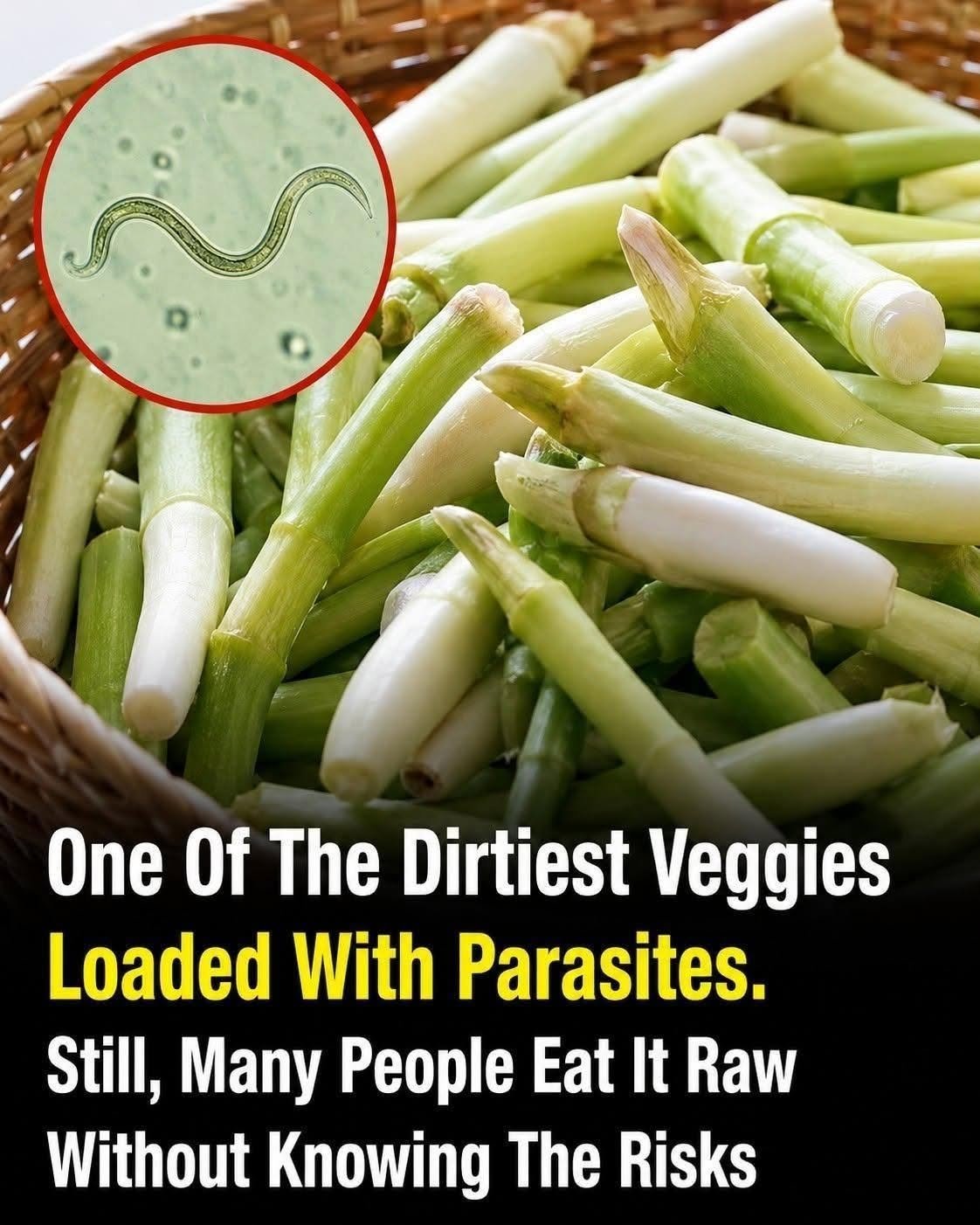
Digital media platforms frequently feature dramatic stock photography and microscope-style cutaway graphics—such as asparagus shoots paired with a circular inset of a microscopic roundworm—alongside sensationalized headlines proclaiming “One Of The Dirtiest Veggies Loaded With Parasites. Still, Many People Eat It Raw Without Knowing The Risks”. These viral posts rely on visceral contamination hooks, fear-based health warnings, and generalized agricultural alarmism to provoke panic in comment sections, bypass moderation filters, and drive rapid social media sharing and ad-monetized click-through rates rather than offering accurate food microbiology or parasitology education.
From a food parasitology and agricultural safety perspective, virtually any raw produce grown in soil or irrigated with natural water sources can potentially harbor parasitic protozoa (such as Giardia or Cryptosporidium) or soil-transmitted helminths if exposed to contaminated water or animal feces. However, single out specific vegetables like asparagus—which is frequently cooked or commercially washed—as uniquely “loaded with parasites” is scientifically inaccurate. Parasitic transmission via fresh produce is primarily a result of environmental sanitation issues, untreated irrigation water, or poor hygiene handling rather than an inherent, unescapable biological property of a specific crop. Content-farming networks systematically take standard food safety precautions and exaggerate them into terrifying, generalized health hazards to manipulate engagement algorithms and maximize digital ad revenue.
Practicing effective food safety and reducing foodborne parasitic or bacterial risks relies on standard kitchen hygiene and proper produce washing rather than avoiding whole food groups out of fear. Essential mitigation steps include thoroughly rinsing fresh vegetables under clean running water, using designated brushes for firm-skinned produce, peeling or cooking vegetables when appropriate, and maintaining clean food preparation surfaces. Understanding how clickbait algorithms weaponize microscopic imagery and food safety concerns helps consumers approach online health information with critical media literacy. For verified guidance on food microbiology, agricultural hygiene, or foodborne illness prevention, consulting public health authorities, agricultural extension services, or food safety experts provides authoritative, scientifically grounded care.
Leave a Reply