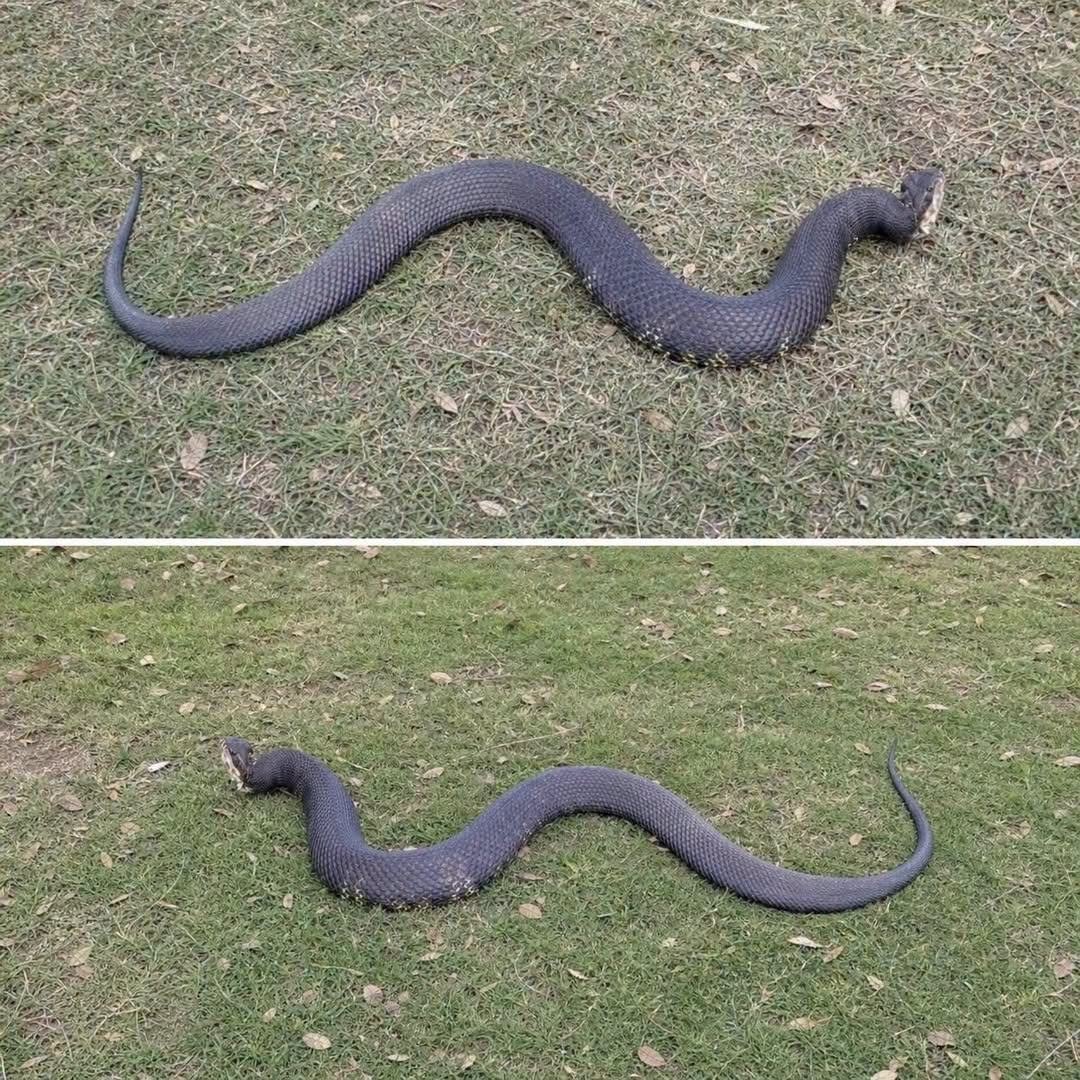
The snake in the photograph is a Cottonmouth (Agkistrodon piscivorus), commonly referred to as a water moccasin. Native to the southeastern United States, this venomous pit viper is frequently encountered during outdoor activities such as hunting or hiking near southern waterways and damp woods.
Key Identification Features
- Thick, Heavy Body: Cottonmouths are characterized by a notably thick, muscular body structure relative to their length, ending in a rapidly tapering tail.
- Dark Adult Coloration: While juvenile cottonmouths display distinct crossbands, older adults often turn a solid dark brown, charcoal, or near-black color.
- Broad, Triangular Head: As members of the pit viper family, they possess a distinct spade-shaped head that is significantly wider than their neck.
- Defensive Posture: When startled, cottonmouths often coil and gap open their jaws to display the stark white interior of their mouth—the defensive behavior that gives them their name.
Outdoor Safety Tips
- Maintain Distance: If encountered in the wild, step back slowly and allow the snake a clear path to retreat.
- Watch Your Footing: Wear thick hunting boots and remain alert when walking through tall grass, dense brush, or along muddy banks where these snakes often rest.
- Avoid Handling: Never attempt to poke, move, or handle pit vipers, as the majority of snakebites occur when people attempt to interact with them.
Leave a Reply