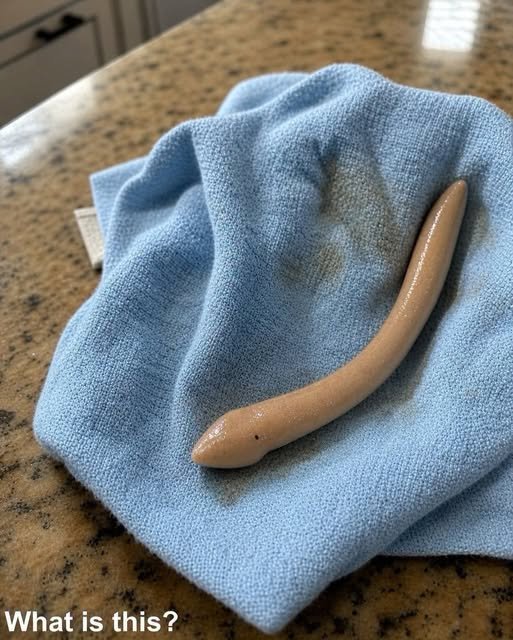
The image shows a smooth, flesh-colored, worm-like object with a small black dot near one end resting on a blue microfiber cloth, accompanied by a dramatic story: “This evening, I went into my girlfriend’s bathroom and noticed this on the floor. I’ve been sitting here for 30 minutes… I’m too embarrassed to ask her.”
Despite the suggestive narrative designed to provoke awkward speculation or disgust, the item in the photo is a blind snake (or a synthetic replica of one)—a completely harmless, non-venomous burrowing reptile.
What the Object Actually Is
- Blind Snake (Typhlopidae):
- Anatomy: Blind snakes (or thread snakes) are tiny, smooth-scaled, subterranean reptiles that closely resemble earthworms. They are often pinkish, beige, or pale brown.
- Features: They have vestigial, rudimentary eyes (appearing as tiny black dots under their translucent scales) and lack defined heads or necks, allowing them to burrow easily through soft soil.
- Accidental Indoor Entrances:
- Blind snakes live underground in soil, flowerpots, or garden beds. They frequently wander indoors through small floor drains, open doorways, or pot drainage holes looking for moisture. Finding one on a bathroom floor or towel is a common occurrence in regions where they are native.
Deconstructing Engagement-Farming Mechanics
This post employs standard viral strategies to trick users into commenting and sharing:
- The Embarrassment Hook: Framing the discovery as an awkward or NSFW secret (“I’m too embarrassed to ask her”) creates a false context tricking scrollers into guessing inappropriate items.
- Open-Ended Prompt (“What is this?”): Asking viewers to identify the object guarantees high comment volume as users debate whether it is a parasite, a cosmetic tool, a toy, or an animal.
- High Algorithmic Reach: The contrast between the sensational story and the mundane biological reality drives high interaction, pushing the graphic to a wider audience on platform feeds.
Leave a Reply