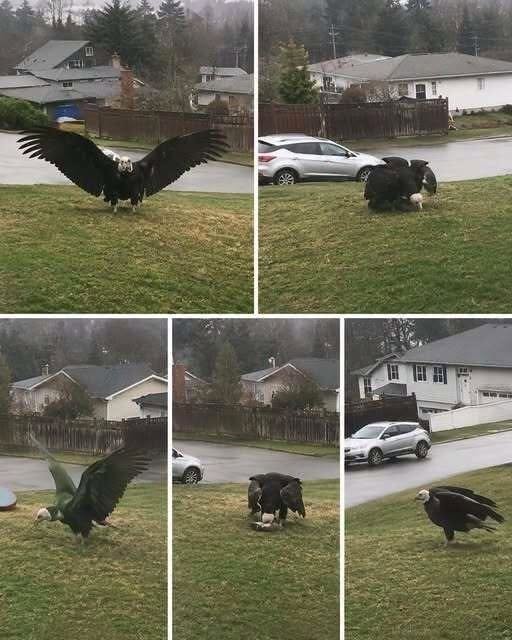
A dramatic photograph or video showing an apparently enormous eagle can spread across social media within hours, especially when the caption claims that a “giant eagle was captured in Brazil.” Images of unusually large birds can be genuinely fascinating, but viral captions often exaggerate an animal’s size or leave out important context. Brazil is home to the harpy eagle, one of the world’s largest and most powerful eagles. Adults can have a wingspan of roughly 6.5 to 7.5 feet (around 2–2.3 meters), making them look enormous when photographed up close. Their large talons, broad wings, and distinctive head feathers can make them appear even bigger than they really are.
The harpy eagle is a real species and is found in tropical forests of Central and South America. Despite its impressive appearance, photographs can easily distort an animal’s apparent size depending on the camera angle, distance, and what the bird is standing beside. A person holding a bird close to the camera, for example, can make it appear dramatically larger than it would look at normal viewing distance. This is why claims that a photograph proves the existence of a previously unknown “giant eagle” should be treated cautiously. A spectacular image does not by itself establish the bird’s species, measurements, location, or circumstances of capture.
If you encounter a viral post claiming that an enormous eagle has been discovered or captured, look for independent confirmation from wildlife authorities, reputable zoological organizations, or established news outlets. Check whether the image has been digitally altered, whether the location is actually known, and whether the bird’s size has been measured rather than estimated from a photograph. The harpy eagle itself is extraordinary enough without exaggeration—it is a powerful apex predator that plays an important role in its forest ecosystem. Disclaimer: The specific viral claim referenced by the headline has not been independently verified here. Photographs can be misleading, and an animal’s apparent size should not be treated as a scientific measurement. Always verify unusual wildlife claims through reputable conservation or zoological sources before sharing them as fact.