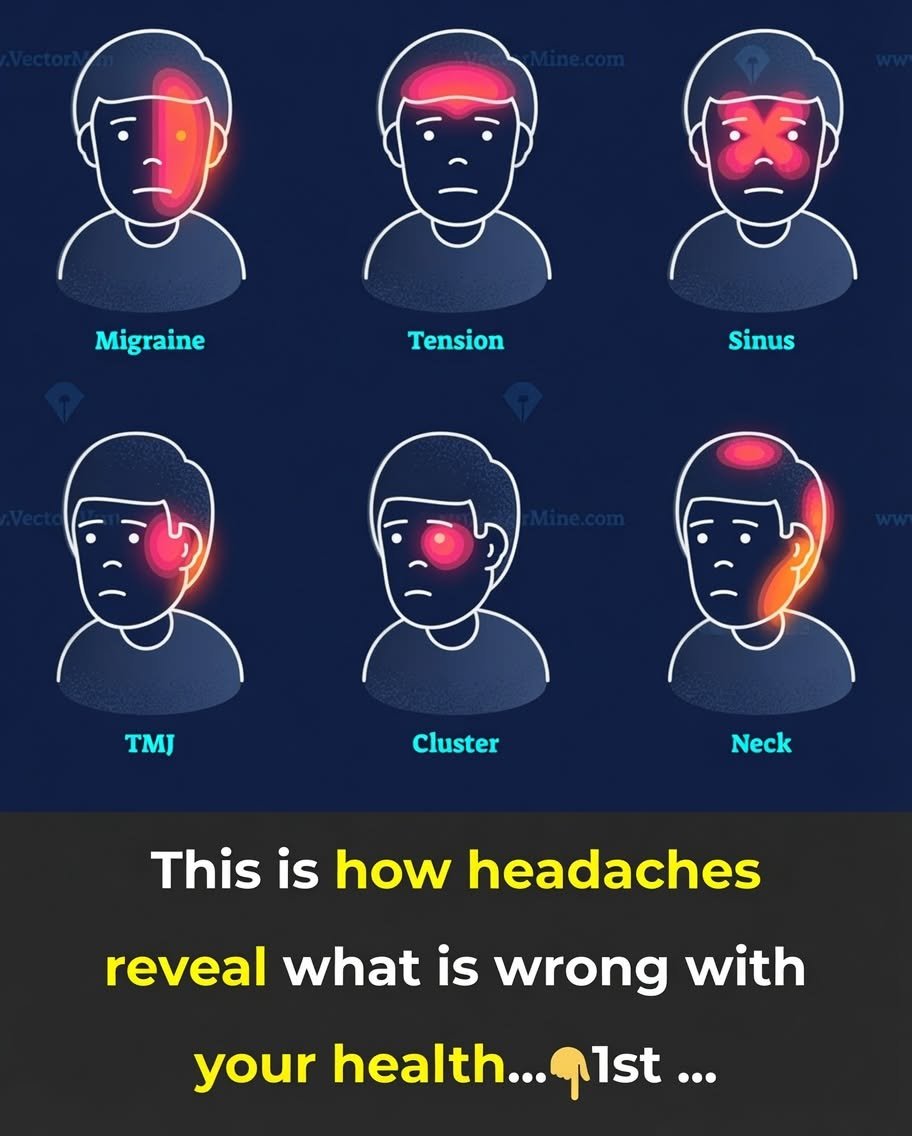
The location, intensity, duration, and accompanying symptoms of a headache can sometimes provide useful clues about what type of headache you may be experiencing. A tension-type headache commonly causes mild-to-moderate, dull or aching pressure that can feel like a tight band around the forehead or sides of the head, sometimes with tenderness in the neck and shoulders. A migraine, on the other hand, often produces throbbing or pulsing pain that may affect one side of the head and can occur with nausea, vomiting, or sensitivity to light, sound, smells, or touch. Headaches can also be influenced by factors such as stress, skipped meals, changes in sleep, dehydration, certain foods, alcohol, or poor posture. These patterns can offer clues, but they cannot reliably establish a diagnosis on their own.
Another distinctive pattern is a cluster headache, which is uncommon but extremely painful. It typically causes severe pain around or behind one eye on one side of the head and may occur repeatedly during a period lasting weeks or months. The affected eye may become red or watery, the nose may become blocked or runny on the same side, and the person may feel intensely restless during an attack. The timing of your headaches can also be meaningful. If headaches repeatedly occur after poor sleep, skipped meals, stress, or certain foods, keeping a headache diary may help you and your healthcare professional identify potential triggers. More importantly, a new or changing headache pattern deserves attention, particularly if headaches are becoming more frequent, severe, or disruptive. Frequent headaches that require medication more than twice a week should also be discussed with a healthcare professional.
Some headache patterns require urgent medical attention rather than observation. Seek emergency care for a sudden, extremely severe headache that reaches maximum intensity quickly, especially if it feels unlike previous headaches. Headache accompanied by weakness, numbness, confusion, seizures, difficulty speaking, double vision, fever with a stiff neck, or a worsening headache after a head injury can also signal a serious medical problem. A headache that first develops after age 50, progressively worsens, or is triggered by coughing, exertion, straining, or a change in body position should also be medically evaluated. Disclaimer: This article is for general educational and health information only and does not constitute medical diagnosis, treatment, or personalized medical advice. Most headaches are not caused by a dangerous condition, but changes in headache pattern should not be ignored. Always verify health information through reliable medical sources and consult a qualified healthcare professional for persistent, unusual, or severe headaches.
Leave a Reply