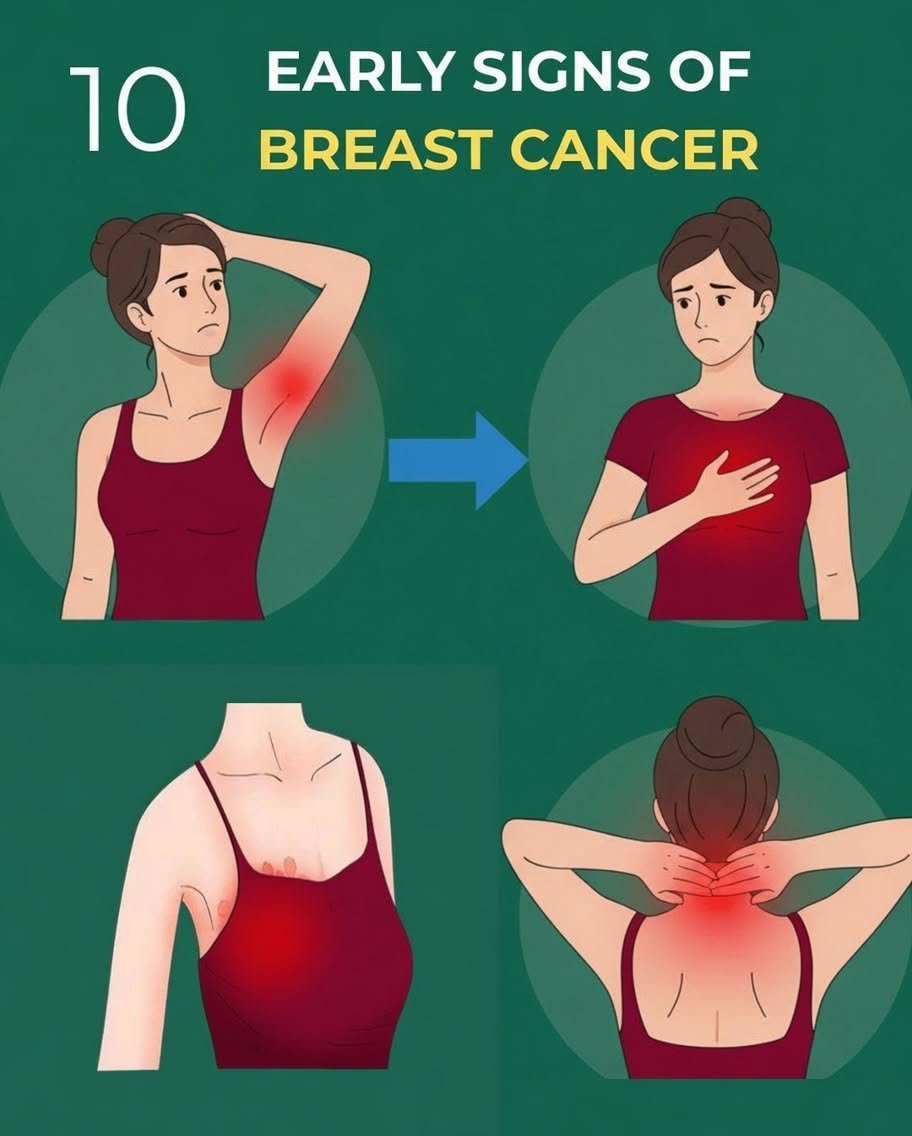
Breast cancer can cause noticeable changes in the breast or nearby areas, although many breast changes are caused by conditions other than cancer. According to the CDC and National Cancer Institute, potential warning signs include a new lump in the breast, a lump or swelling in the armpit, thickening or swelling of part of the breast, a change in breast size or shape, skin dimpling or puckering, redness or flaky skin, unusual skin thickening or swelling, a nipple that turns inward, nipple discharge that is not breast milk, and persistent breast or nipple pain. These changes can look or feel different from one person to another, and breast cancer does not always produce a lump. Some types can cause swelling or skin changes before a distinct mass is noticeable.
One important point is that experiencing one of these symptoms does not mean you have breast cancer. Cysts, hormonal changes, infections, benign breast conditions, medications, and other issues can produce similar symptoms. The American Cancer Society notes that most breast lumps are not cancer, and breast pain by itself is usually not a sign of most breast cancers. However, a new or persistent change should not simply be ignored. Pay particular attention to a new lump, bloody nipple discharge, nipple retraction, unexplained skin dimpling, or a noticeable change in the breast’s appearance or texture. If you discover something unusual, arrange an evaluation with a qualified healthcare professional—even if you recently had a normal mammogram.
Knowing what is normal for your own breasts can make it easier to notice meaningful changes. Regular screening is also important because early breast cancer can have no symptoms, and mammography can sometimes detect cancer before it becomes large enough to feel. Do not wait for pain before seeking medical attention, and do not attempt to diagnose a breast change using online symptom lists alone. A healthcare professional may recommend an examination, diagnostic mammogram, ultrasound, or other testing depending on what is found. Disclaimer: This article is for general educational and health information only and does not constitute medical diagnosis, treatment, or personalized medical advice. These symptoms can have many causes and do not automatically indicate breast cancer. If you notice a new or persistent breast or nipple change, seek evaluation from a qualified healthcare professional and follow appropriate screening recommendations. Always verify important health information through reliable medical sources.
Leave a Reply