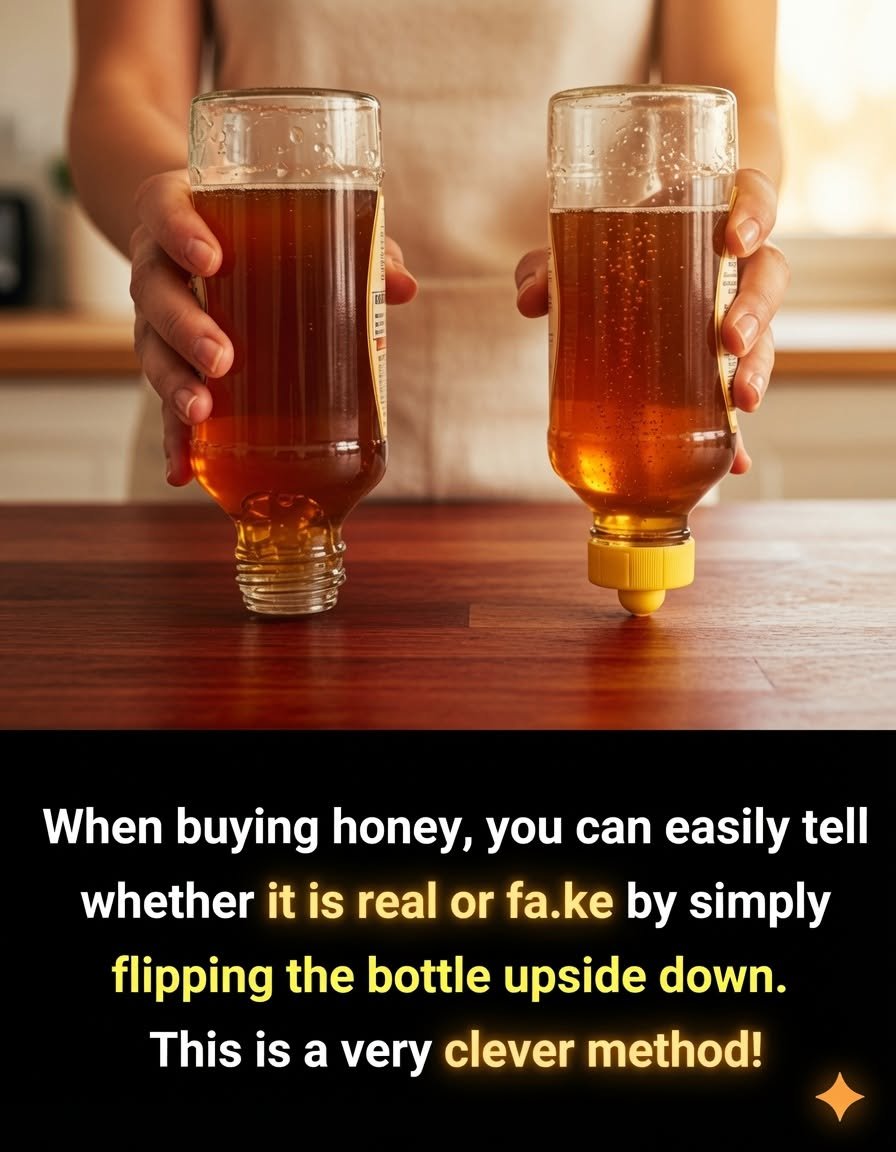
With honey products ranging from raw and minimally processed honey to blended and flavored products, it can be difficult to judge authenticity simply by looking at a jar. Many viral “home tests” claim you can identify pure honey using water, a match, a thumb test, or whether honey crystallizes, but these methods are not reliable ways to prove authenticity. The National Honey Board explains that crystallization is a natural process and does not indicate that honey is fake; almost all natural honey can eventually crystallize depending on its floral source and storage conditions. (honey.com) Likewise, color, thickness, aroma, and taste can vary naturally between different types of honey. Genuine honey can range from very light to dark and can have different textures and flavors depending on the flowers from which bees collected nectar.
One of the most important things to understand is that a home test cannot reliably determine whether honey has been adulterated with inexpensive sweeteners. The water test, for example, may show how quickly a particular honey dissolves, but that depends on moisture content, temperature, viscosity, and other characteristics—not simply whether it is authentic. The same applies to the flame or match test: honey’s moisture content can influence whether it burns, but this is not a scientifically dependable authentication method. Professional laboratories can use analytical techniques such as isotope-ratio analysis and other chemical testing to investigate whether honey contains added sugars or syrups. (fao.org) Therefore, an internet video demonstrating a simple kitchen experiment should not be treated as definitive evidence that a particular jar is genuine or fake.
For consumers, the safest approach is to buy honey from reputable producers, inspect the label carefully, and look for clear information about the product’s origin and ingredients. A product labeled simply as honey should not contain undisclosed added sweeteners, while products marketed as blends may have different compositions depending on local labeling regulations. If you suspect serious adulteration, laboratory testing is much more dependable than attempting several viral kitchen tricks. Also remember that crystallized honey has not necessarily spoiled—it can often be returned to a liquid state by gently warming the container in warm water. (honey.com) Disclaimer: This article is for general educational and food-information purposes only and does not guarantee the authenticity of any particular honey product. Home tests such as water, flame, or thumb tests cannot reliably prove whether honey is pure or adulterated. Always verify product authenticity through reputable suppliers, accurate labeling, and, when necessary, appropriate laboratory analysis.
Leave a Reply