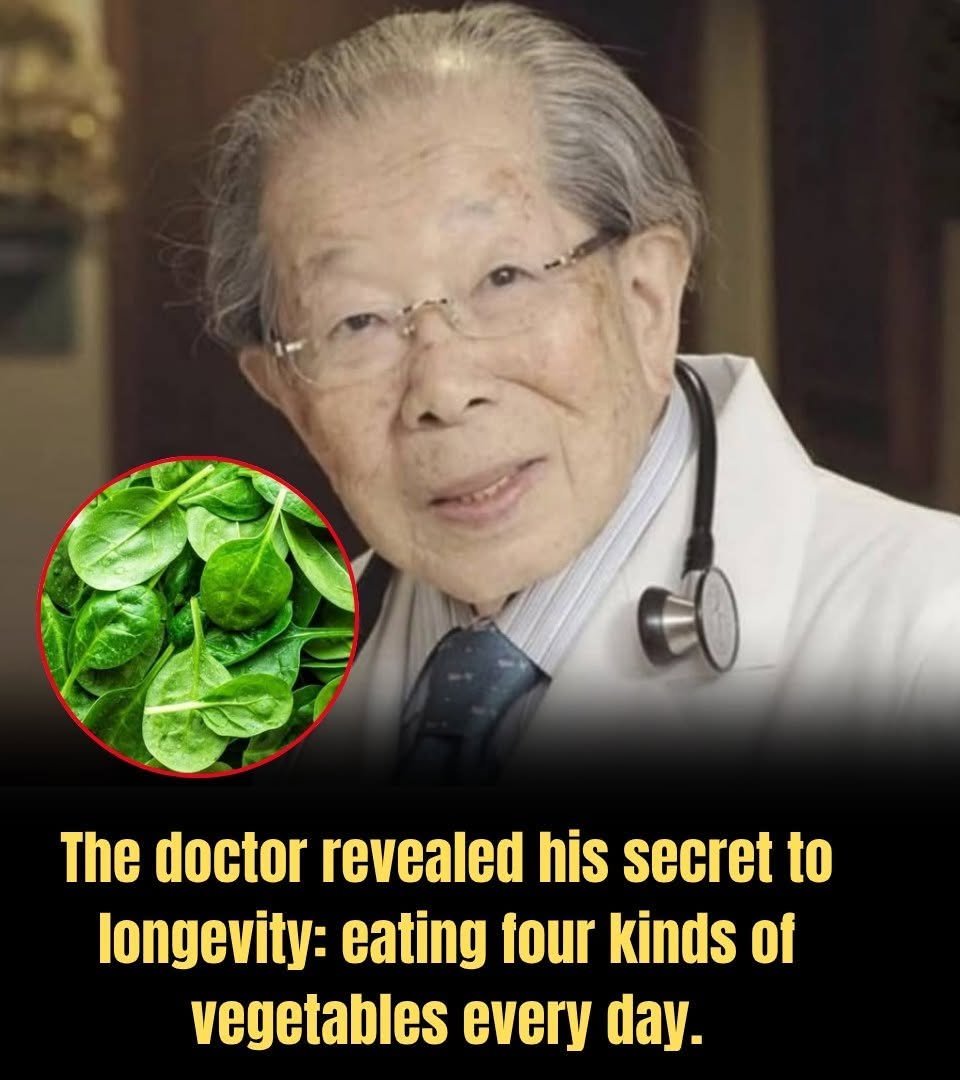
Stories about centenarians who remain active well into old age are fascinating, especially when they attribute their longevity to simple daily habits. One popular claim suggests that a 100-year-old doctor continues treating patients and credits her long life to eating four types of vegetables. While an individual’s routine can be inspiring, it is important not to present a personal habit as scientifically proven to cause longevity. Research does, however, strongly support eating a variety of vegetables as part of a healthy dietary pattern. Four excellent choices are leafy greens such as spinach and kale, broccoli and other cruciferous vegetables, carrots, and tomatoes. These foods provide fiber, vitamins, minerals, and numerous naturally occurring plant compounds. The American Heart Association reports that diets containing around five servings of fruits and vegetables daily—particularly three servings of vegetables—are associated with a lower risk of death from cardiovascular disease, cancer, and other major conditions.
Leafy greens may be especially valuable because they provide nutrients such as folate, vitamin K, lutein, and other plant compounds. Research supported by the National Institute on Aging found that older adults who consumed more green leafy vegetables experienced slower cognitive decline over several years, although this was an association and does not prove that greens alone prevented cognitive decline. Broccoli and other cruciferous vegetables are also nutrient-rich choices, while carrots and tomatoes provide carotenoids and other beneficial compounds. The National Institute on Aging recommends a varied eating pattern that includes different types of vegetables, fruits, whole grains, legumes, and other nutritious foods rather than depending on one particular food. This variety matters because different vegetables provide different nutrients, and combining them can make it easier to meet nutritional needs throughout life.
The bigger lesson from a long-lived doctor’s routine is therefore not that four specific vegetables can guarantee a 100-year lifespan, but that consistent healthy habits may contribute to healthier aging. Longevity is influenced by many factors, including genetics, physical activity, sleep, blood pressure, metabolic health, smoking status, social circumstances, healthcare, and overall dietary quality. The National Institute on Aging notes that Mediterranean-style and MIND-style eating patterns, both rich in vegetables and other minimally processed foods, are associated with several markers of healthier aging. A practical approach is to rotate leafy greens, broccoli, carrots, tomatoes, and other colorful vegetables throughout the week rather than searching for a single “longevity food.” Disclaimer: This article is for general educational and informational purposes only and does not constitute medical, nutritional, or treatment advice. The specific claims about an individual centenarian’s routine should be independently verified, and eating these vegetables cannot guarantee longevity or prevent disease. Always verify health information through reliable scientific and medical sources and consult a qualified healthcare professional for personalized dietary guidance.
Leave a Reply