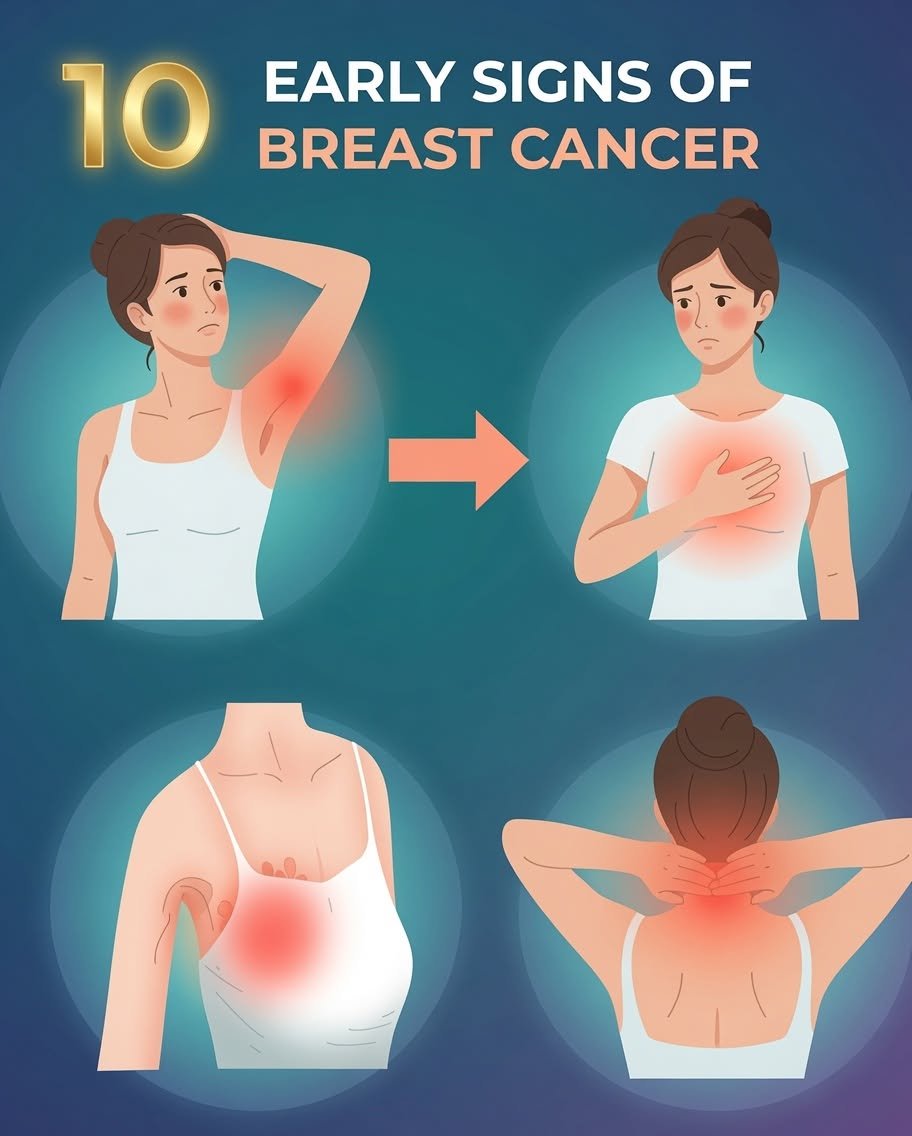
Knowing how your breasts normally look and feel can help you recognize changes that deserve medical attention. The most common sign of breast cancer is a new lump or mass, although most breast lumps are not cancer. Other possible warning signs include swelling of all or part of the breast even without a noticeable lump, skin dimpling or puckering that can resemble an orange-peel texture, and a change in the size or shape of the breast. (cancer.org) Other changes can involve the nipple or surrounding skin. These may include nipple inversion, persistent nipple or breast pain, redness, flaky or dry skin, thickening of the skin, and unusual nipple discharge, particularly discharge that is not breast milk. (cdc.gov) A swollen lymph node or lump under the arm or near the collarbone can also occur with breast cancer. (cancer.org) These are warning signs to understand—not proof that cancer is present.
It is important not to panic if you notice one of these changes. Many breast changes have causes other than cancer, including hormonal changes, benign breast conditions, infections, cysts, and other non-cancerous problems. (cancer.org) Breast pain, for example, is not usually caused by cancer, although persistent or unusual pain should still be evaluated when appropriate. (cancer.org) The key is to notice new, persistent, or unexplained changes rather than trying to diagnose yourself based on an internet checklist. If you discover a new lump, nipple discharge, skin change, nipple inversion, or another unusual breast change, arrange an evaluation with a qualified healthcare professional. A clinical examination and, when appropriate, imaging or biopsy are used to determine the actual cause. (cancer.org)
Regular screening is also important because breast cancer can sometimes be found before symptoms develop. Mammography and other recommended screening methods can help detect cancers earlier, when treatment is generally more successful. (cancer.org) Remember that breast cancer can occur in men as well, although it is much less common; men should also have new breast lumps, nipple changes, or unexplained discharge checked by a healthcare professional. (cancer.org) The most useful habit is simple: know what is normal for your body and don’t ignore significant changes. Early evaluation does not mean you have cancer—it means you are taking your health seriously. Disclaimer: This article is for general educational and informational purposes only and does not constitute medical advice, diagnosis, or treatment. The symptoms described above can have many causes, and none of them alone confirms breast cancer. Always verify cancer-related information through reliable medical and scientific sources and consult a qualified healthcare professional about any new or concerning breast changes.
Leave a Reply