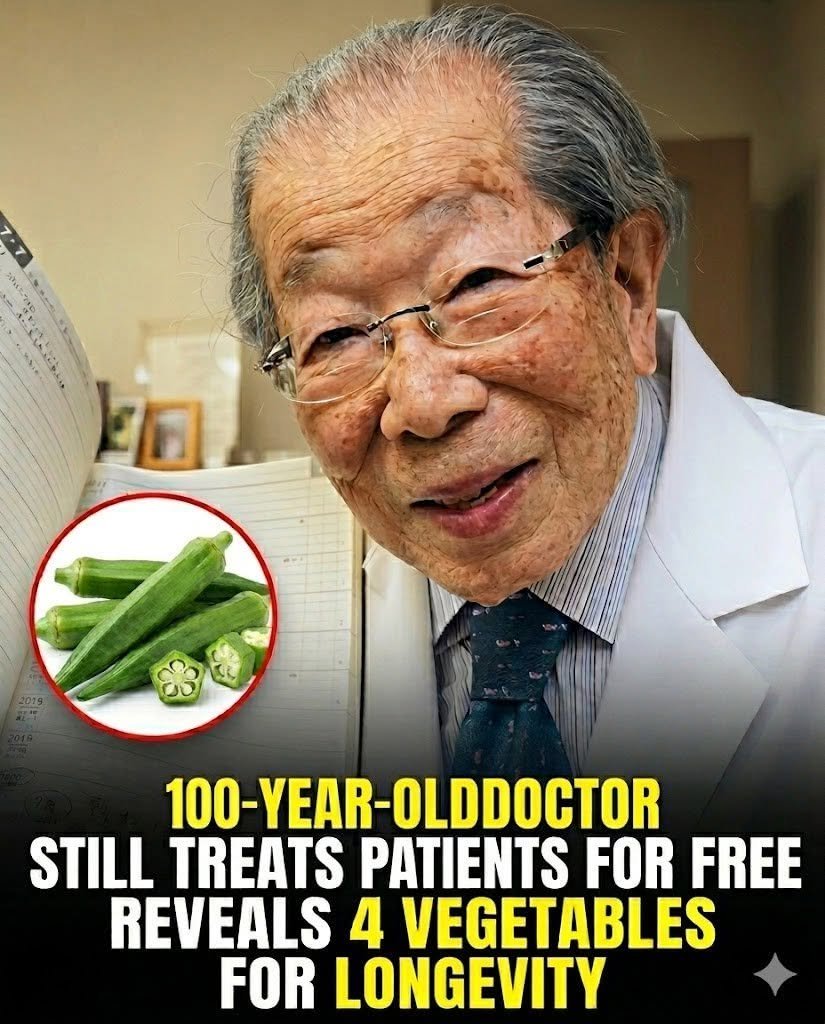
Stories about exceptionally healthy centenarians often inspire people to look for the foods behind their longevity, but there is an important distinction between a personal routine and scientific proof. If we focus on vegetables supported by nutrition research, four excellent choices are leafy greens, broccoli, carrots, and tomatoes. Leafy greens such as spinach and kale provide fiber, vitamins, minerals, and plant compounds, while carrots and tomatoes contribute carotenoids and other nutrients. The National Institute on Aging recommends that older adults eat a variety of nutrient-dense foods, including different types of vegetables, rather than relying on a single food. Research has also associated higher vegetable and fruit intake with lower mortality risk; one large analysis found that around five daily servings, including three servings of vegetables, was associated with the lowest overall mortality risk.
Leafy greens may deserve special attention because they have been studied in relation to healthy aging and cognitive function. An NIA-supported study found that people who consumed higher amounts of green leafy vegetables experienced slower cognitive decline over several years, although this type of research does not prove that greens alone caused the difference. Broccoli and other cruciferous vegetables contain compounds that continue to interest researchers, while tomatoes and carrots provide carotenoids that contribute to a diverse nutrient profile. The important lesson is variety: different vegetables supply different vitamins, minerals, fiber, and naturally occurring plant compounds. The American Heart Association’s updated 2026 dietary guidance emphasizes eating plenty of vegetables and fruits, choosing a wide variety, prioritizing minimally processed foods, and maintaining healthy eating patterns throughout life.
Ultimately, there is no scientifically proven list of four vegetables that guarantees a person will live to 100. Longevity is influenced by genetics, physical activity, sleep, blood pressure, cholesterol, blood sugar, smoking status, social factors, healthcare access, and the overall quality of one’s lifestyle. The strongest evidence supports a consistent dietary pattern rather than a miracle-food approach. A practical strategy is to rotate colorful vegetables throughout the week and combine them with whole grains, legumes, nuts, seeds, and other nutritious foods. If the story of a centenarian doctor is based on a specific individual, his or her personal routine should not be presented as proof that particular foods caused exceptional longevity. Disclaimer: This article is for general educational and informational purposes only and does not constitute medical or nutritional advice. The claimed routine of any individual should be independently verified, and observational research cannot prove that specific foods guarantee longevity or prevent disease. Always verify health claims through reliable scientific and medical sources and consult a qualified healthcare professional for personalized dietary guidance.
Leave a Reply