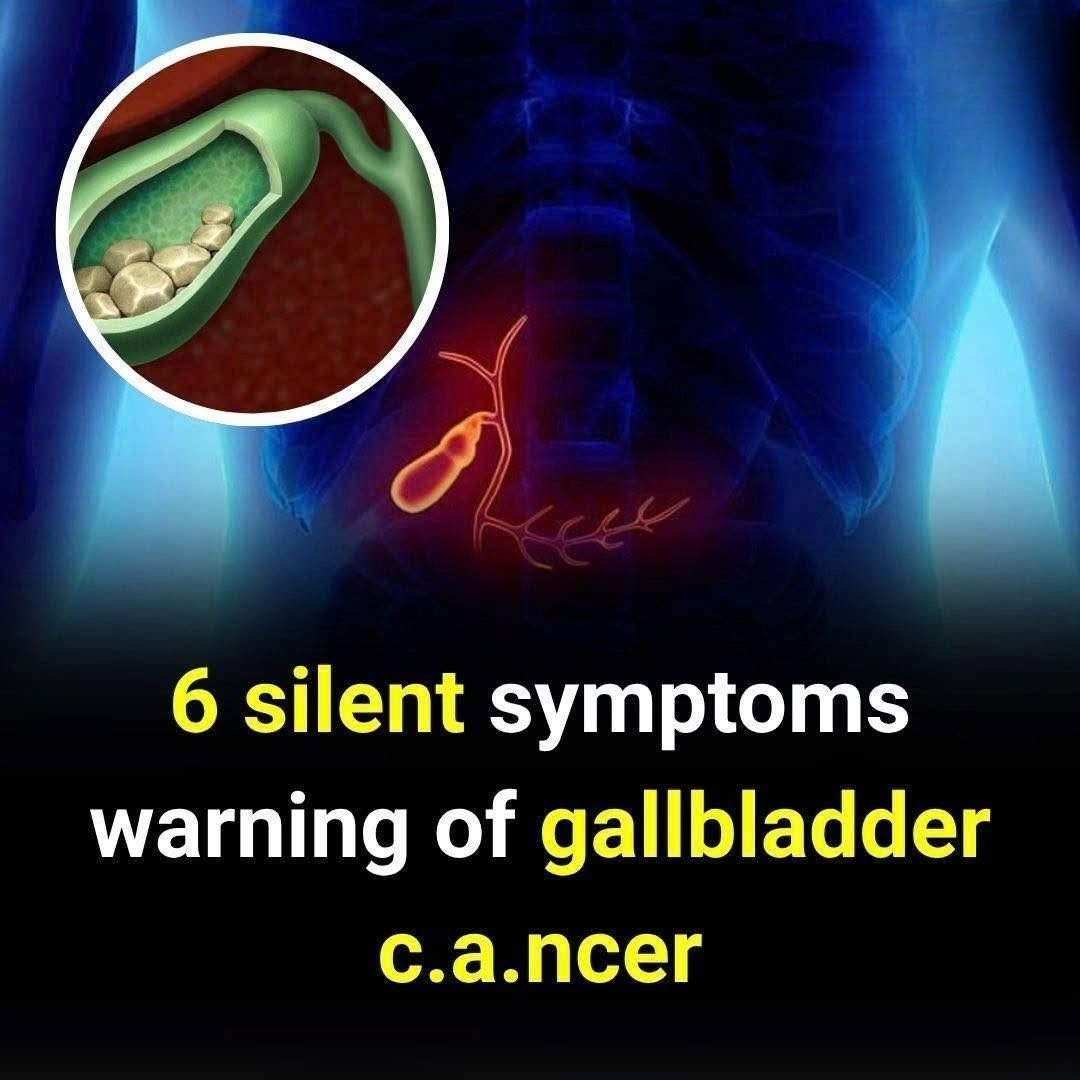
Gallbladder problems can sometimes be difficult to recognize because symptoms may resemble ordinary digestive discomfort. Gallstones are especially common and may remain completely silent, but when a stone blocks a bile duct, it can trigger a gallbladder attack. One of the most recognizable symptoms is sudden or persistent pain in the upper-right abdomen, although discomfort can also occur in the middle of the abdomen or spread toward the back or right shoulder. Other symptoms worth noticing include nausea, vomiting, bloating, and digestive discomfort, particularly when they repeatedly occur after meals. These symptoms do not automatically mean you have gallbladder disease because indigestion, ulcers, reflux, pancreatitis, and other conditions can cause similar problems. Still, recurring symptoms deserve proper medical evaluation rather than being repeatedly dismissed as ordinary stomach trouble.
Six warning signs that deserve attention are recurrent upper-right abdominal pain, nausea or vomiting, persistent bloating or digestive discomfort, pain that lasts for several hours, fever or chills, and yellowing of the skin or eyes. Dark or tea-colored urine and unusually pale stools can also occur when bile flow is obstructed. These latter symptoms are particularly important because a prolonged blockage can lead to inflammation or infection involving the gallbladder, bile ducts, liver, or pancreas. Many people with gallstones never develop symptoms, so simply having gallstones does not necessarily mean treatment is required. However, when symptoms or complications develop, doctors may use blood tests and imaging studies to determine what is happening. Treatment depends on the underlying problem, and symptomatic gallstones are commonly treated with gallbladder removal surgery.
Supporting gallbladder health also means avoiding extreme dieting and rapid weight-loss programs, because losing weight too quickly can increase the risk of developing gallstones. Maintaining a healthy weight through gradual, sustainable lifestyle changes, eating a diet containing adequate fiber and healthy fats, limiting excessive refined carbohydrates and added sugar, and staying physically active may help reduce risk. Most importantly, severe abdominal pain lasting several hours, fever or chills, repeated vomiting, jaundice, dark urine, or pale stools should not be ignored; these may indicate a complication requiring prompt medical assessment. Disclaimer: This article is for general educational and informational purposes only and does not constitute medical advice, diagnosis, or treatment. Gallbladder symptoms can overlap with many other conditions, and these signs alone cannot confirm gallbladder disease. Always verify health information through reliable medical and scientific sources and consult a qualified healthcare professional for persistent or concerning symptoms.
Leave a Reply