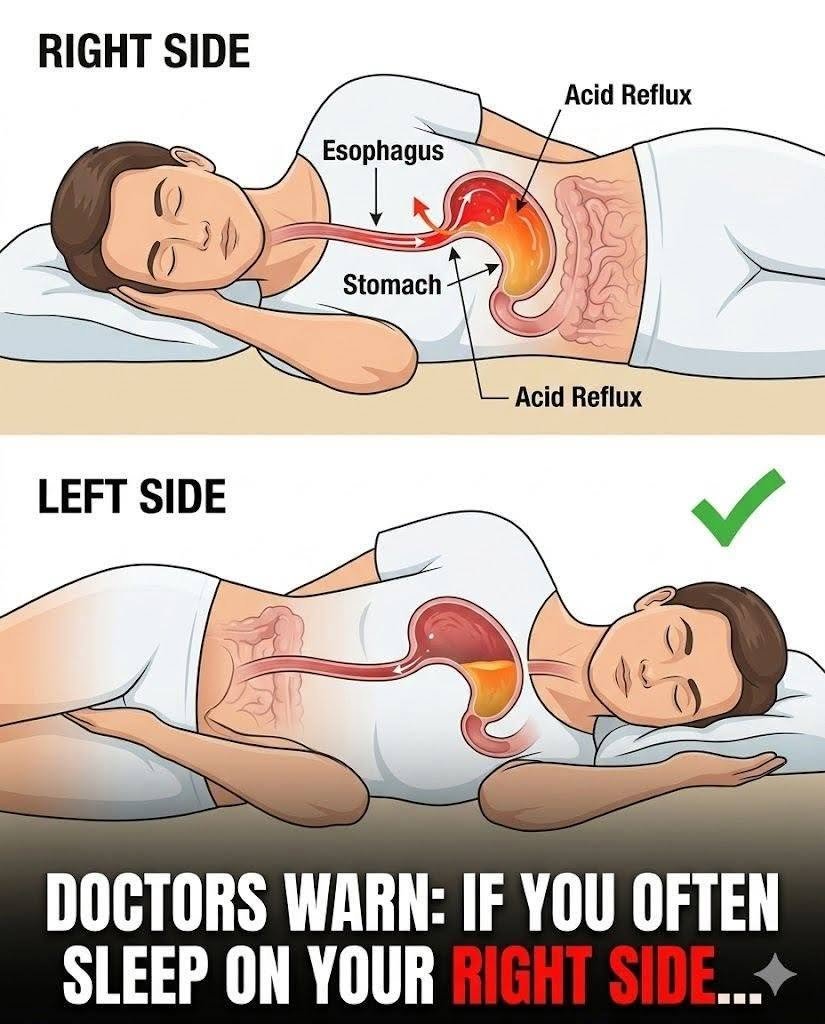
Sleeping on your right side is not inherently dangerous for most healthy adults. In fact, side sleeping is generally considered a good sleep position because it can help keep the airway open and may reduce snoring compared with sleeping flat on the back. (Mayo Clinic) However, your preferred side can matter if you experience certain conditions. One example is acid reflux or GERD. For people who frequently experience nighttime reflux, medical guidance commonly recommends starting sleep on the left side, because this position can make reflux less likely. (Mayo Clinic) That does not mean sleeping on the right side will harm everyone; it simply means some people with reflux may notice worse symptoms in that position.
If you wake with shoulder, neck, hip, or back discomfort, your sleeping position may also be contributing to pressure on certain areas. Side sleeping can be made more comfortable by keeping the neck aligned with the spine and placing a pillow between the knees, which can help reduce strain around the hips and lower back. (Mayo Clinic) Your mattress and pillow height also matter. A pillow that is too high or too low can leave the neck tilted for hours, potentially contributing to morning stiffness. Rather than forcing yourself to sleep on one particular side, pay attention to whether your position consistently produces discomfort, numbness, or poor-quality sleep. If you have persistent nighttime symptoms, changing positions may help, but the underlying cause should still be considered.
There is one important exception: pregnancy, particularly after 28 weeks. NHS guidance recommends going to sleep on your side, either left or right, rather than on your back during later pregnancy. (NHS) So the idea that everyone must sleep exclusively on the left side is an oversimplification. For most healthy adults, the best position is the one that allows comfortable, uninterrupted breathing and restful sleep. If right-side sleeping repeatedly causes severe reflux, significant pain, numbness, breathing problems, or other concerning symptoms, discuss these issues with a qualified healthcare professional. Disclaimer: This article is for general educational and informational purposes only and does not constitute medical advice, diagnosis, or treatment. Sleep-position recommendations can vary according to individual health conditions, pregnancy, pain, and sleep disorders. Always verify health information through reliable medical and scientific sources and consult a qualified healthcare professional for personalized guidance.
Leave a Reply