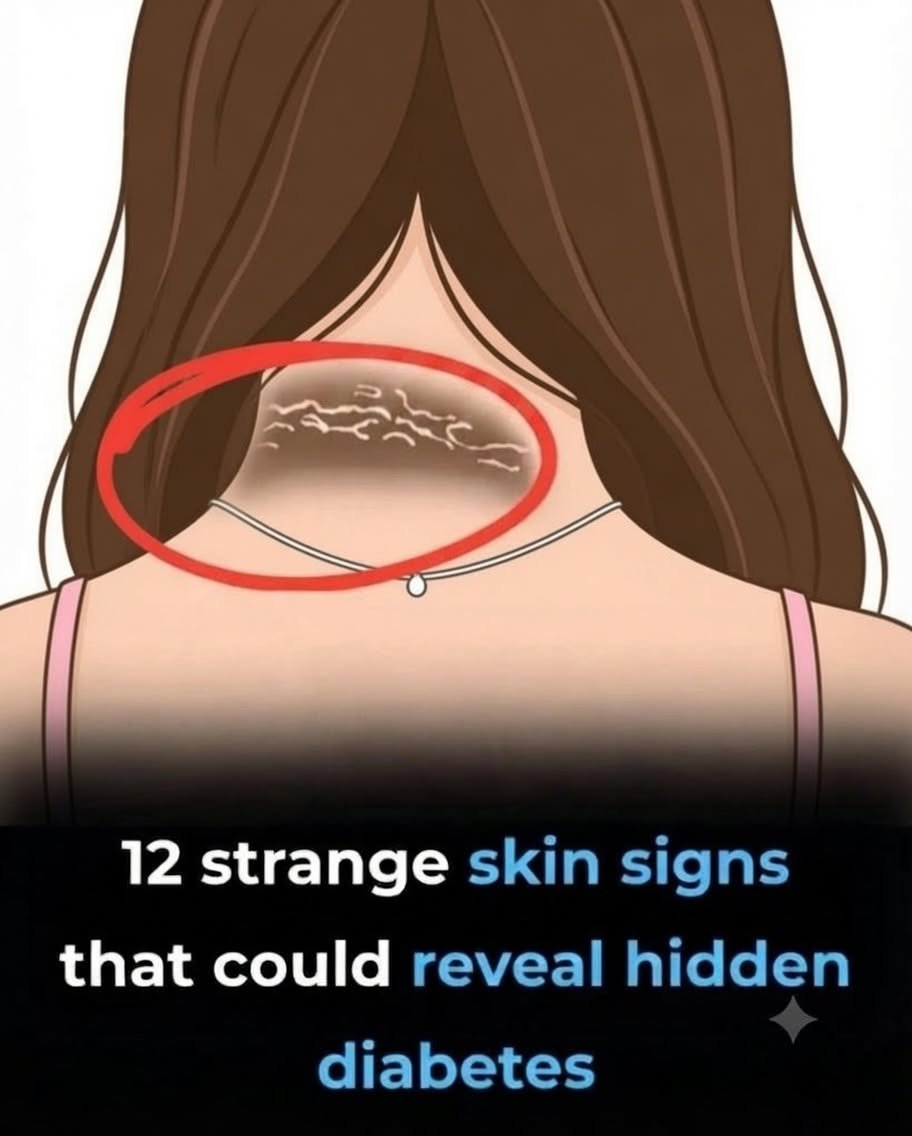
Your skin can sometimes provide clues that something is happening inside your body, and diabetes can affect the skin in several different ways. Dermatologists note that certain skin changes may occasionally be among the first visible signs of diabetes or prediabetes, although no skin symptom can diagnose the condition by itself. Twelve changes worth knowing about include dark, velvety skin around the neck, armpits, or groin; small skin tags; yellow, reddish, or brown patches that develop from raised bumps; shin spots or slightly depressed marks; very dry or itchy skin; slow-healing cuts or sores; recurring skin infections; yellowish scaly patches around the eyelids; thick or hardened skin on the hands or upper back; unusual changes around the feet and toenails; fungal infections such as scaling between the toes; and persistent changes in skin texture or color that have no obvious explanation. One particularly recognizable condition is acanthosis nigricans, which produces darker, thicker, velvety skin and is often seen on the neck, armpits, or groin. It can be associated with insulin resistance, prediabetes, or diabetes, but it can also have other causes.
It is important not to panic when you notice one of these changes. Dry skin, itching, discoloration, rashes, or skin tags are common and can occur for many reasons unrelated to diabetes. Diabetes-related skin problems are more concerning when they are persistent, unexplained, recurring, or accompanied by other possible symptoms such as increased thirst, frequent urination, unusual tiredness, unexplained weight loss, blurred vision, numbness or tingling, or wounds that heal slowly. People who already have diabetes should pay particular attention to their feet because reduced sensation and impaired healing can allow small injuries or infections to become more serious. The American Academy of Dermatology recommends checking the feet regularly for redness, scaling, blisters, cuts, and sores and seeking medical attention for concerning wounds or infections. If dark, velvety patches suddenly appear or spread rapidly, medical evaluation is especially important because acanthosis nigricans can occasionally have causes other than insulin resistance.
The most important takeaway is that your skin can provide clues, but blood testing is needed to determine whether you actually have diabetes or prediabetes. If you notice several unexplained skin changes, particularly alongside increased thirst, frequent urination, fatigue, vision changes, or slow-healing wounds, consider speaking with a qualified healthcare professional about appropriate glucose testing. Do not attempt to treat suspected diabetes by using skin creams, supplements, detox drinks, or other home remedies. Early identification and appropriate management can help reduce the risk of complications affecting the eyes, kidneys, nerves, heart, and blood vessels. Disclaimer: This article is for general educational and health information only and does not constitute medical diagnosis, treatment, or personalized medical advice. Skin changes can have numerous causes and do not prove that a person has diabetes. Health claims online may be exaggerated, misleading, or unauthenticated, so always verify important information through reliable medical sources and consult a qualified healthcare professional for appropriate testing and guidance.
Leave a Reply