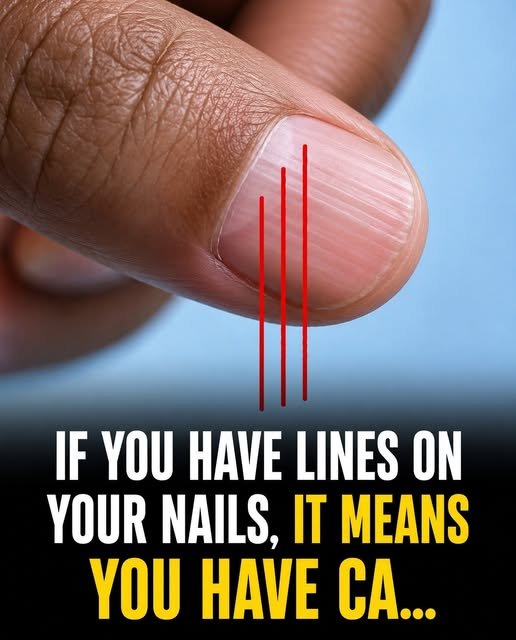
Not every line on a nail is a warning sign, but changes in nail texture can become more noticeable as people get older. Vertical ridges, which run from the cuticle toward the tip, are common and are often harmless. The American Academy of Dermatology notes that lengthwise ridges can occur with brittle nails, while the NHS explains that nails naturally become thicker or more brittle as we age. Dryness, frequent exposure to water or cleaning products, minor trauma, and normal changes in nail growth can all influence appearance. This means someone over 40 who notices fine vertical lines should not immediately assume they have a serious illness. Instead, it can be useful to observe whether the change is gradual, affects several nails, or is accompanied by other noticeable symptoms. Good nail care—including moisturizing the nails and surrounding skin and protecting hands from harsh chemicals—can also help maintain stronger, healthier-looking nails.
The type of line matters. Horizontal grooves or deep bands, commonly called Beau’s lines, can occur when nail growth is temporarily slowed or interrupted. According to the American Academy of Dermatology, causes can include fever, injury, chemotherapy, or major physical stress. Other nail changes may deserve professional attention as well. A new or changing dark streak under one fingernail or toenail should be evaluated by a dermatologist because, although many dark streaks have harmless explanations, some can be associated with melanoma. Nail lifting, significant discoloration, persistent swelling around the nail, unusual thickening, or major changes in shape can also have several possible causes, including infections and inflammatory conditions. The important point is that a nail line alone cannot diagnose a disease. Self-diagnosis based on photographs or social-media health claims can create unnecessary fear or lead to missed problems.
For adults over 40, the smartest approach is simple: pay attention to changes without becoming alarmed. Keep nails clean and moisturized, avoid aggressive cuticle treatments, protect your hands when using cleaning chemicals, and monitor any new or persistent abnormalities. If a line changes over time, appears suddenly, affects only one nail, or occurs alongside pain, swelling, discoloration, nail separation, or other unexplained symptoms, arranging an evaluation with a qualified healthcare professional or dermatologist is sensible. Healthy nails can naturally change with age, but they can also provide clues that deserve professional assessment when the pattern is unusual. Disclaimer: This article is intended for general educational and informational purposes only and does not constitute medical advice, diagnosis, or treatment. Nail changes have many possible causes, and the information presented here may be general or unauthenticated. Do not assume that a particular nail line indicates a specific disease; verify important health information through reliable medical sources and consult a qualified healthcare professional for personalized evaluation.
Leave a Reply