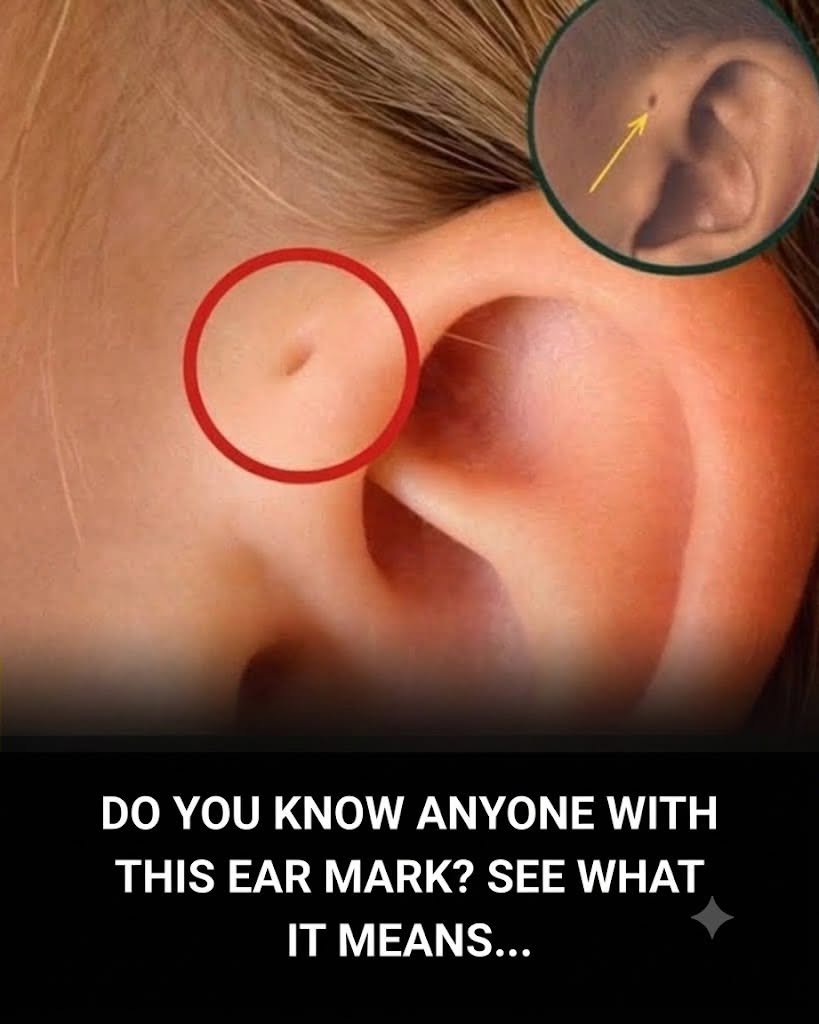
Digital media platforms frequently feature close-up anatomical photography—such as a tiny indentation or pit located near the upper cartilage of the ear—paired with sensationalized headlines like “Most People Have No Idea What This Ear Mark Really Means” and “DO YOU KNOW ANYONE WITH THIS EAR MARK? SEE WHAT IT MEANS…”. These viral posts rely on mysterious curiosity hooks, body-focused anomaly framing, and hidden diagnostic warnings to bypass content moderation filters, provoke unnecessary health anxiety in comment sections, and drive rapid social media sharing and ad-monetized click-through rates rather than offering accurate otolaryngological or embryological education.
815767350_1412453380979361_3264668104076111917_n.jpg+ 1
From an embryology and otolaryngology perspective, this facial feature is known as a preauricular pit (or preauricular sinus), which is a common, benign congenital variation. These tiny holes or dimples form during embryonic development around the sixth week of gestation due to incomplete fusion of the six auricular hillocks that give rise to the external ear. While the vast majority of individuals who have a preauricular pit live asymptomatic lives without any health complications, the pit can occasionally trap dead skin cells or become prone to minor localized bacterial infections or cysts if proper hygiene is neglected. Content-farming networks systematically take normal, harmless anatomical variations and cast them in mysterious or alarming diagnostic frameworks to manipulate recommendation algorithms and maximize digital ad revenue.
815767350_1412453380979361_3264668104076111917_n.jpg+ 2
Managing a preauricular pit and understanding minor anatomical differences relies on established clinical guidelines rather than succumbing to internet sensationalism. Standard medical advice emphasizes keeping the area clean and dry during routine hygiene, monitoring for signs of localized redness, swelling, or tenderness, and seeking professional care only if a secondary infection or cyst develops. Understanding how engagement algorithms weaponize human body variations helps consumers evaluate online health content with critical media literacy. For verified guidance on congenital ear anomalies or ENT care, consulting board-certified otolaryngologists, pediatricians, or primary care physicians provides authoritative, scientifically grounded care.
815767350_1412453380979361_3264668104076111917_n.jpg+ 3
Leave a Reply