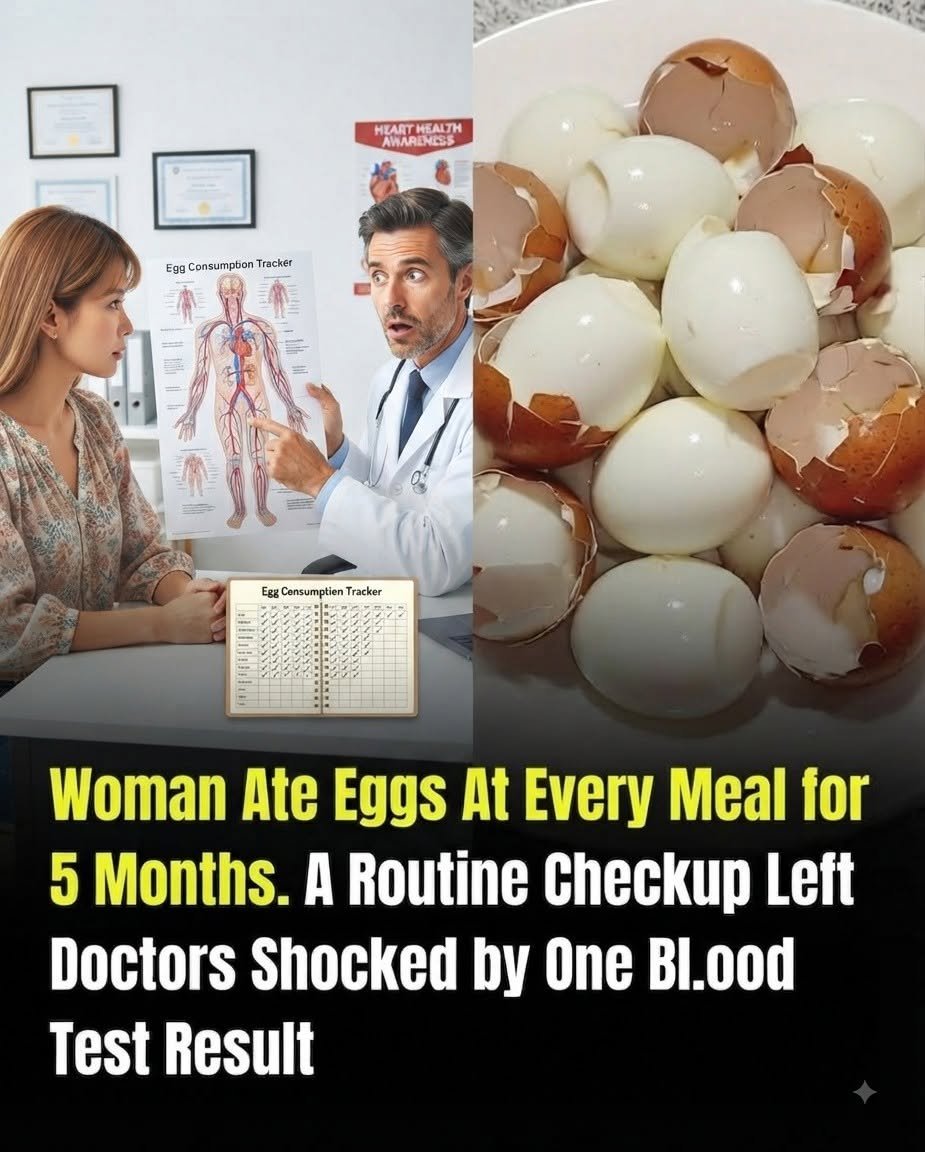
Digital media platforms frequently feature composite visual graphics—such as stock imagery of medical consultations alongside peeled hard-boiled eggs—paired with sensationalized headlines claiming “Trying to Lose Weight, She Ate Eggs at Every Meal for 5 Months. Her Medical Checkup Left Doctors Stunned” or “Woman Ate Eggs At Every Meal for 5 Months. A Routine Checkup Left Doctors Shocked by One Bl.ood Test Result”. These viral posts rely on censorial character modification (such as “Bl.ood”), extreme mono-diet narratives, and dramatic medical cliffhangers to bypass automated moderation filters, provoke health-related curiosity, and drive rapid social media sharing and ad-monetized click-through rates rather than offering balanced nutritional or clinical education.
From a nutritional biochemistry and cardiovascular lipidology perspective, the claim that eating eggs at every meal for months leads to a singular “shocking” blood test anomaly simplifies complex human metabolic science into a clickbait trope. Eggs are dense sources of high-quality protein, essential vitamins (such as B12 and choline), and dietary cholesterol. However, contemporary cardiovascular research demonstrates that dietary cholesterol has a far less direct impact on blood serum LDL cholesterol levels for the vast majority of people (“non-responders”) than saturated and trans fats. While consuming an extreme, restrictive diet consisting primarily of eggs may promote short-term caloric deficit weight loss, long-term adherence to extreme single-food regimes can lead to dietary imbalances, micro-nutrient deficiencies, and GI disturbances due to a lack of dietary fiber. Content-farming networks systematically invent dramatic medical reactions to basic dietary items, pairing synthetic story arcs with stock photography to manipulate recommendation algorithms and maximize advertising revenue.
Achieving sustainable weight management and cardiovascular health relies on evidence-based dietary patterns rather than adopting viral mono-diets or succumbing to internet health panics. A healthy, balanced diet emphasizes whole foods, diverse protein sources, complex carbohydrates, healthy fats, and adequate fiber, tailored to an individual’s specific lipid profile and metabolic health. Understanding how engagement-driven algorithms weaponize common dietary debates helps consumers evaluate wellness claims with critical media literacy. For verified diagnostic evaluation, lipid panel interpretation, or tailored weight-loss protocols, consulting a primary care physician or registered dietitian provides authoritative, scientifically grounded care.
Leave a Reply