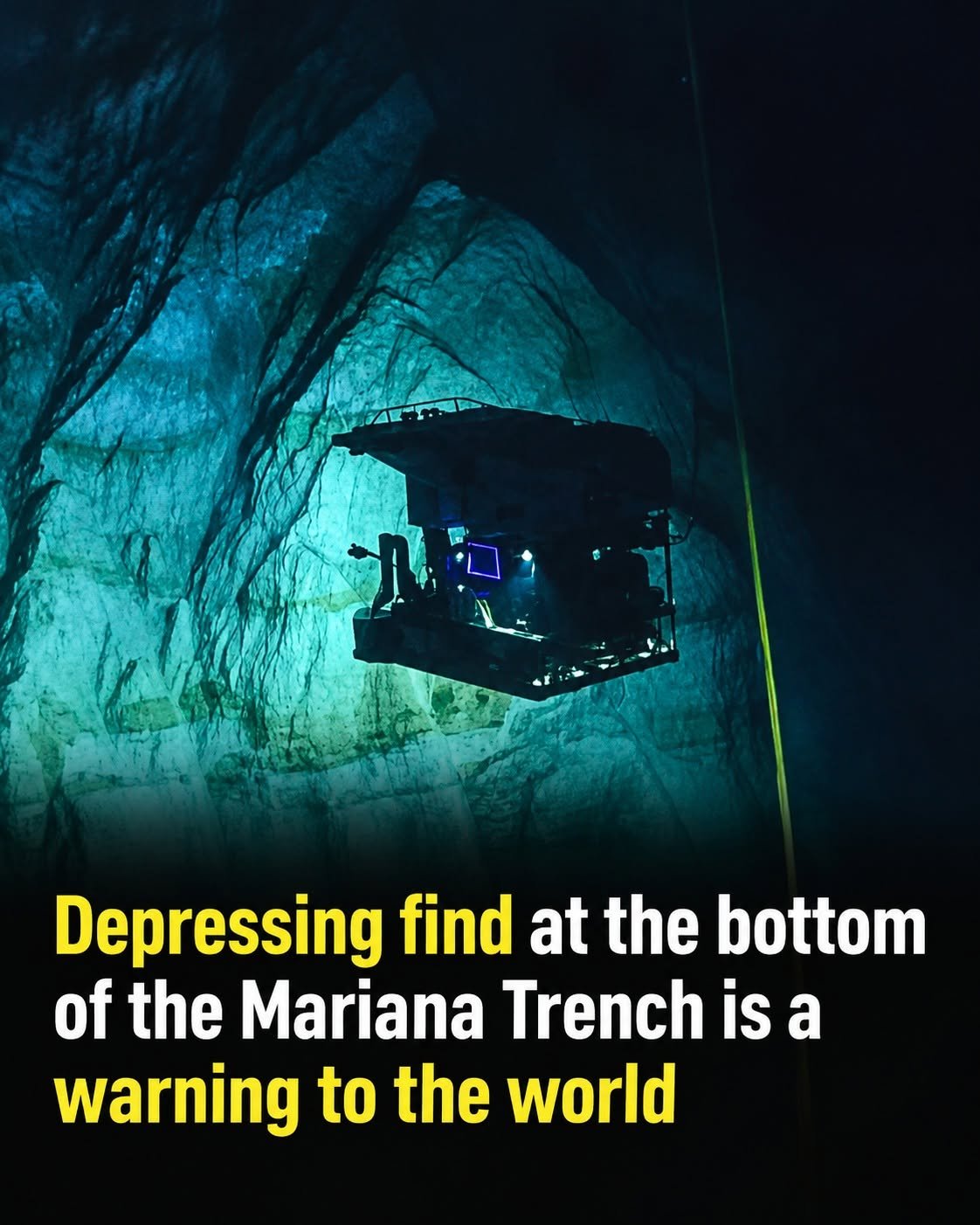
Digital media platforms frequently feature dramatic underwater exploration photography—such as a deep-sea submersible or remotely operated vehicle (ROV) illuminated against a sheer oceanic trench wall—paired with sensationalized, sensational headlines like “Depressing find at the bottom of the Mariana Trench is a warning to the world”. These viral posts rely on mystery hooks, existential environmental warnings, and open-ended curiosity prompts to provoke widespread intrigue, incite heavy comment section engagement, and drive rapid social media sharing and ad-monetized click-through rates rather than offering clear oceanographic or environmental reporting.
From a marine biology and deep-sea oceanography perspective, these posts typically refer to the documented discovery of anthropogenic pollution—specifically plastic waste, candy wrappers, and plastic bags—at the bottom of the Challenger Deep in the Mariana Trench (nearly 36,000 feet / 10,900 meters below sea level). First highlighted during deep-diving expeditions such as Victor Vescovo’s Five Deeps Expedition in 2019, the presence of single-use plastics and microplastics in the planet’s deepest oceanic trench serves as a stark indicator of global plastic pollution and ocean waste accumulation. Content-farming networks systematically take real scientific findings regarding ocean conservation, strip them of explicit factual context, and frame them with vague, ominous clickbait titles purely to manipulate platform distribution algorithms and maximize ad revenue.
Navigating environmental news and scientific discoveries effectively relies on primary research publications, academic journals, and reputable marine conservation organizations rather than accepting open-ended social media graphics at face value. Addressing global ocean pollution requires international policy initiatives, systemic reductions in single-use plastics, and improved waste management infrastructure rather than sensationalized online fear-mongering. Understanding how clickbait algorithms weaponize genuine environmental crises helps online audiences evaluate viral media with critical discernment. For verified scientific reports on deep-sea biology, oceanic trench exploration, or marine pollution statistics, consulting organizations like the National Oceanic and Atmospheric Administration (NOAA), the Woods Hole Oceanographic Institution, or peer-reviewed scientific journals provides authoritative, scientifically grounded information.
Leave a Reply