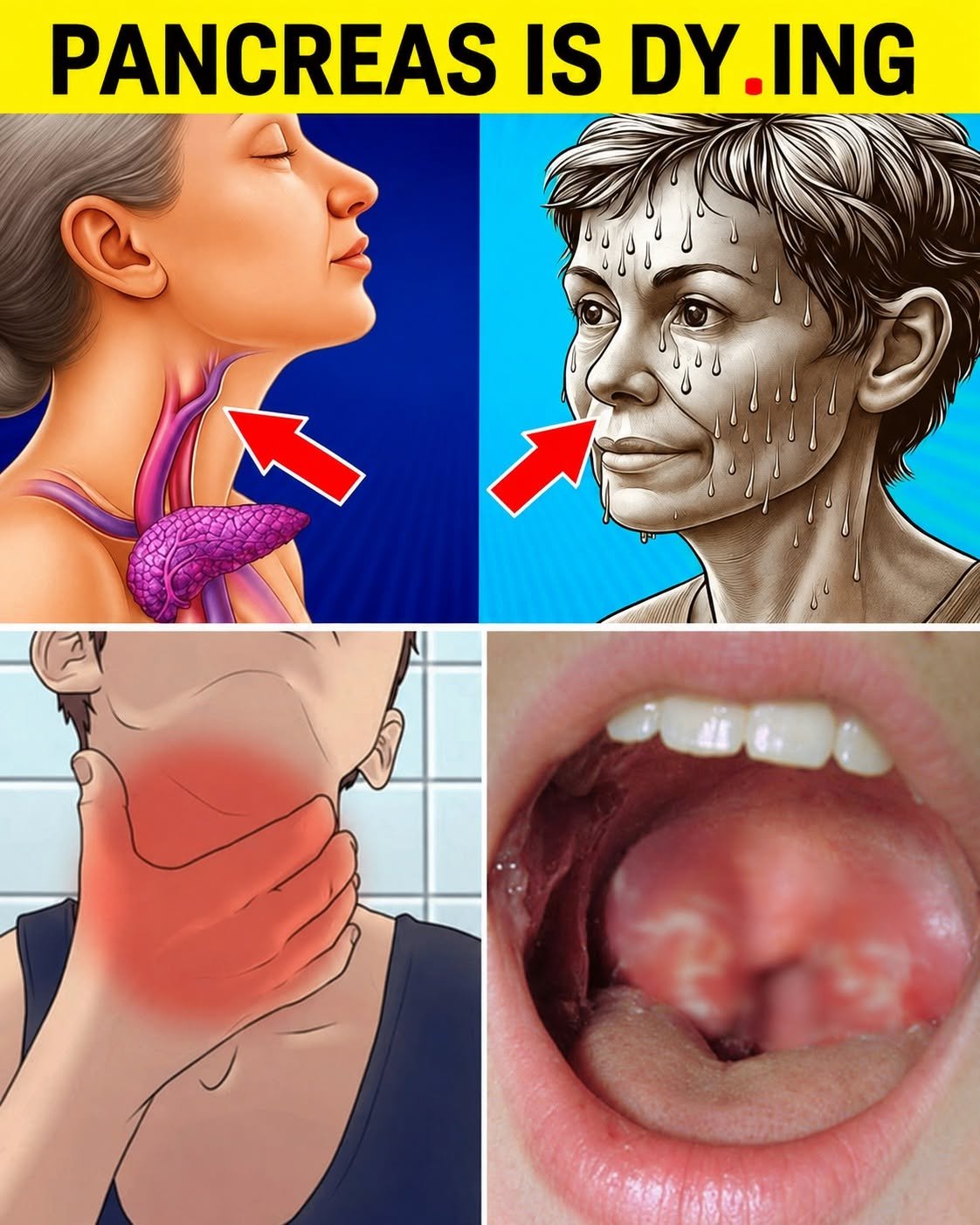
Digital media platforms frequently feature dramatic, anatomically implausible graphic panels—such as a human neck overlaid with an isolated purple organ paired with text proclaiming “PANCREAS IS DY.ING”—accompanied by sensationalized headlines like “8 Strange Signs Your Body May Be Sending Before Pancreatic Can.cer Is Found”. These viral posts rely on strategic character punctuation (such as “Can.cer” and “DY.ING”), alarming medical pseudo-diagnoses, and visceral anxiety-inducing hooks to bypass automated content moderation filters, provoke intense health panic, and drive rapid social media sharing and ad-monetized click-through rates rather than providing accurate medical or oncological education.
From an oncology and clinical gastroenterology perspective, the claims and illustrations presented in such clickbait are entirely scientifically baseless and anatomically incoherent. The pancreas is an abdominal retroperitoneal organ situated deep in the upper abdomen behind the stomach, not located in the neck or throat as depicted in the graphic. While pancreatic cancer is a serious malignancy, early symptoms—when present—typically include painless jaundice, unexplained weight loss, new-onset diabetes, or upper abdominal pain radiating to the back, rather than arbitrary throat pain, excessive facial sweating, or localized oral lesions. Content-farming networks systematically weaponize severe cancer fears, combine unrelated anatomical graphics, and use sensationalized warnings to manipulate engagement algorithms and inflate digital ad revenue.
Navigating health information effectively relies on evidence-based oncology guidelines and verified medical literature rather than succumbing to sensationalized internet hoaxes. Comprehensive digestive health management focuses on recognizing genuine persistent symptoms, maintaining routine clinical evaluations, and addressing established risk factors such as smoking, chronic pancreatitis, and family history. Understanding how clickbait algorithms exploit serious medical conditions helps consumers approach online content with critical media literacy. For verified guidance on cancer prevention, risk assessment, or diagnostic screenings, consulting board-certified oncologists, gastroenterologists, or accredited health institutions provides authoritative, scientifically grounded care.
Leave a Reply