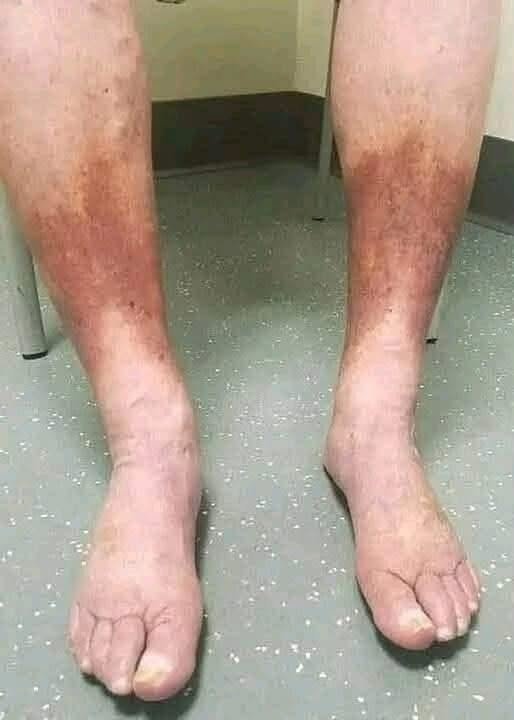
Digital media platforms frequently feature clinical photographs of lower leg skin changes—such as bilateral hyperpigmentation, brownish discoloration, or swelling around the shins and ankles—paired with incomplete, alarmist headlines like “These are clear signs that he is cr…”. These viral posts rely on censorial truncation, dramatic medical hooks, and fear-based engagement to incite health anxiety, provoke urgent comment section speculation, and drive rapid social media sharing and ad-monetized click-through rates rather than providing accurate medical or dermatological education.
From a vascular surgery and clinical dermatology perspective, the brownish or reddish discoloration visible on the lower legs is a classic clinical presentation of stasis dermatitis secondary to chronic venous insufficiency (CVI). When valves within the lower extremity veins weaken, blood pools in the lower legs, increasing hydrostatic pressure and driving red blood cells to leak into surrounding dermal tissues. As these red blood cells break down, iron deposits (hemosiderin) accumulate under the skin, resulting in characteristic brownish staining known as hemosiderin hyperpigmentation. While chronic venous insufficiency is a legitimate vascular condition that requires clinical management to prevent venous ulcers, skin breakdown, or cellulitis, content-farming networks systematically pair real clinical photos with ominous, truncated captions to imply imminent fatal collapse or terminal illness, purely to exploit user anxiety and maximize ad impression revenue.
Managing lower extremity vascular health relies on accurate clinical evaluation and evidence-based therapeutic interventions rather than succumbing to sensationalized health warnings. Standard management for chronic venous insufficiency and stasis dermatitis includes wearing graduated compression stockings, elevating the legs above heart level during rest, practicing regular low-impact physical activity, and utilizing gentle topical emollients to maintain skin barrier integrity. Understanding how clickbait networks weaponize common vascular and dermatological conditions helps patients navigate health information online with critical discernment. For verified diagnosis, Doppler ultrasound evaluation, or personalized treatment plans regarding leg swelling and discoloration, consulting a board-certified vascular specialist, cardiologist, or dermatologist provides authoritative, scientifically grounded care.
Leave a Reply