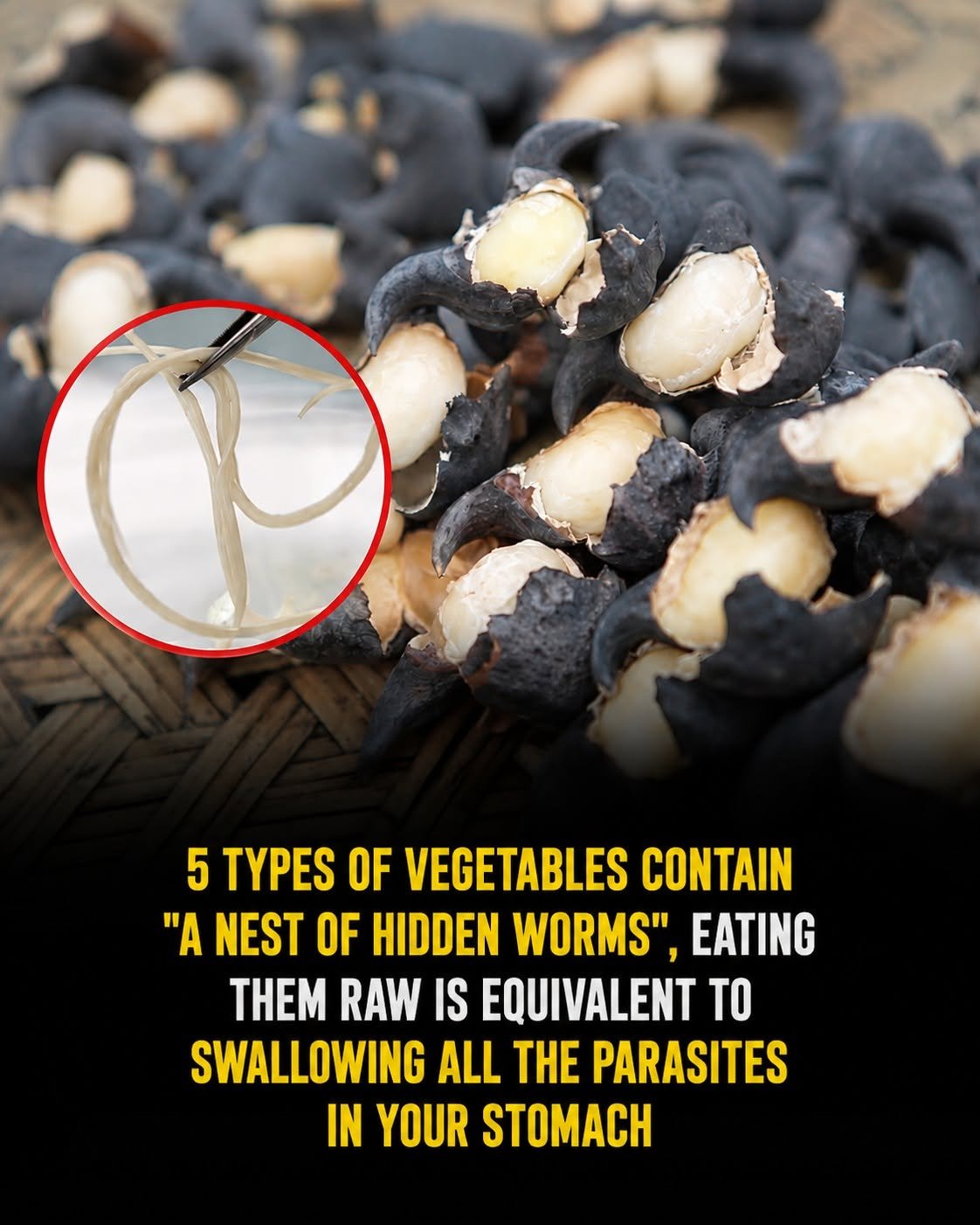
Digital media platforms frequently feature composite graphics depicting aquatic plants or unfamiliar produce—such as water caltrops (Trapa natans or Trapa bicornis)—alongside inset images of long parasitic worms and sensationalized headlines claiming certain raw vegetables contain “a nest of hidden worms.” These viral posts rely on visceral fear tactics, gross-out visual inserts, and extreme medical warnings to provoke health anxiety, drive rapid social media sharing, and maximize digital engagement metrics rather than providing evidence-based botanical and parasitological education.
From a food safety and parasitology perspective, aquatic plants grown in fresh water (such as water caltrops, water chestnuts, and lotus roots) can host microscopic infectious agents like Fasciolopsis buski (the giant intestinal fluke) if cultivated in environments contaminated with agricultural runoff or animal waste. However, the infectious stage consists of microscopic metacercariae encysted on the outer skin or hull of the plant, rather than visible, macroscopic adult roundworms writhing inside the flesh as depicted in viral composite graphics. When raw or unwashed aquatic vegetables harboring these microscopic cysts are consumed, larvae hatch in the duodenum and attach to the intestinal wall, leading to fasciolopsiasis—a condition treatable with anti-parasitic medications like praziquantel. Content-farming networks systematically pair real food hygiene warnings regarding aquatic crops with dramatic, unrelated parasite imagery to manufacture high-engagement clickbait that inflames public terror and inflates web ad revenue.
Preventing waterborne parasite transmission relies on straightforward culinary hygiene and proper food preparation rather than succumbing to sensationalized health warnings. Thoroughly washing produce under clean running water, peeling the tough outer skins of aquatic nuts, and boiling or thoroughly cooking crops completely destroys encysted metacercariae, rendering the food entirely safe for consumption. Understanding how viral media exaggerates real agricultural risks helps consumers practice effective food safety without adopting unnecessary dietary panic. For verified guidelines on foodborne parasite prevention, produce handling, and agricultural safety standards, consulting public health agencies, agricultural extension services, or infectious disease specialists provides authoritative, scientifically grounded information.
Leave a Reply