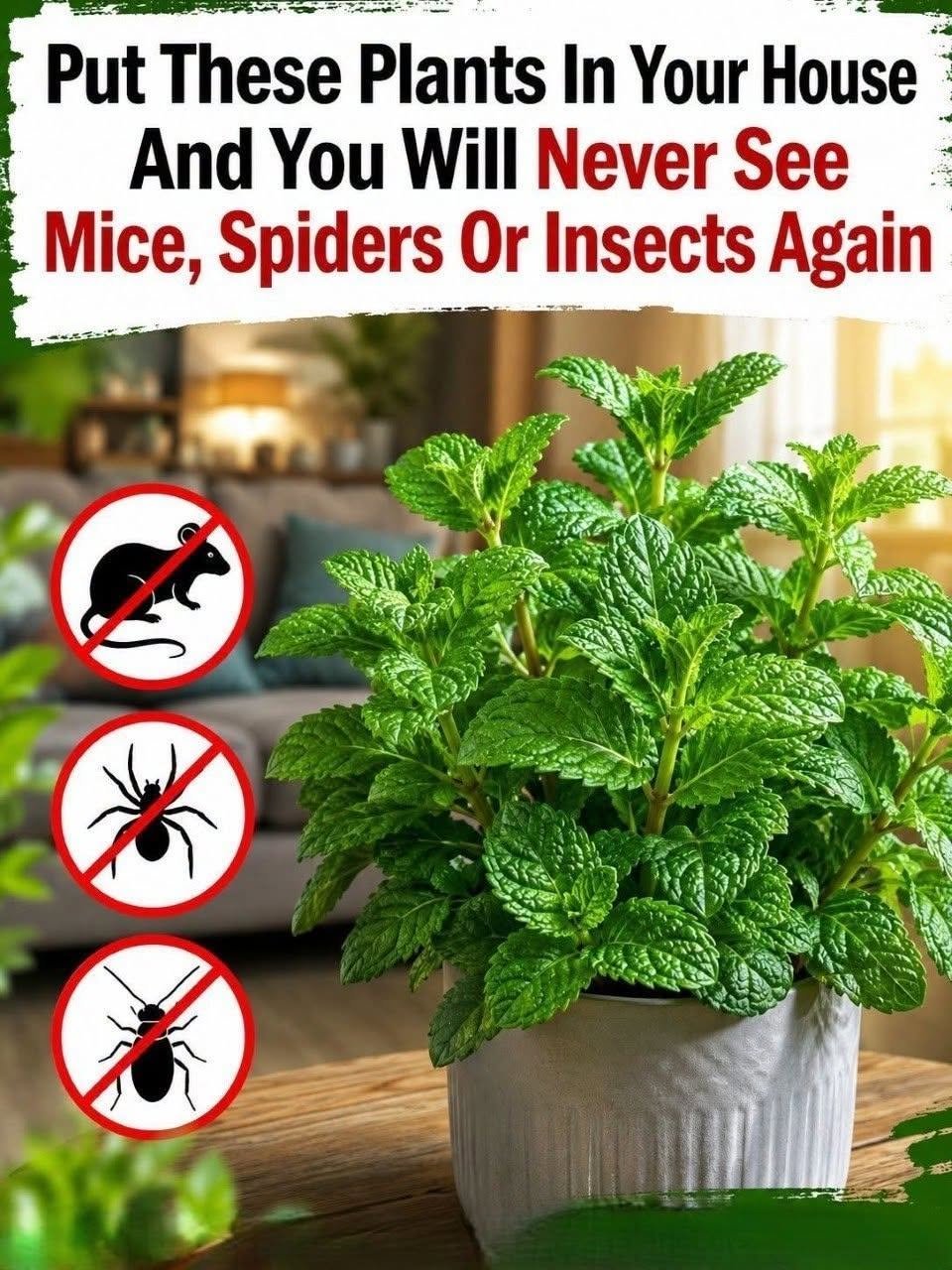
Digital media platforms frequently feature houseplant graphics—such as potted mint or lavender—prominently displayed alongside red “prohibited” icons over mice, spiders, and insects. Accompanied by absolute claims that placing these plants in your home guarantees you will “never see pests again,” these viral posts rely on bold visual typography, simplified gardening hacks, and total elimination promises to trigger domestic interest, drive rapid social media sharing, and maximize digital ad revenue rather than offering evidence-based integrated pest management guidance.
From an entomological and botanical science perspective, living potted plants contain natural aromatic compounds like menthol, linalool, or citronellal, but their presence in a room does not create an active barrier or exterminate household pests. While concentrated essential oils extracted from plants like peppermint or eucalyptus can exert minor, localized repellent effects when applied directly to entry points, a living indoor plant releases far too low a concentration of volatile organic compounds into ambient air to deter rodents, arachnids, or insect infestations. In fact, potted houseplants can sometimes attract pests by adding soil moisture, decaying organic matter, and shelter for fungus gnats, mites, or spiders. Content-farming networks systematically take minor botanical characteristics and exaggerate them into magical, absolute pest-eradication solutions to maximize digital click-through rates.
Effective, long-term household pest control relies on proven Integrated Pest Management (IPM) principles rather than relying on potted greenery. Sealing structural cracks and gaps around doors and utility lines, maintaining dry indoor environments, eliminating standing water, and storing food in airtight containers address the root causes of pest entry and survival. Understanding how viral gardening advice oversimplifies ecological interactions helps homeowners adopt realistic, effective maintenance strategies. For verified guidance on domestic pest eradication, structural vector control, or botanical repellents, consulting professional pest control operators, agricultural extension offices, or certified urban entomologists provides authoritative, evidence-based recommendations.
Leave a Reply