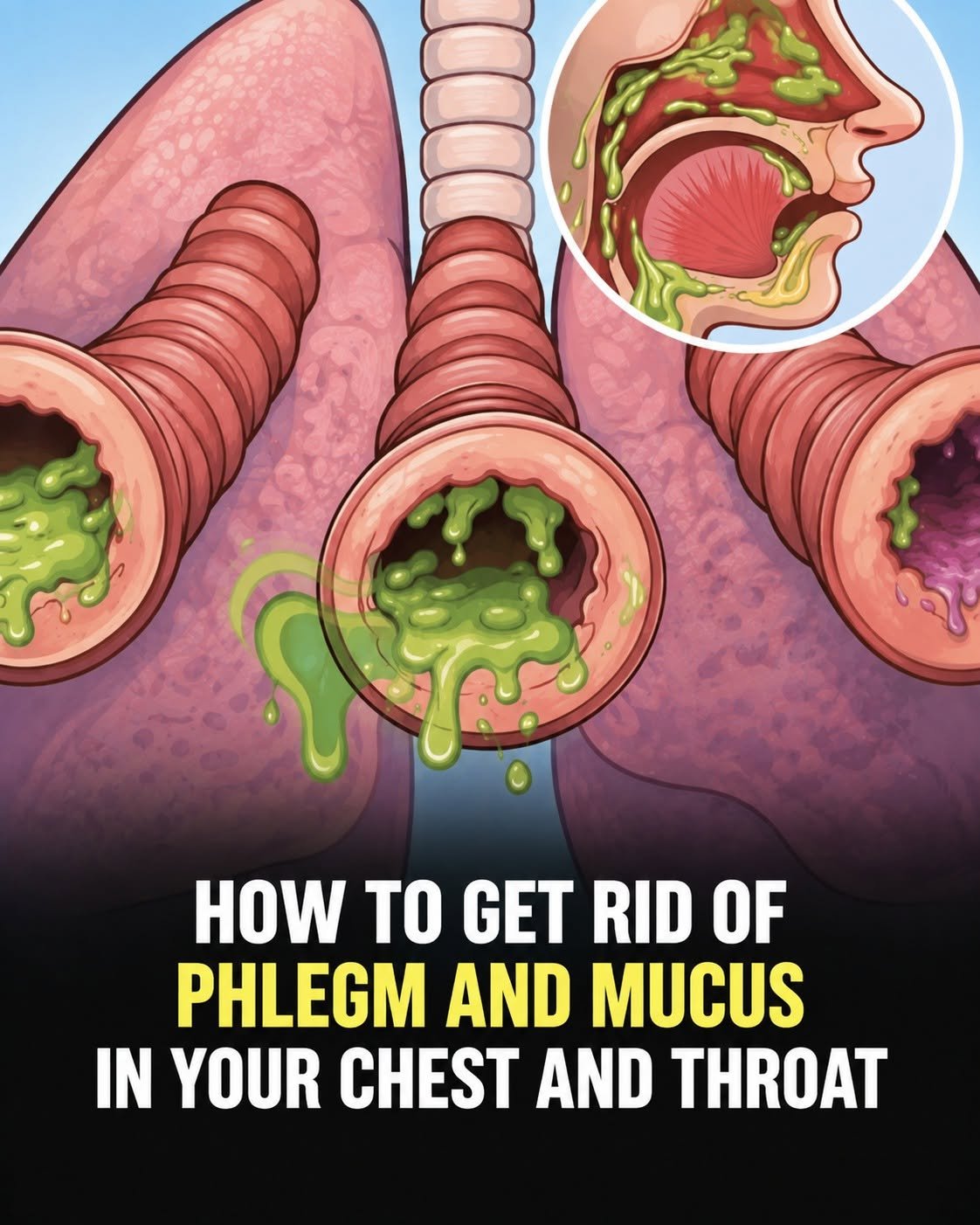
Digital media platforms frequently feature exaggerated anatomical illustrations depicting airways clogged with bright green phlegm paired with titles promising quick home remedies for persistent throat clearing. These viral posts rely on visceral visual hooks, simplified health advice, and open-ended curiosity claims to provoke physical discomfort, encourage self-treatment, and drive rapid social media engagement metrics rather than offering evidence-based medical education.
From an otolaryngology and pulmonology perspective, chronic throat clearing and excess mucus sensation are rarely caused by isolated airway blockages. Instead, persistent phlegm is commonly driven by post-nasal drip (associated with allergic rhinitis or sinusitis), laryngopharyngeal reflux (LPR)—where gastric acid and digestive enzymes irritate the throat lining—or chronic bronchitis and asthma. Frequent, forceful throat clearing actually exacerbates the sensation, creating a mechanical friction cycle that further inflames the vocal cords and stimulates mucosal glands to produce more mucus. Content-farming networks routinely exaggerate normal physiological defense mechanisms into dramatic, alarming anatomical blockages to maximize digital engagement metrics, click-through rates, and advertising revenue.
Managing mucus hypersecretion and chronic throat clearing effectively relies on addressing underlying etiologies through evidence-based interventions. Hydration thins mucosal secretions, warm saline nasal rinses clear post-nasal drainage, and addressing reflux through dietary adjustments or proton pump inhibitors reduces laryngeal irritation. Substituting gentle swallows or sips of water for hard throat clearing helps break the mechanical irritation cycle. If you experience persistent cough, shortness of breath, fever, hemoptysis (coughing up blood), or unexplained weight loss, consulting a licensed physician, otolaryngologist, or pulmonologist provides safe, accurate, and individualized medical care.
Leave a Reply