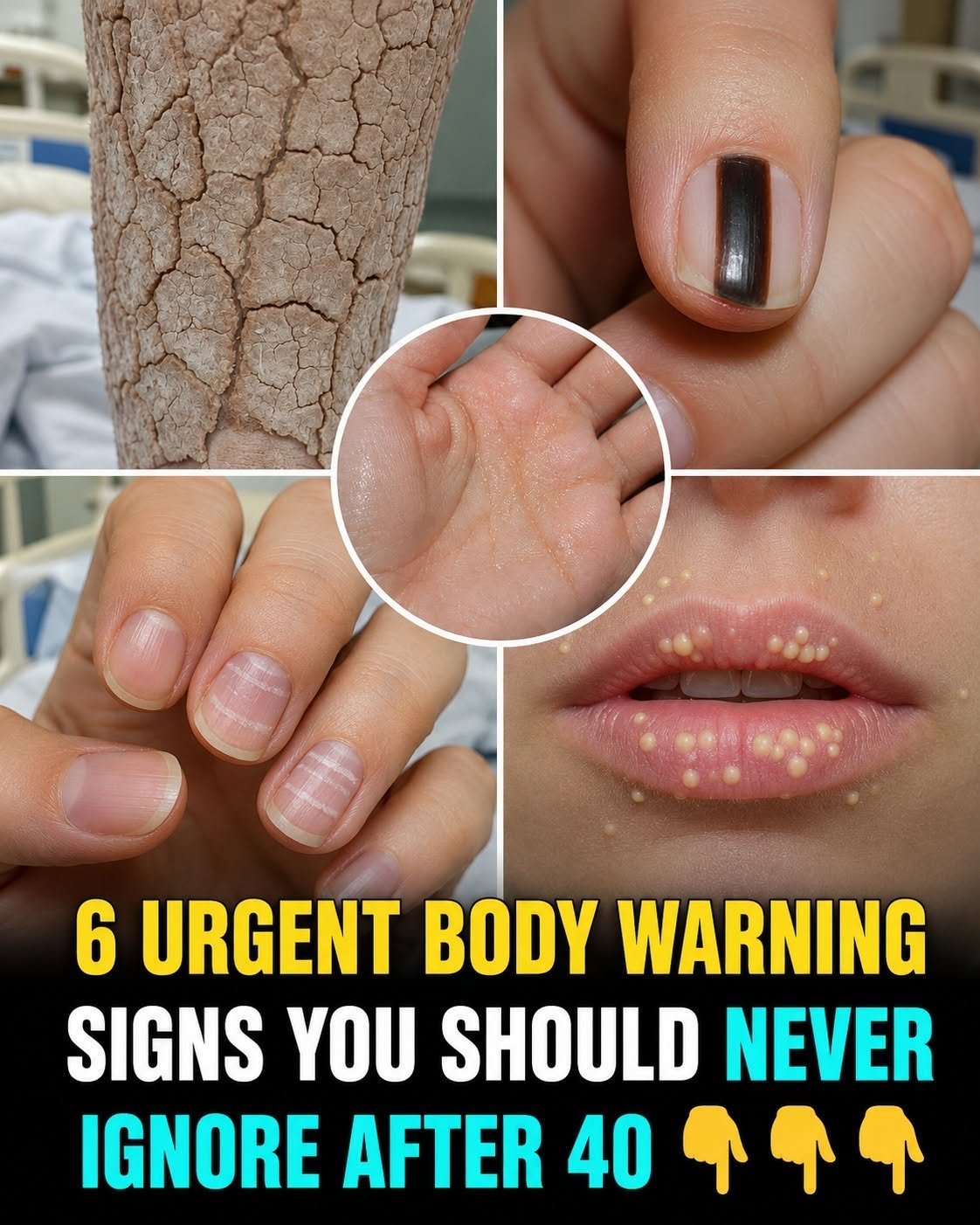
Digital media platforms frequently feature compiled graphics showing diverse dermatological anomalies—such as severe skin cracking, nail discoloration, horizontal lines, and facial papules—paired with urgent warnings about aging past 40. These viral posts rely on dramatic visual cues and broad age-based fear framing to provoke personal health anxieties, encourage self-diagnosis, and maximize social media engagement metrics rather than offering evidence-based medical education.
From a clinical dermatology and internal pathology perspective, the physical signs depicted represent a mix of benign traits, synthetic visual exaggerations, and legitimate medical conditions. For example, dark longitudinal bands under a nail (melanonychia) warrant evaluation to distinguish benign subungual nevus from subungual melanoma, while horizontal nail lines (Muerhrcke’s lines or Mees’ lines) can reflect systemic stress, hypoalbuminemia, or past acute illness. Tiny yellowish papules around the lips or face may indicate Fordyce spots, milia, or lipid deposits (xanthelasma) associated with hyperlipidemia. However, extreme features like hyper-cracked skin resembling dried earth are often digitally altered or represent rare dermatological extremes such as severe acquired ichthyosis. Content-farming networks routinely cluster disparate symptoms and sensationalize age milestones to craft high-engagement clickbait that inflames medical anxiety to drive web traffic.
Managing health after age 40 relies on structured primary care, routine wellness screenings, and monitoring persistent physical changes through accredited medical channels rather than engaging with online health alarmism. Clinical evaluation utilizes physical examinations, blood panels, and dermoscopy to determine whether cutaneous signs require therapeutic intervention. If you notice new, changing, or unusual skin and nail manifestations, consulting a licensed physician or dermatologist provides safe, accurate, and evidence-based medical care.
Leave a Reply