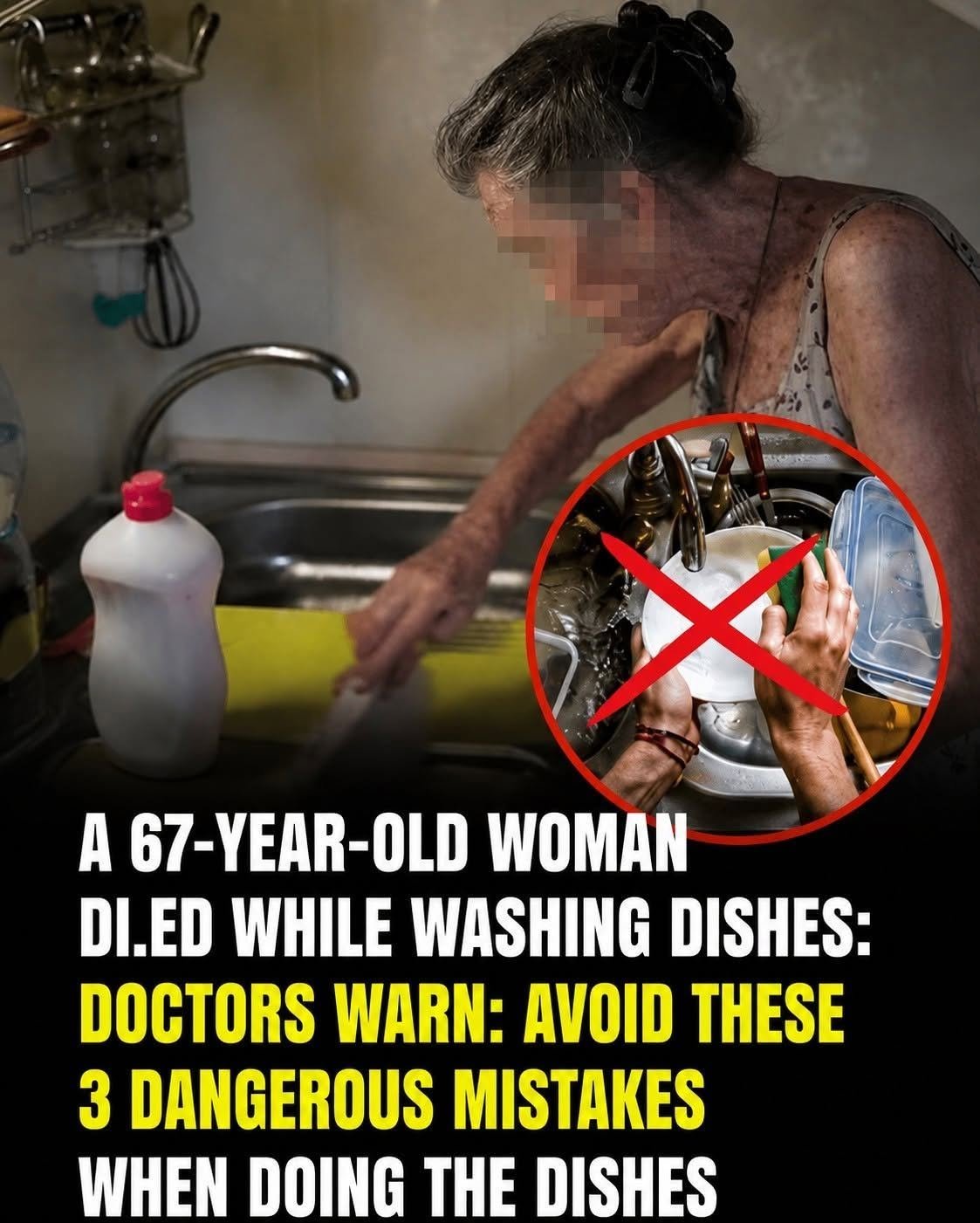
Digital media platforms frequently feature dramatic imagery depicting elderly individuals at kitchen sinks paired with sensationalized headlines—such as claiming a 67-year-old woman collapsed while washing dishes due to “3 dangerous mistakes.” These viral posts leverage evasive spelling, dramatic framing, and health fear tactics to provoke anxiety, incite curiosity, and drive rapid social media shares rather than providing evidence-based medical or domestic safety education.
From a clinical medicine and physiology perspective, routine domestic chores like dishwashing carry virtually no inherent hazard for healthy individuals. However, sudden syncope (fainting) or cardiovascular events during standing household tasks can occasionally occur due to underlying physiological factors such as orthostatic hypotension (a sudden drop in blood pressure upon standing), vasovagal responses, severe dehydration, or pre-existing cardiovascular conditions. Additionally, household chemical safety—such as improperly mixing bleach with ammonia or acid-based cleaners—can release toxic chloramine gases that cause acute respiratory distress. Nevertheless, content-farming networks systematically take rare medical events or basic domestic hygiene tips and exaggerate them into terrifying, fatal “dishwashing mistakes” to maximize digital engagement metrics, click-through rates, and advertising revenue.
Maintaining personal safety during daily domestic activities relies on sensible posture, proper ventilation when using household cleaning agents, staying adequately hydrated, and managing underlying cardiovascular health. Recognizing how sensationalized content exploits fear of routine activities helps maintain a grounded perspective on digital health media. If you experience lightheadedness, dizziness, shortness of breath, or chest discomfort while performing light household tasks, consulting a licensed physician or cardiovascular specialist provides safe, comprehensive evaluation and care.
Leave a Reply