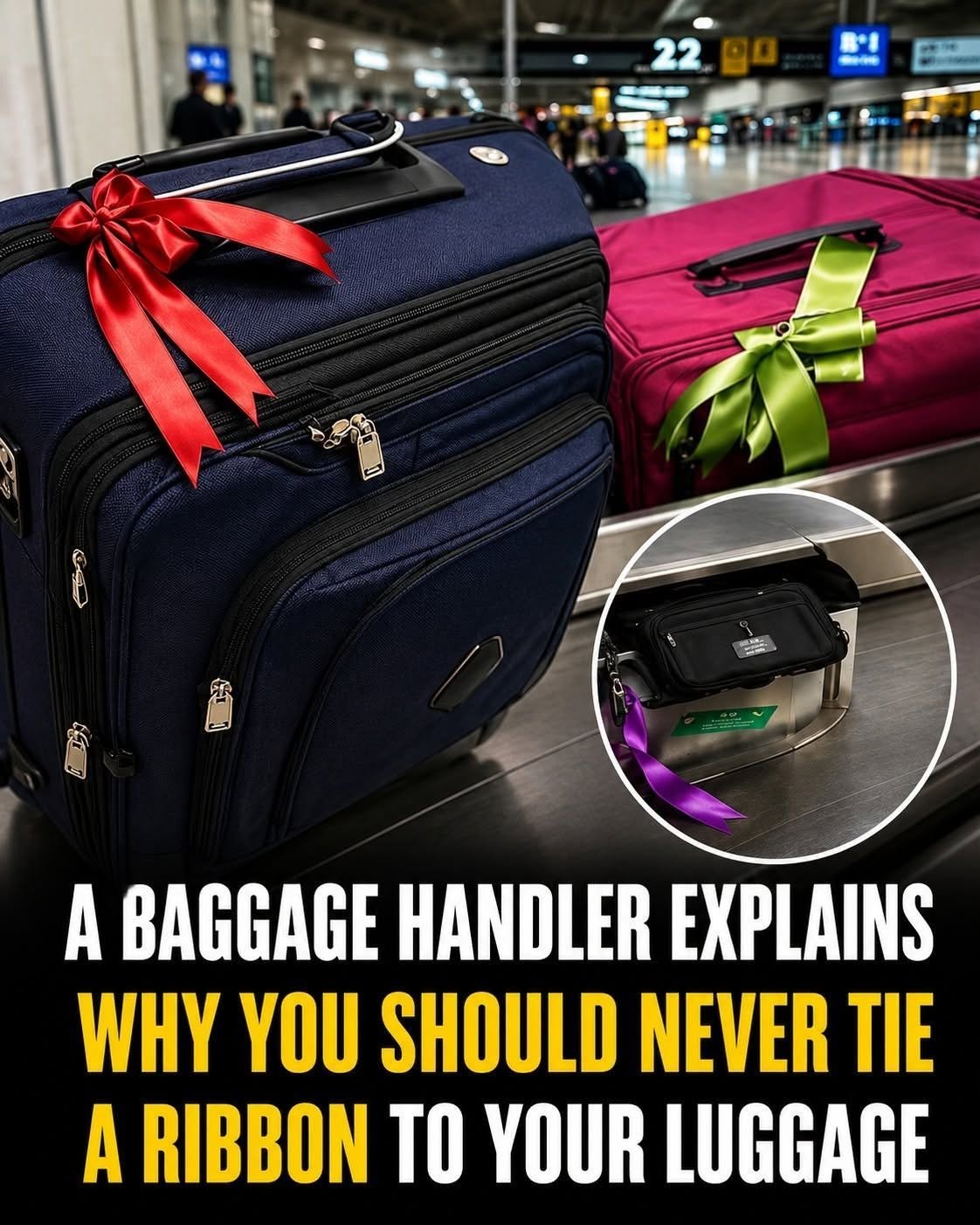
Digital media platforms frequently feature striking travel graphics and insider advice claims—such as warning travelers that tying colorful ribbons to their suitcases can cause severe luggage delays or loss. While many viral travel posts rely on sensationalized clickbait hooks, recommendations concerning luggage accessories are rooted in the operational mechanics of modern automated baggage handling systems (BHS) and airport logistics.
From an airport operations and logistics perspective, tying long, loose fabric ribbons, decorative bows, or extraneous straps to suitcase handles creates tangible mechanical risks during automated transit. Modern airports rely on high-speed conveyor belts, automated sorting scanners, and tilt-tray sorters equipped with optical barcode readers to direct checked luggage to designated flight chutes. Loose ribbons can catch on mechanical sensors, snag in conveyor belt rollers, or physically obstruct automated scanners from reading the official airline barcode tag, causing the sorting system to route the bag to manual processing areas for fault resolution. This mechanical friction or scan interference can lead to missed flight connections, delayed baggage delivery, or damaged luggage straps.
Ensuring smooth luggage transit without risking BHS delays involves adopting practical, low-profile identification methods. Rather than loose ribbons, travelers can utilize bright, distinctive luggage tags, unique handle wraps that lie flat, bold-colored luggage straps secured tightly around the bag’s frame, or subtle personal markings like permanently attached colored tape or distinctive luggage covers. Streamlined packing and secure accessory placement prevent mechanical snags while maintaining easy visual identification at airport baggage carousels. For specific airline size, weight, and accessory compliance policies, consulting official carrier guidelines provides reliable travel standards.
Leave a Reply