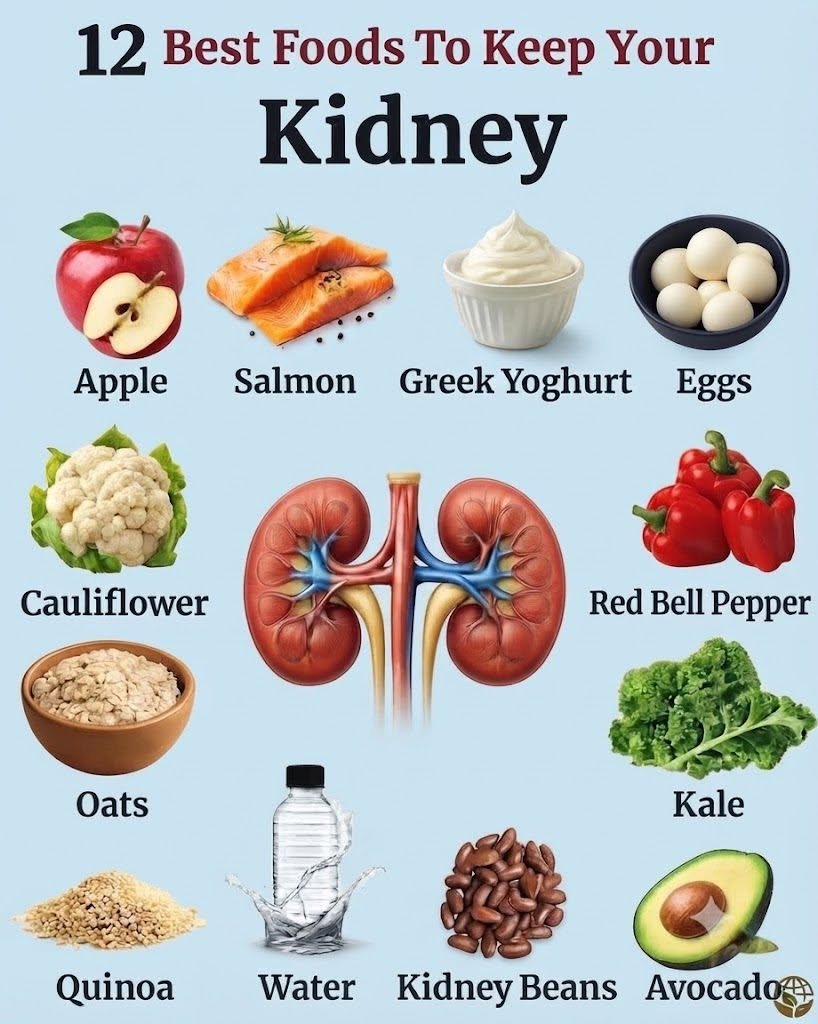
Digital media platforms frequently feature composite food infographics presenting standardized lists of “superfoods”—such as claiming that a specific set of 12 everyday foods universally maintains or cleanses kidney function. These viral graphics rely on generalized health claims, visually appealing layouts, and simplified dietary promises to provoke interest, encourage social sharing, and drive digital engagement rather than offering nuanced, evidence-based nephrological dietetics.
JPG+ 1
From a clinical nephrology and renal dietetics perspective, dietary recommendations for kidney health cannot be universally applied, as optimal nutrition varies drastically depending on an individual’s stage of kidney function. While items like apples, red bell peppers, cauliflower, and water are generally low in potassium, sodium, and phosphorus—making them suitable choices for individuals managing chronic kidney disease (CKD)—other items featured on generalized lists, such as avocados, salmon, Greek yogurt, and kidney beans, contain high levels of potassium, phosphorus, or protein. For individuals with advanced CKD or impaired filtration, unmonitored intake of high-potassium or high-phosphorus foods can lead to life-threatening complications like hyperkalemia or mineral bone disorder. Content-farming networks systematically flatten complex, highly individualized renal nutrition principles into blanket “kidney-cleansing” infographics to maximize reach, click-through rates, and advertising revenue.
JPG+ 3
Maintaining renal health requires tailored dietary planning grounded in comprehensive metabolic panel (CMP) blood tests, glomerular filtration rate (eGFR) monitoring, and individual serum electrolyte tracking. Nutritional strategies must adjust protein, sodium, potassium, and fluid intake dynamically based on whether a person is focusing on primary prevention, managing early-stage CKD, undergoing dialysis, or recovering from kidney stone formation. Preventive healthcare relies on precise diagnostic assessments rather than one-size-fits-all internet lists. If you have concerns about your renal function, chronic kidney disease, or specific dietary needs, consulting a licensed physician, board-certified nephrologist, or renal dietitian provides safe, personalized, and evidence-based care.
JPG+ 3
Leave a Reply