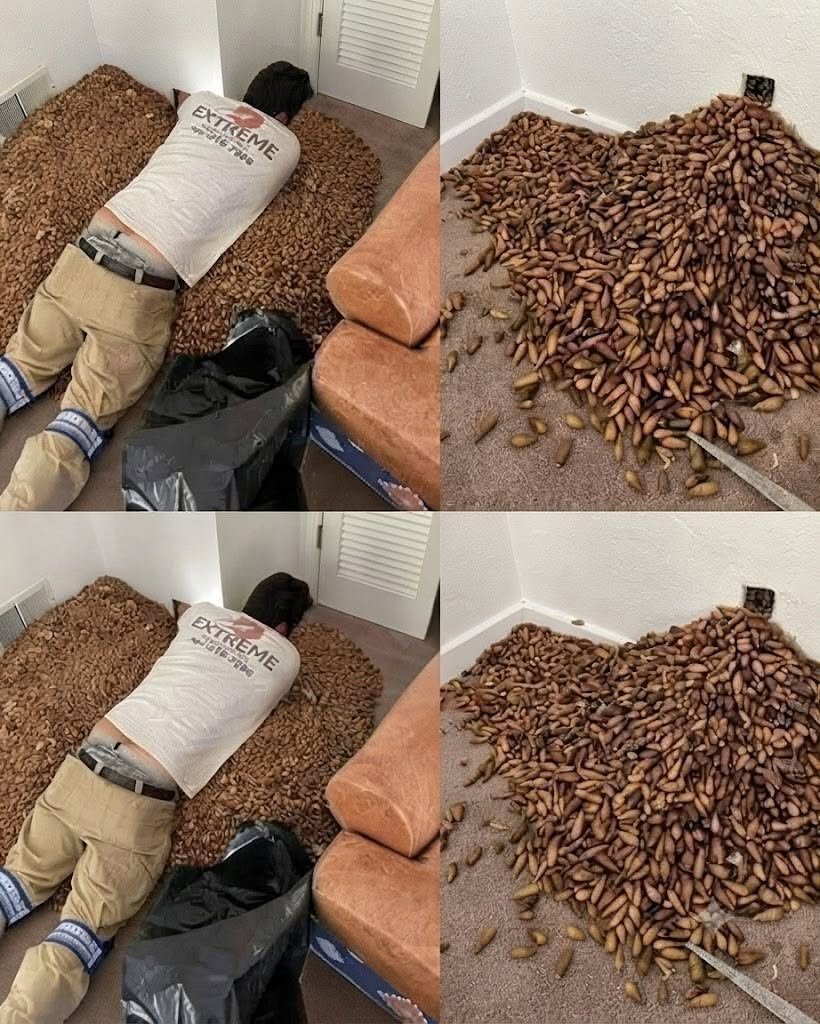
Digital media platforms frequently feature composite imagery depicting residential repair work paired with suspenseful, inquisitive narratives—such as a homeowner investigating a strange smell behind a wall only to discover a massive horde of acorns. These viral posts are specifically engineered to provoke intense curiosity, puzzle-solving engagement, and rapid online comment sharing rather than providing objective architectural or wildlife education.
From a structural entomology and wildlife biology perspective, the phenomenon depicted is a well-documented real-world occurrence involving urban wildlife, specifically acorn woodpeckers (Melanerpes formicivorus) or rodents such as squirrels and mice. These animals frequently exploit architectural vulnerabilities—such as chimney chases, soffits, or exterior wall voids—to cache winter food reserves, packing thousands of acorns or nuts into cavities. Over time, organic matter trapped within enclosed spaces can decompose, attract secondary pests, or emit musty odors, prompting homeowners to open drywall for investigation. Content-farming networks systematically package these unusual wildlife encounters into dramatic, cinematic clickbait hooks to maximize digital engagement metrics and ad revenue.
Resolving wildlife intrusions and maintaining structural integrity involves conducting professional home inspections, sealing exterior entry points with rodent-resistant materials, clearing nearby acorn-dropping trees, and relying on humane pest management experts rather than sensationalized internet mysteries. Property maintenance should always be handled through systematic building diagnostics. If you experience persistent structural odors, unexplained noises in your walls, or suspected pest infestations, consulting a licensed pest control professional or wildlife exclusion specialist ensures safe and effective resolution.
Leave a Reply