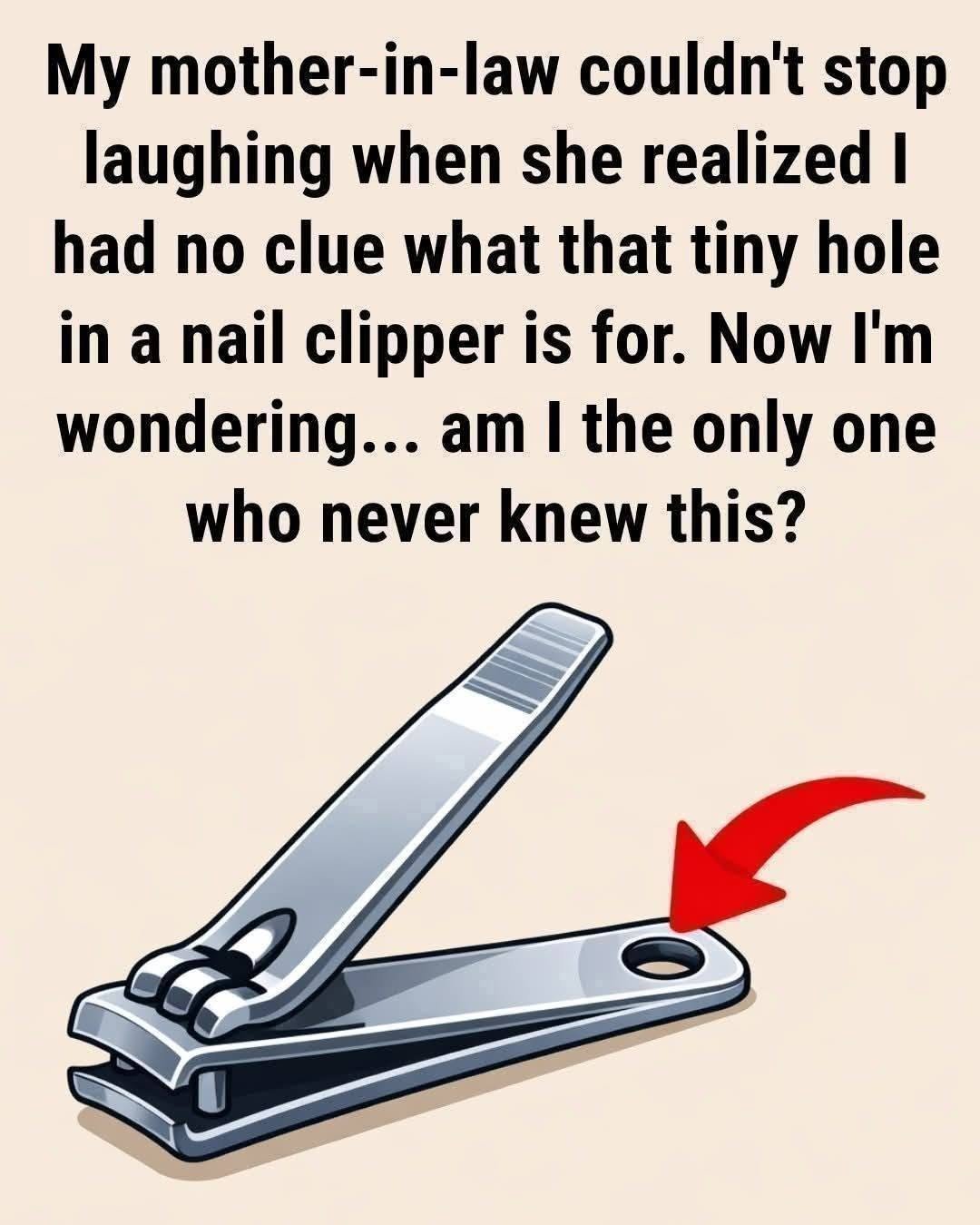
Digital media platforms frequently feature simple diagrams or illustrations of everyday household tools paired with exaggerated, inquisitive headlines—such as claiming that the small round hole at the base of a standard nail clipper serves a hidden, mind-blowing purpose. These viral posts rely on relatable domestic scenarios, fake family anecdotes, and red arrows to provoke curiosity, self-doubt, and rapid online comment sharing rather than presenting objective manufacturing facts.
From an industrial design and mechanical engineering perspective, the small hole located at the back end of standard metal nail clippers is primarily designed for attachment, portability, and manufacturing efficiency. It allows the tool to be threaded onto a keychain, lanyard, or hygiene kit ring so that users do not misplace it. Additionally, during the manufacturing and electroplating processes, these holes enable mass-production hooks to suspend the metal components while applying anti-corrosive coatings or chrome finishes. Content-farming networks routinely frame basic design utilities as “shocking secrets” or “hidden features” to trick users into expanding comment sections to share their own mundane theories.
Understanding everyday object engineering involves recognizing functional, straightforward utility rather than searching for viral mysteries in basic household items. Modern consumer products are mass-produced with cost-effective, practical features aimed at convenience and manufacturing ease. Recognizing how content creators sensationalize ordinary tools helps maintain a critical perspective against digital clickbait strategies designed solely for engagement metrics.
Leave a Reply