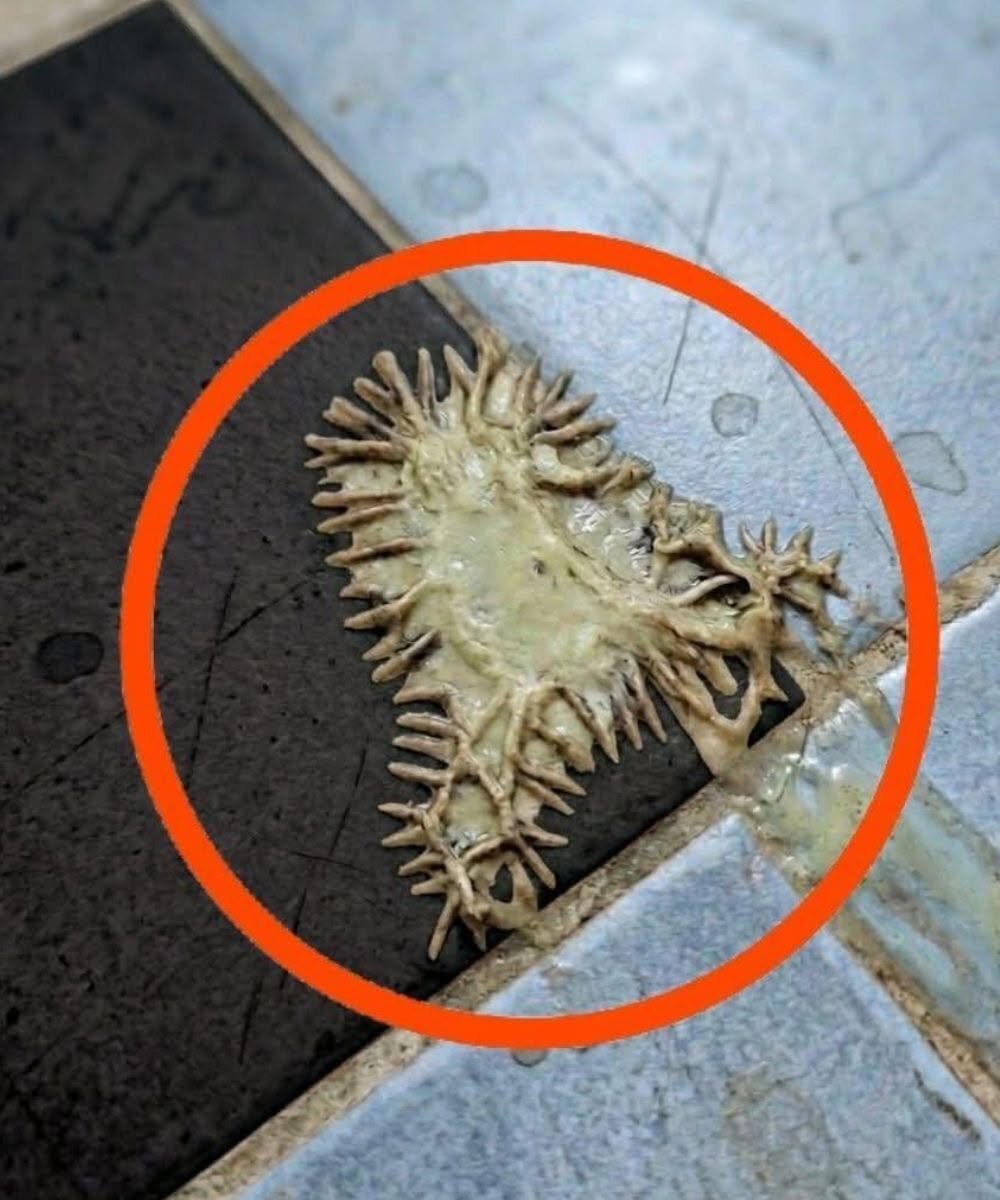
Digital media platforms frequently feature sensationalized imagery and clickbait warnings claiming that strange organic growths found in domestic spaces—such as bathroom tiles—are alien organisms, hazardous toxins, or signs of severe structural contamination. These viral posts are specifically engineered to provoke shock, disgust, and rapid online sharing rather than providing accurate, evidence-based microbiological education.
From a microbiology and mycology perspective, the organic-looking growth often associated with these viral images is a slime mold (such as Physarum polycephalum) or a fungal biofilm. Slime molds are single-celled eukaryotic organisms that aggregate into macroscopic, creeping masses when searching for nutrients like bacteria, yeast, and decaying organic matter. They thrive in dark, humid environments with poor ventilation, such as damp bathroom floors, shower corners, or grout lines where moisture accumulates. While they can look unsettling, slime molds are completely non-toxic to humans, do not bite or transmit diseases, and simply feed on microscopic organic debris.
Maintaining a clean and healthy indoor environment involves reducing excess humidity with bathroom exhaust fans or dehumidifiers, cleaning surfaces regularly with standard household disinfectants or a mild bleach solution, keeping grout sealed, and relying on proper home maintenance rather than alarming internet generalizations. Personalized household management should always reflect practical cleanliness and environmental control. If you encounter persistent mold or biological growth that resists standard cleaning, consulting a professional cleaning service or building inspector provides safe, evidence-based direction.
Leave a Reply