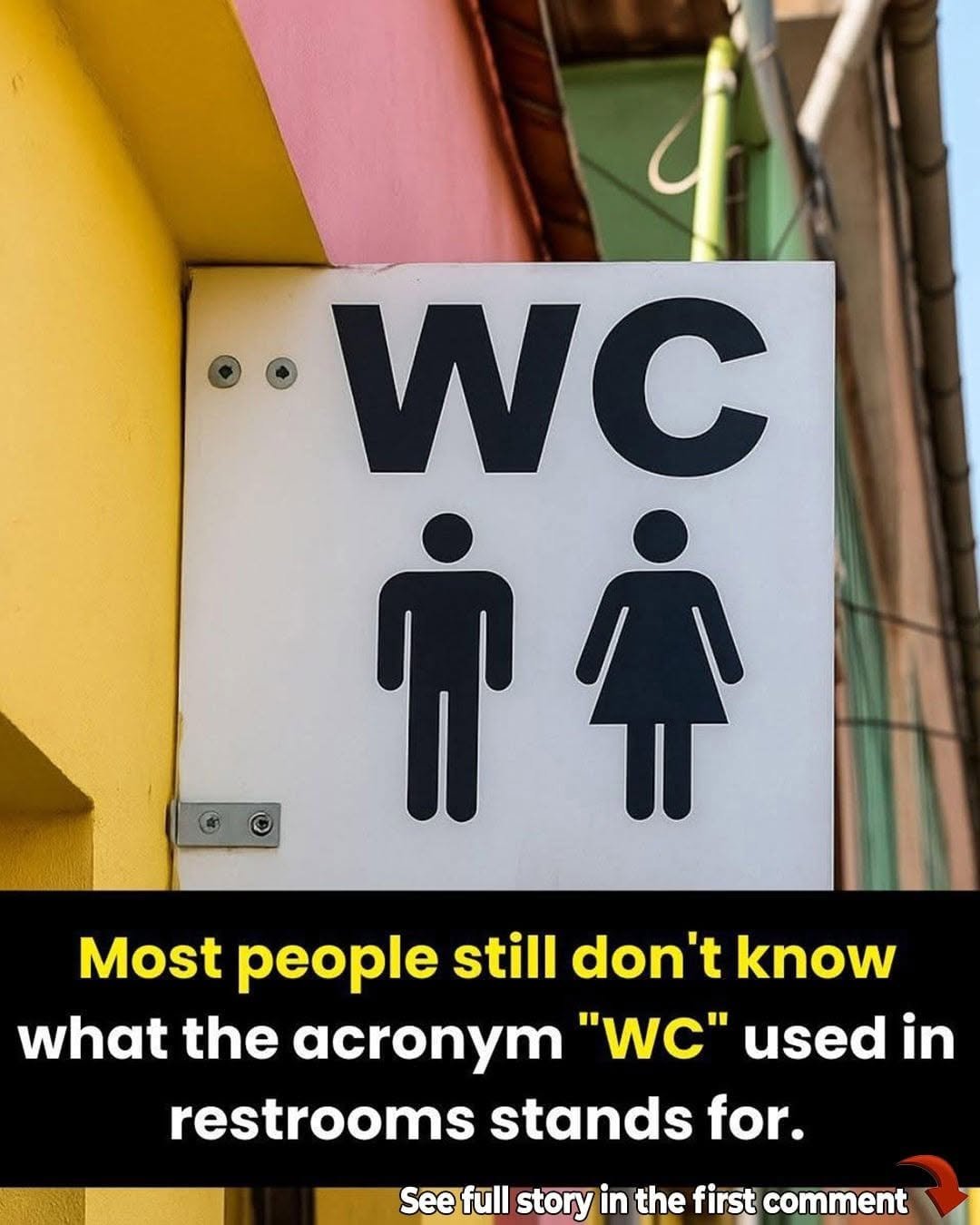
Digital media platforms frequently feature mismatched image-and-text graphics—such as pairing an alarmist headline about household insects with a picture of a “WC” restroom sign—designed to provoke curiosity, confusion, and rapid online comment generation. These viral posts are specifically engineered to exploit algorithmic misdirection and drive traffic toward “link in comment” ad networks rather than providing factual historical or linguistic education.
From a linguistic and architectural history perspective, the acronym “WC” stands for “Water Closet.” The term originated in late 19th-century Britain during the advent of modern indoor plumbing, differentiating rooms equipped with a flush toilet (a “water closet”) from traditional outdoor privies, earth closets, or chamber pots. Over time, “WC” became an international standard abbreviation used across signage worldwide. Content mills routinely pair ordinary etymological trivia with mismatched warning headlines to trigger cognitive friction, prompting users to click through or comment to point out the image discrepancy, which artificially inflates post engagement.
Maintaining effective digital literacy involves recognizing visual mismatch tactics, ignoring speculative click-bait comments, and relying on reputable linguistic dictionaries or historical archives for etymological facts. Personalized information consumption is most constructive when grounded in clear, factual inquiry rather than algorithmic traps. If you find yourself frequently intrigued by online trivia teasers, consulting verified educational references provides a reliable and engaging way to learn.
Leave a Reply