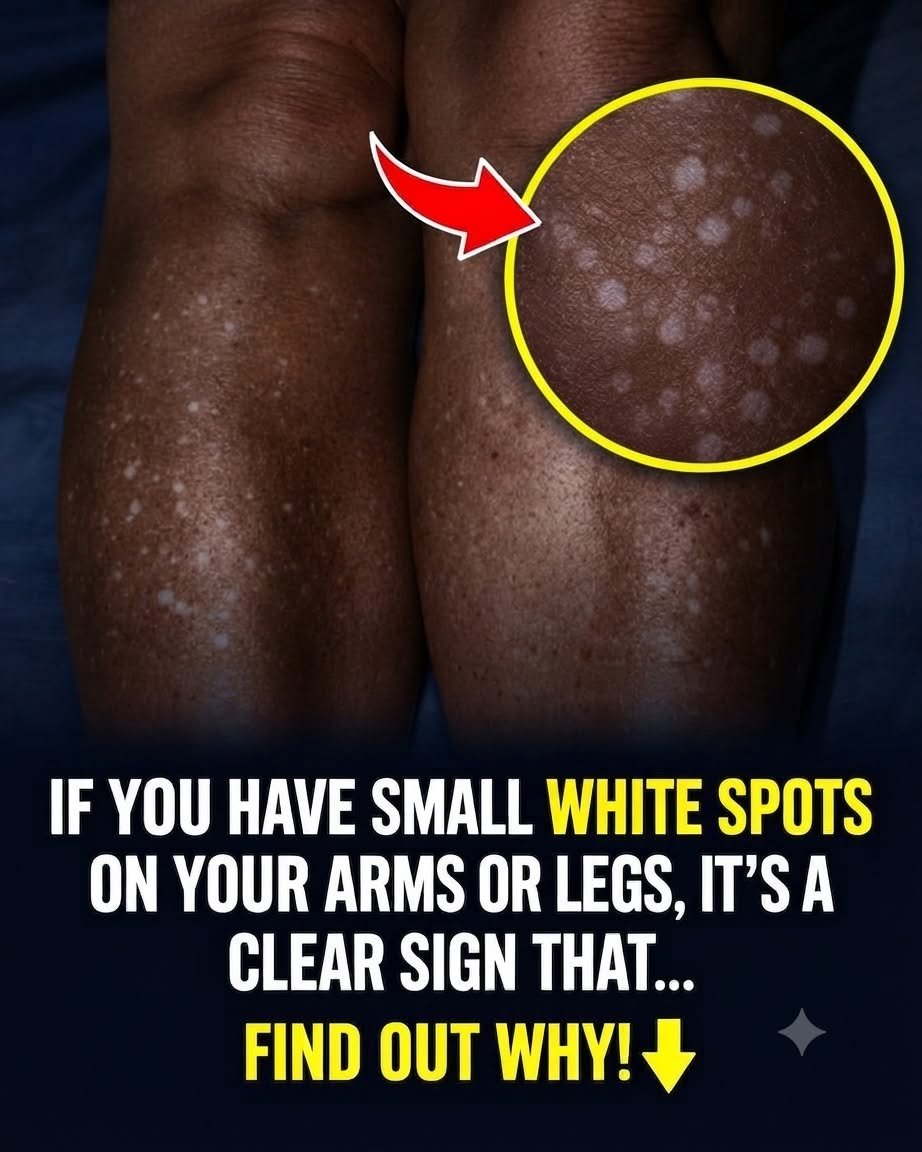
Digital media platforms frequently feature sensationalized medical graphics and clickbait warnings claiming that small, asymptomatic white spots on the arms or legs act as an immediate signal of a severe, underlying systemic disease. These viral posts are specifically designed to provoke skin anxiety, fear, and rapid online sharing rather than providing accurate, evidence-based dermatological or clinical education.
From a clinical and dermatological perspective, small, smooth white macules on sun-exposed extremities are most commonly identified as Idiopathic Guttate Hypomelanosis (IGH). IGH is a completely benign, non-contagious skin condition primarily related to long-term cumulative sun exposure and natural skin aging, characterized by a localized loss of skin pigment (melanin). While other dermatological conditions such as tinea versicolor, vitiligo, or post-inflammatory hypopigmentation can also cause light spots, framing benign age- and sun-related changes around alarming clickbait warnings oversimplifies complex skin pathology to maximize digital engagement metrics.
Maintaining long-term skin health involves practicing consistent sun protection—such as using broad-spectrum sunscreen and wearing protective clothing—moisturizing regularly, avoiding excessive UV exposure, and relying on professional clinical guidance rather than alarming internet generalizations. Personalized dermatological care should always reflect a direct visual and clinical evaluation by a specialist. If you notice changing skin lesions, spreading macules, itching, or persistent dermatological concerns, consulting a licensed physician or board-certified dermatologist provides safe, evidence-based direction.
Leave a Reply