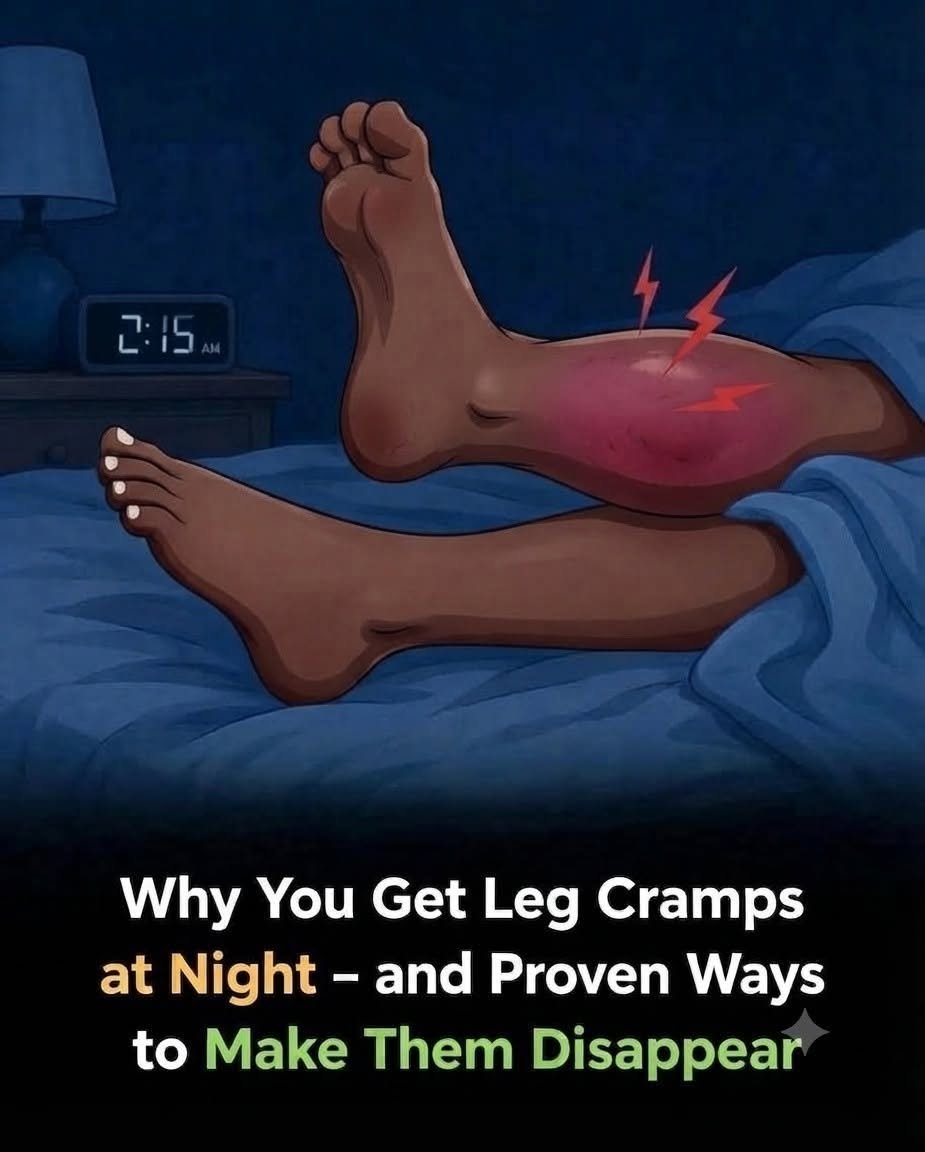
Digital media platforms frequently feature sensationalized medical graphics and dramatic clickbait warnings framing ordinary nighttime muscle spasms around severe, mysterious pathologies. These viral posts are specifically designed to provoke health anxiety, curiosity, and rapid online sharing rather than providing accurate, evidence-based clinical or kinesiological education.
From a clinical and physiological perspective, nocturnal leg cramps—most commonly affecting the calf muscles—involve sudden, involuntary muscle contractions that can cause sharp pain and temporarily limit movement. While their exact etiology remains multifactorial, they are frequently associated with muscle fatigue, prolonged standing, dehydration, electrolyte imbalances (such as low magnesium, potassium, or calcium), or ordinary changes in neuromuscular function during sleep. Sensationalized online narratives routinely oversimplify these common muscular events to manufacture urgency and maximize engagement metrics.
Managing night cramps effectively involves staying well-hydrated, maintaining regular physical activity and stretching routines, ensuring balanced electrolyte intake, and relying on professional clinical guidance rather than alarming internet generalizations. Personalized physical care should always reflect individual health habits and clinical context. If you experience frequent, severe, or debilitating muscle cramps, consulting a licensed physician or physical therapist provides safe, evidence-based direction.
Leave a Reply