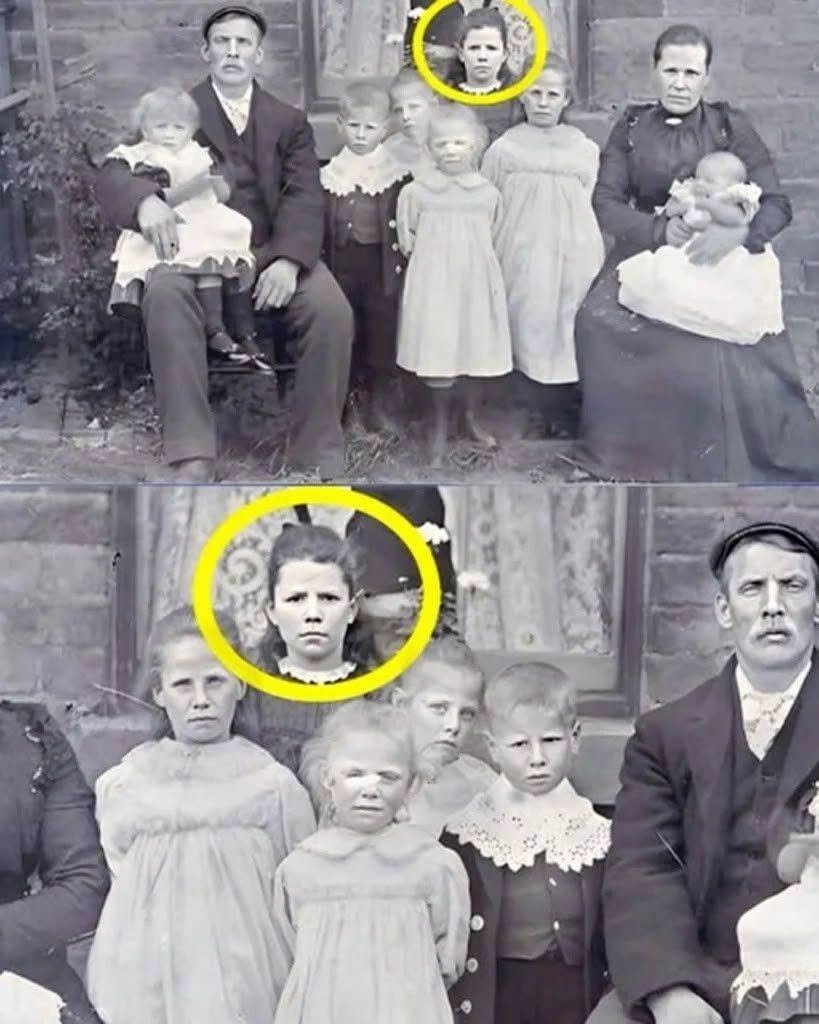
Digital media platforms frequently feature historical or vintage family photographs paired with sensationalized, dramatic captions claiming that an image reveals a hidden secret, a ghost, or a historical anomaly spanning two centuries. These viral posts are specifically designed to exploit curiosity, leverage historical mystery tropes, and drive rapid social media engagement rather than providing accurate, evidence-based historical or photographic education.
From a historical and technical photography perspective, the timeline of these viral claims frequently falls apart under basic scrutiny. The first permanent photographic image (heliography) was successfully captured around 1826 by Nicéphore Niépce, and practical photography (such as the daguerreotype) did not emerge for public use until 1839. Furthermore, the clothing, hairstyles, and print quality of images like this typically point toward late 19th-century or early 20th-century family portraiture rather than the 1820s. Clickbait marketers routinely fabricate dramatic backstories or invent impossible dates to turn ordinary historical snapshots into viral internet mysteries.
Maintaining healthy digital literacy involves checking the factual timeline of archival media, looking past sensationalized tabloid hooks, and relying on reputable historical archives or museum sources for photographic analysis. Personalized information consumption is most rewarding when grounded in verified historical facts rather than manufactured internet lore. If you find yourself captivated or confused by viral historical claims, exploring authentic historical documentation provides a fascinating, grounded alternative to online sensationalism.
Leave a Reply