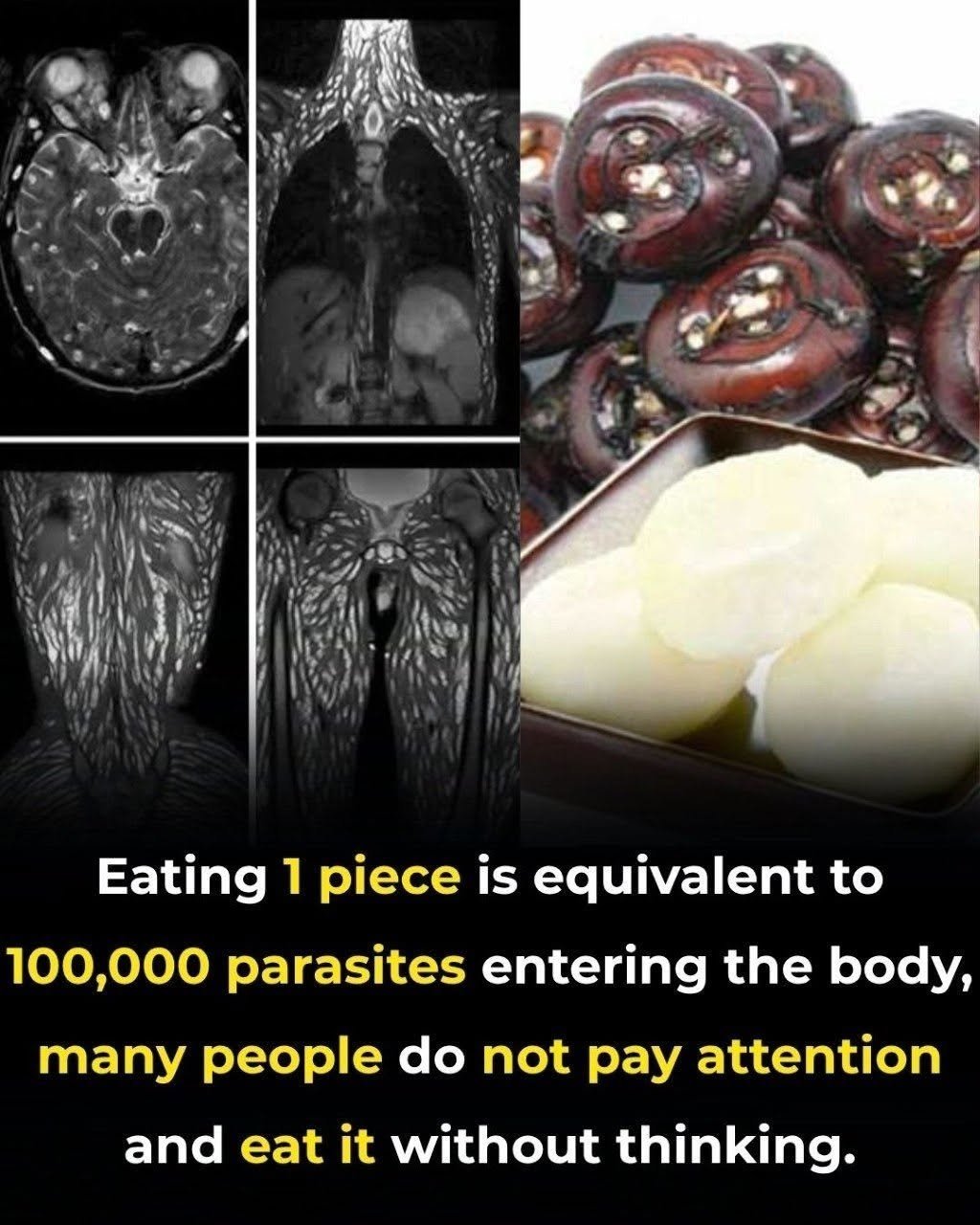
Digital media platforms frequently feature sensationalized medical graphics and alarming clickbait warnings claiming that consuming common produce items—such as water chestnuts—instantly introduces hundreds of thousands of parasites into the body. These viral posts are specifically designed to provoke intense disgust, health anxiety, and rapid online sharing rather than providing accurate, evidence-based parasitological or clinical education.
From a clinical and parasitological perspective, aquatic plants grown in shallow water can theoretically harbor metacercariae of foodborne trematodes, such as the giant intestinal fluke (Fasciolopsis buski), if harvested from contaminated water sources. However, sensationalized claims stating that a single bite automatically transmits a precise, astronomical count of 100,000 parasites are a gross exaggeration manufactured to maximize engagement. Proper washing, peeling, and thorough cooking completely eliminate any potential risk of foodborne parasites, making safe culinary consumption entirely risk-free.
Maintaining long-term food safety involves practicing proper hygiene, thoroughly washing and cooking produce, and relying on professional public health guidance rather than alarming internet generalizations. Personalized health decisions should always reflect standard food safety practices and professional medical advice. If you ever suspect a foodborne infection or experience unusual gastrointestinal symptoms, consulting a licensed physician or gastroenterologist provides safe, evidence-based direction.
Leave a Reply