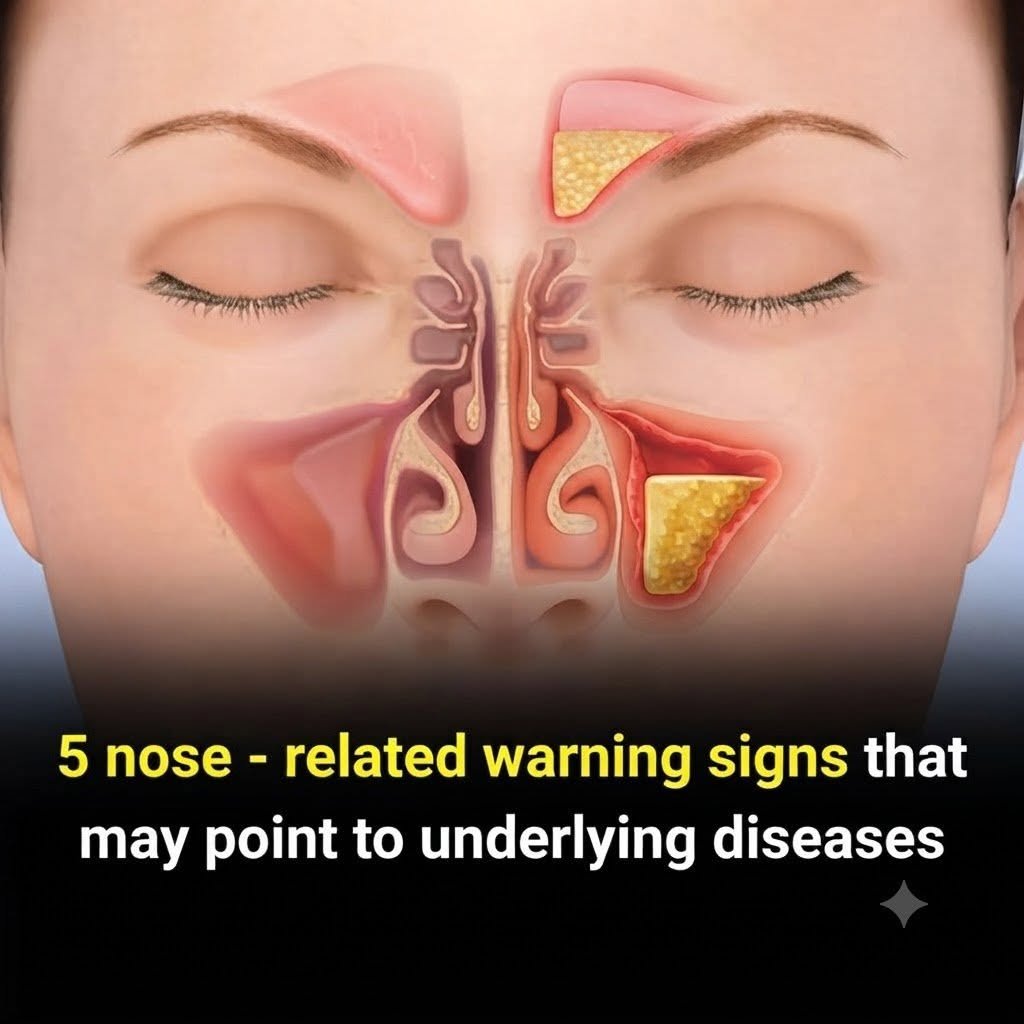
Your nose can sometimes provide clues about your overall health, although a symptom alone rarely identifies a specific disease. Five changes worth paying attention to are 1) persistent nasal congestion, 2) frequent nosebleeds, 3) reduced or lost sense of smell, 4) persistent nasal discharge, and 5) recurring pain or pressure around the nose and face. Congestion may occur with allergies, viral infections, nasal polyps, or structural problems, while changes in smell can accompany respiratory infections, chronic sinus conditions, or other medical issues. Frequent nosebleeds are commonly related to dry air, irritation, nose picking, or certain medications, but recurrent or unexplained bleeding deserves evaluation. (mayoclinic.org)
The duration and pattern of these symptoms matter. A blocked nose during a short-term cold is usually very different from congestion that persists for weeks. Likewise, occasional clear nasal discharge can be normal, while persistent discharge accompanied by facial pressure, fever, or worsening symptoms may suggest sinus inflammation or infection. A reduced sense of smell can also have many causes, including allergies, infections, nasal polyps, certain medications, and neurological conditions. (nidcd.nih.gov) Facial pain or pressure around the forehead, cheeks, or nose may occur with sinus problems, but similar discomfort can also be caused by migraine or other conditions. This is why an online symptom list should not be used to diagnose the underlying cause.
If nasal symptoms are persistent, severe, repeatedly returning, or interfering with breathing, sleep, smell, or daily activities, consider speaking with a healthcare professional. Seek urgent medical attention for heavy nosebleeding that does not stop with appropriate first aid, significant difficulty breathing, severe facial swelling, or other serious symptoms. Keeping track of when symptoms began and whether they are associated with allergies, infections, medications, or environmental triggers can help during an evaluation. Disclaimer: This article is for general educational and informational purposes only and does not constitute medical diagnosis, treatment, or personalized health advice. These five symptoms can have many harmless and treatable causes and do not automatically indicate an underlying serious condition. Online health claims may be exaggerated, misleading, or unauthenticated, so always verify important information through reliable medical sources and consult a qualified healthcare professional for persistent or concerning symptoms.
Leave a Reply