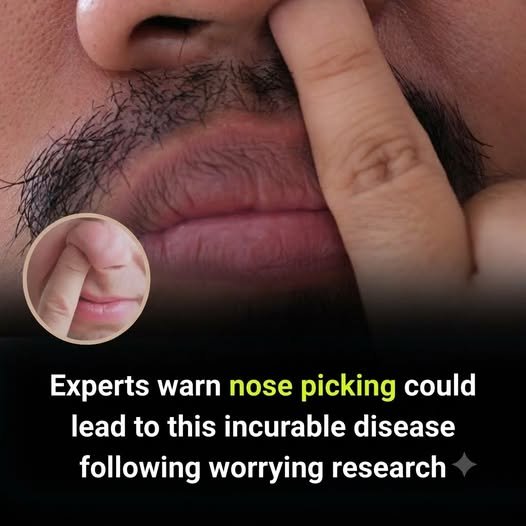
The image features a close-up photo of a person picking their nose alongside a dramatic headline: “Experts warn nose picking could lead to this incurable disease following worrying research”.
While the headline relies on sensationalized framing to drive curiosity, it refers to actual scientific studies investigating the hypothesis that nasal tissue damage could facilitate pathogen entry into the brain, potentially contributing to Alzheimer’s disease or late-onset dementia.
What the Science Actually Shows
- The Olfactory Pathway Hypothesis:
- The olfactory nerve provides a relatively direct pathway from the nasal cavity into the brain’s olfactory bulb, bypassing the protective blood-brain barrier.
- Recent animal and lab studies (such as research published by Griffith University involving Chlamydia pneumoniae bacteria) suggest that damaging the nasal lining (epithelium) via frequent picking or hair pulling makes it easier for pathogens to travel up the olfactory nerve.
- Pathogens and Beta-Amyloid Accumulation:
- Once inside the brain, certain bacteria or viruses can trigger an immune response.
- In mouse models, researchers observed that the brain responds to these bacterial invasions by depositing beta-amyloid plaques—a classic hallmark associated with Alzheimer’s disease.
- Correlation vs. Causation:
- Nose picking does not directly cause Alzheimer’s disease. Alzheimer’s is a complex, multifactorial neurodegenerative condition driven by genetics, lifestyle, age, cardiovascular health, and environmental factors.
- Current research shows a potential mechanical risk factor in lab models, not a proven, direct cause-and-effect relationship in everyday human life.
Deconstructing Medical Clickbait Tactics
This graphic follows a familiar template used by health-content outlets to maximize social media reach:
- The Curiosity Gap: Replacing the name of the condition with “this incurable disease” forces readers to click an external link or check the comment section to find out what disease is being referred to.
- Sensationalized Fear Framing: Words like “worrying research” and “experts warn” frame preliminary lab hypotheses as an immediate, looming health crisis.
- Visually Jarring Imagery: Macro imagery of a taboo habit (rhinotillexis) creates a visceral reaction, causing scrollers to pause mid-feed.
- Comment-Driven Virality: Users commenting to express disgust, tag friends, or debate the claim signals high engagement to platform algorithms, boosting the post to a wider audience.
Leave a Reply