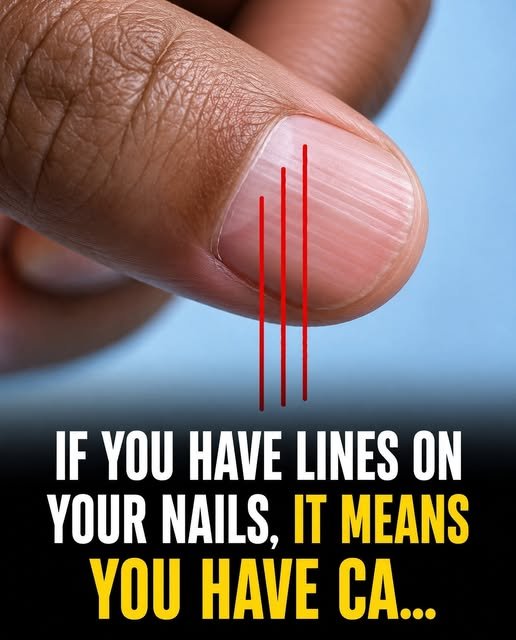
Nail lines and ridges can become more noticeable with age, and for many people over 40, they may simply reflect normal changes in the nail. As nails grow, the production of new nail cells can gradually slow, sometimes creating vertical ridges that run from the cuticle toward the tip. These ridges are often harmless, particularly when they appear gradually and affect several nails in a similar way. Nails can also become drier or more brittle over time, making their texture easier to notice. Everyday factors such as repeated hand washing, exposure to cleaning products, minor trauma, or changes in nail care can also influence the appearance of the nail surface. Because nails are visible and easy to monitor, changes can understandably attract attention, but a line or ridge alone does not automatically indicate a serious health problem.
However, not every nail change should be ignored. Horizontal grooves, sometimes called Beau’s lines, can occur when nail growth is temporarily interrupted. They may develop after certain illnesses, significant physical stress, injury, or other underlying conditions. A dark or unusual streak under a single nail can have many possible causes, including trauma or pigmentation, but some changes require professional assessment to rule out more serious conditions. Similarly, nails that suddenly change color, become unusually thick or distorted, separate from the nail bed, or develop persistent pain or swelling deserve attention. The important point is that nail appearance cannot reliably diagnose a medical condition by itself. If a new or unusual line appears suddenly, continues to change, affects only one nail, or is accompanied by other symptoms, consulting a qualified healthcare professional or dermatologist is a sensible step.
For adults over 40, the best approach is to monitor nail health without unnecessary alarm. Keeping nails clean and moisturized, protecting hands from harsh chemicals, avoiding aggressive manicures, and maintaining a balanced diet can support normal nail growth. It is also useful to compare new changes with older photographs if you regularly take pictures of your hands, as gradual differences can otherwise be difficult to remember. If you notice a persistent dark streak, significant change in nail structure, unexplained pain, or a rapidly developing abnormality, professional evaluation is more appropriate than relying on online explanations or self-diagnosis. Disclaimer: This article is intended for general educational and informational purposes only. Nail changes can have many different causes, and the information provided here should not be considered a diagnosis or medical advice. Some information may be general or unauthenticated and should be verified through reliable medical sources. If you are concerned about a new, persistent, or changing nail abnormality, consult a qualified healthcare professional for an appropriate evaluation.
Leave a Reply