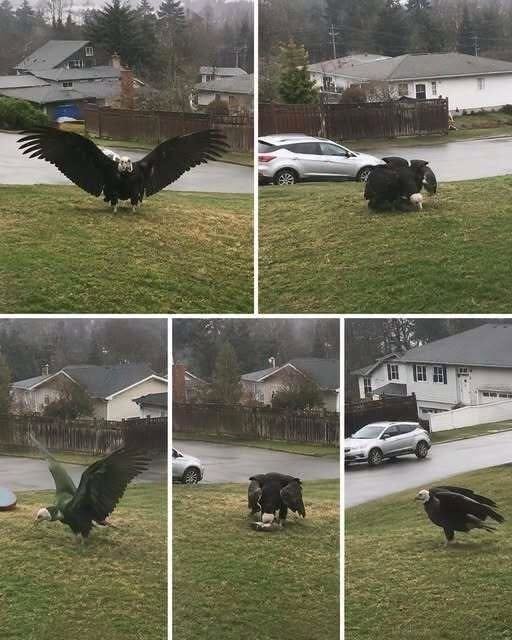
The photo grid shows a massive bird with dark plumage, a white neck ruff, and a broad wingspan landing on a residential lawn, often paired with viral captions like “Giant Eagle captured in…”.
This bird is not an eagle. It is an Andean Condor (Vultur gryphus), one of the largest flying birds in the world, recognizable by its distinct bald head, white collar, and massive wingspan that can reach over 10 feet (3 meters).
Wildlife Context & Misidentification
- Species: The Andean Condor is a South American vulture species native to the Andes mountain range. It is primarily a scavenger (feeding on carrion) rather than a raptor/hunter like an eagle.
- Why It Appears in Residential Areas: In regions bordering the Andes (such as parts of Chile, Argentina, or Peru), young or habituated condors occasionally land near human settlements or suburban hillsides searching for food scraps, animal carcasses, or water.
- Size Confusion: Because of its enormous size and dark color, onlookers who are unfamiliar with South American wildlife frequently misidentify condors as “giant eagles” or mythical birds.
Deconstructing “Motive Mystery” Clickbait
Sensationalized posts sharing this series of images follow a standard social media viral formula:
- Sensationalized Framing: Calling a scavenger a “Giant Eagle” or trimming the location text (“Giant Eagle captured in Bro…”) creates instant drama and mystery.
- Forced Curiosity: Leaving the caption truncated or vague forces scrollers to open the comments or click linked pages to find out where the photo was taken or if the “giant monster” is real.
- Engagement Inflation: Birdwatchers, locals, and wildlife enthusiasts flood the comment section to correct the species name, driving up algorithmically rewarded interaction metrics.
Leave a Reply