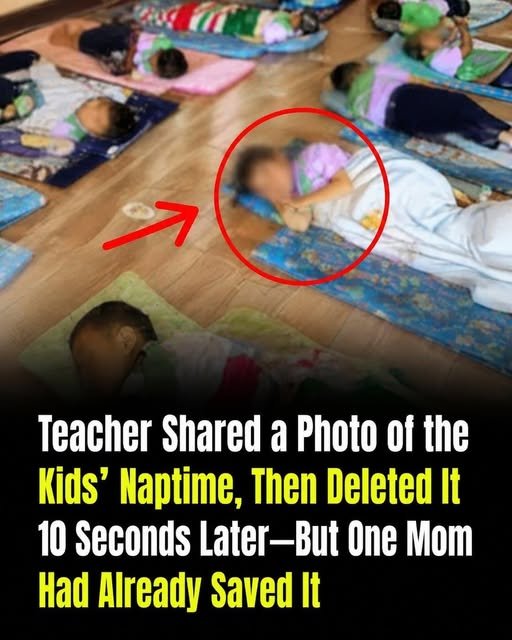
The graphic shows a classroom filled with sleeping young children on nap mats, with a bright red circle and arrow drawn around one blurred child, accompanied by the sensationalized headline: “Teacher Shared a Photo of the Kids’ Naptime, Then Deleted It 10 Seconds Later—But One Mom Had Already Saved It”.
This image is a widely circulated example of fictional story-clickbait created to farm link clicks, gather personal data, and generate ad revenue by fabricating dramatic narratives around ordinary stock photography.
Deconstructing the Clickbait Anatomy
- Generic Stock Photography: The photo simply depicts a completely normal daycare or pre-school naptime scene. The red circle and arrow are artificially added to imply a hidden detail or scandal that does not exist in the original photograph.
- Artificial Urgency & Scandal: Headlines using tropes like “deleted it 10 seconds later” or “one mom had already saved it” create a high-stakes dramatic narrative designed to exploit parental protective instincts and human curiosity.
- The Infinite Loop Link Scheme: Clicking the link associated with these posts typically leads to multi-page, ad-cluttered websites that stretch a completely fabricated story across 20–30 slides to maximize ad impressions. The resolution of the story rarely matches the dramatic headline, often ending in a trivial misunderstanding or a completely unrelated resolution.
Risks of Viral Engagement-Farming Posts
- Malicious Link Redirection: Pinned comments on such posts often route users through tracking links, ad-network redirections, or low-quality websites containing pop-up scams or malware.
- Data Harvesting: These websites frequently prompt users to accept intrusive browser notifications, answer survey questions, or input personal information to “read the rest of the story.”
- Algorithmic Manipulation: Liking, sharing, or commenting on these posts signals high engagement to platform algorithms, spreading low-quality misinformation further across user feeds.
Leave a Reply