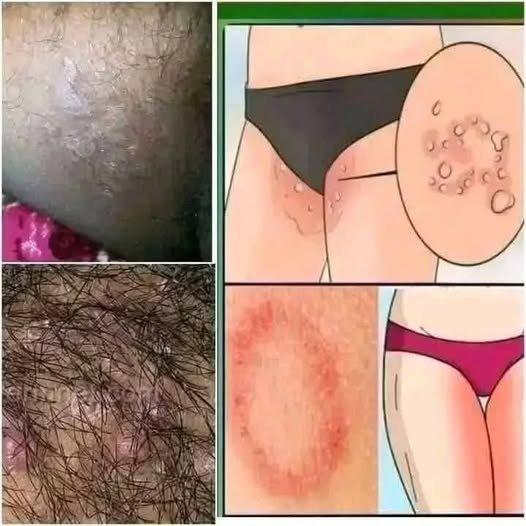
The graphic displays close-up photos of dry, scaly skin and red rash borders alongside medical illustrations showing a rash spreading along the groin and upper thigh area, paired with the vague, alarmist caption: “These are the first symptoms that it’s growing”.
The images depict tinea cruris—commonly known as jock itch—a superficial fungal infection of the skin. While sensationalized posts use ominous phrasing to stir anxiety, fungal skin infections are common, non-life-threatening, and treatable.
What Is Tinea Cruris (Jock Itch)?
Tinea cruris is a superficial dermatophyte (fungal) infection affecting the warm, moist folds of the body, particularly the groin, inner thighs, and buttocks. It is caused by dermatophytes (most commonly Trichophyton rubrum), which feed on keratin in the top layer of skin.
Typical Symptoms:
- Raised, Ring-Like Border: A characteristic red or hyperpigmented rash with a sharp, slightly raised border that expands outward over time.
- Scaling and Flaking: The central area of the rash may appear dry, scaly, or clear as the border expands.
- Itching and Irritation: A persistent itching, burning, or chafing sensation in the affected skin folds.
Causes and Risk Factors
Fungi thrive in warm, humid environments. Factors that contribute to fungal growth include:
- Excess sweat, moisture, or friction from tight clothing.
- Prolonged wear of damp athletic gear or swimsuit attire.
- Co-existing fungal infections elsewhere on the body, such as athlete’s foot (tinea pedis), which can spread to the groin via hands or towels.
- Weakened immune system or conditions like diabetes.
Prevention and Management
- Keep the Area Clean and Dry: Thoroughly dry skin folds after showering or exercising before putting on clothing.
- Use OTC Antifungals: Over-the-counter topical antifungal creams or powders (such as clotrimazole, miconazole, or terbinafine) are typically effective when applied consistently as directed.
- Avoid Sharing Personal Items: Do not share towels, clothing, or athletic gear.
- Wear Breathable Fabrics: Choose loose-fitting cotton or moisture-wicking underwear to minimize friction and heat buildup.
Deconstructing Social Media Health Clickbait
Sensational social media graphics frequently use vague captions (“These are the first symptoms…”) to trigger fear and drive clicks:
- Vague Threat Language: Leaving out the actual condition name forces users to read comments or click external links out of medical concern.
- Alarmist Imagery: Combining close-up skin photos with anatomical diagrams creates an impression of a severe or mystery illness.
- Engagement Farming: Unspecified medical claims generate comment debates where users guess diagnoses, boosting the post’s visibility across social algorithms.
If a skin rash persists, spreads rapidly despite OTC treatment, or causes severe pain or signs of bacterial infection (pus, fever), consult a healthcare provider or dermatologist for an accurate diagnosis and prescription treatment.
Leave a Reply