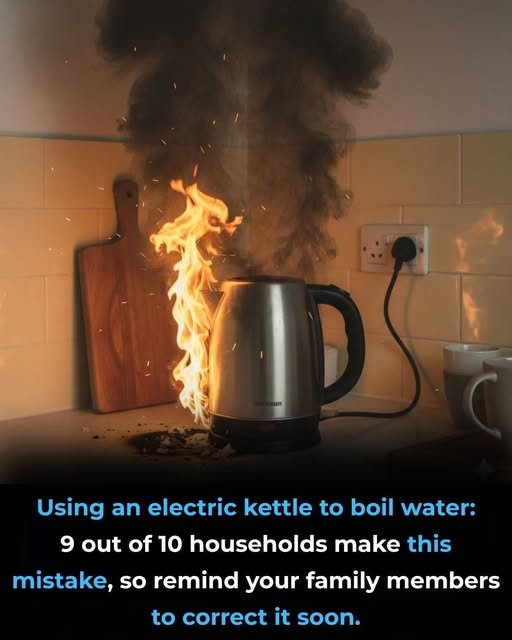
The viral graphic shows a stainless steel electric kettle bursting into flames on a kitchen counter, accompanied by the sensational claim: “Using an electric kettle to boil water: 9 out of 10 households make this mistake, so remind your family members to correct it soon”. While electric kettles are generally safe household appliances, improper usage can create legitimate fire or electrical hazards, even though the image itself uses AI-generated drama to manufacture panic.
Real Appliance Safety Hazards vs. Myth
- Dry Boiling (Running Without Water): Turning on a kettle with little to no water causes the heating element to rapidly overheat. While modern kettles feature automatic “boil-dry protection” switches that shut the unit off, older or damaged models can melt their internal components, short-circuit, or ignite surrounding materials.
- Overfilling Past the Maximum Line: Filling a kettle beyond its maximum capacity causes boiling water to spray out of the spout or lid. This steam or hot water can leak into the electrical base or wall outlet, creating a short circuit, electric shock risk, or thermal damage.
- Plugging into Extension Cords: Kettles draw high wattage (typically 1,200 to 3,000 watts) to heat water quickly. Plugging a kettle into a thin extension cord or low-grade power strip rather than a dedicated wall outlet can cause the cord to overheat and melt.
- Limescale Build-Up: Heavy mineral deposits on the heating element reduce thermal efficiency, causing the kettle to run longer and hotter than designed, which places unnecessary stress on electrical wiring.
Fear-Based Safety Clickbait and Engagement Farming
Posts combining sensationalized destruction images with artificial statistics (“9 out of 10 households…”) represent classic engagement farming designed to exploit household safety anxieties.
Content creators leverage these tactics to boost algorithmic reach:
- AI-Generated Shock Imagery: The photo features distinct signs of AI generation—such as unnatural flame physics emerging beside the metal casing without charring the wall, alongside a floating, distorted plug wire. The dramatic visual forces users to pause their scroll in alarm.
- Artificial Curiosity Gap: The image text intentionally avoids specifying the “mistake” being made. This design forces users to click external links or scroll through comments to discover what they are supposedly doing wrong.
- Monetization Routing: Pinning comments with links like “Read the full warning here” leads users to ad-dense blogs, affiliate store pages, or malicious click-through networks rather than official safety standards.
Using an electric kettle safely simply requires keeping the water level between the min/max lines, plugging it directly into a grounded wall socket, and descaling the reservoir periodically.
Leave a Reply