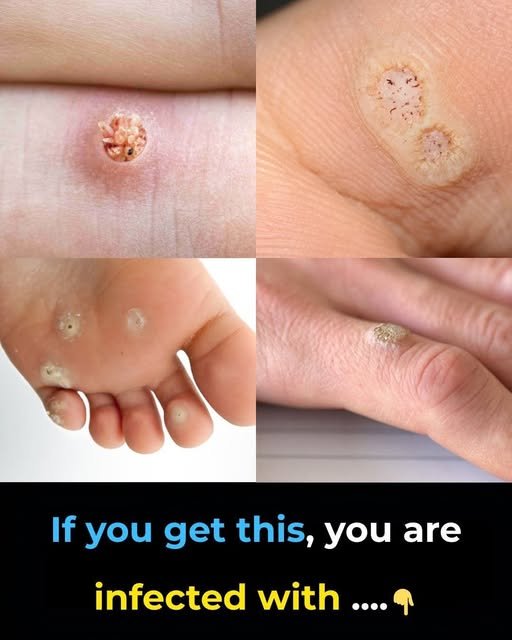
The multi-panel graphic displays close-up images of common skin lesions—including a filiform/periungual wart (top-left) and plantar warts with visible black specks (top-right, bottom panels)—paired with an ominous text hook: “If you get this, you are infected with ….”. While these lesions are indeed the result of a viral infection, the graphic sensationalizes a common, non-life-threatening dermatological condition to provoke health anxiety.
Etiology and Characteristics of Cutaneous Warts
- Viral Origin: Cutaneous warts (verrucae) are benign skin growths caused by localized infection of the top layer of skin with low-risk strains of the Human Papillomavirus (HPV), most commonly types 1, 2, 4, 27, or 57. These are completely distinct from high-risk mucosal HPV strains associated with cervical cancer or genital warts.
- Transmissibility: The virus enters through tiny cuts, scratches, or friction breaks in the skin. It spreads via direct person-to-person contact or indirectly through contaminated damp surfaces like locker room floors, pool decks, or shared towels.
- Anatomical Manifestations:
- Plantar Warts (Verruca Plantaris): Occur on the soles of the feet. Pressure from walking flattens them into the skin. The tiny black dots often visible in the center (seen in the right and bottom panels) are pinpoint pinpoint hemorrhages—clotted capillaries supplying blood to the lesion, not “roots” or “seeds.”
- Filiform Warts: Characterized by thread-like, finger-like projections (top-left panel), commonly appearing around the mouth, eyes, or finger margins.
- Prognosis & Treatment: Warts are non-malignant and often resolve spontaneously as the immune system clears the localized viral infection. Over-the-counter salicylic acid treatments, cryotherapy (freezing), or minor clinical procedures are routine, effective options for persistent cases.
Fear-Based Health Clickbait and Trypophobia Exploitation
Social media posts featuring textured skin lesions framed with incomplete, ominous captions represent a deliberate combination of health-anxiety farming and sensory manipulation.
Content creators utilize these visual and psychological tactics to maximize algorithmic reach:
- Exploiting Trypophobia and Revulsion: Images featuring clustered, textured, or porous skin formations (like the filiform projection in the top-left) trigger trypophobia—an aversion to clusters of small holes or bumps. This visual discomfort forces users to stop scrolling and inspect the image out of morbid curiosity.
- Medical Panic and Incomplete Captions: Using phrases like “To BE VERY CAREFUL” and leaving the sentence unfinished (“infected with ….”) exploits health paranoia, leading viewers to fear they have contracted a severe or incurable disease.
- Comment Section Manipulation: Viewers naturally flood the comment section to state the diagnosis (“HPV” or “warts”), argue over home remedies, or express disgust, creating high comment volume that tricks social algorithms into giving the post viral distribution.
While skin warts require basic hygiene precautions to avoid spreading them to other areas of the body or other people, they are extremely common, medically benign growths that are easily treated by standard dermatological methods.
Leave a Reply