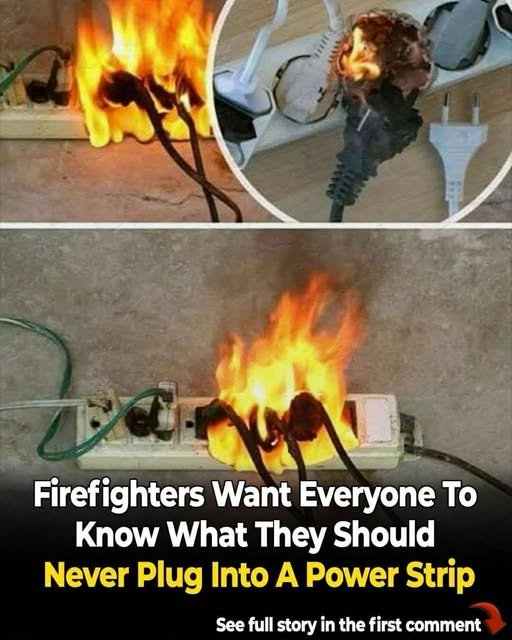
The viral image displays burning surge protectors and melted electrical plugs alongside dramatic text urging viewers to learn what they should “NEVER Plug Into A Power Strip”. Unlike pure internet myths, this warning is grounded in legitimate fire safety standards, though the imagery leans on sensational visual triggers to drive social media clicks.
Fire Safety Principles and High-Draw Appliances
- High-Wattage Appliances: Fire departments consistently warn against plugging high-power appliances into basic power strips or extension cords. Devices with heating elements or heavy compressors—such as space heaters, microwaves, micro-fridges, toaster ovens, hair dryers, and air conditioners—draw continuous, heavy electrical current.
- Overheating and Electrical Fires: Standard power strips are designed for low-wattage electronics like laptops, phone chargers, and lamps. Connecting high-draw appliances causes electrical resistance inside the strip’s internal wiring to soar, melting the plastic housing and sparking electrical fires before a breaker can trip.
- Daisy-Chaining Danger: Plugging one power strip into another (known as “daisy-chaining”) multiplies electrical load across a single wall outlet, severely exceeding safe circuit limits and creating a major fire hazard.
Fear-Based Safety Clickbait Tactics
While electrical safety advice is crucial, the sensational presentation is designed for engagement farming:
- Shock Imagery: Using dramatic photos of active fires and charred plugs triggers immediate fear, forcing users to pause their scroll.
- Withholding Critical Answers: The image text avoids listing the specific appliances, forcing readers to open the comments or click external links (“See full story in the first comment”) to get basic safety information.
- Monetization Routing: Prompts linking to comment sections almost always direct users to ad-heavy websites or affiliate pages rather than direct fire department safety guidelines.
To prevent electrical fires, always plug high-wattage appliances directly into dedicated wall outlets and ensure your power strips carry certified safety testing labels (such as UL or ETL).
Leave a Reply