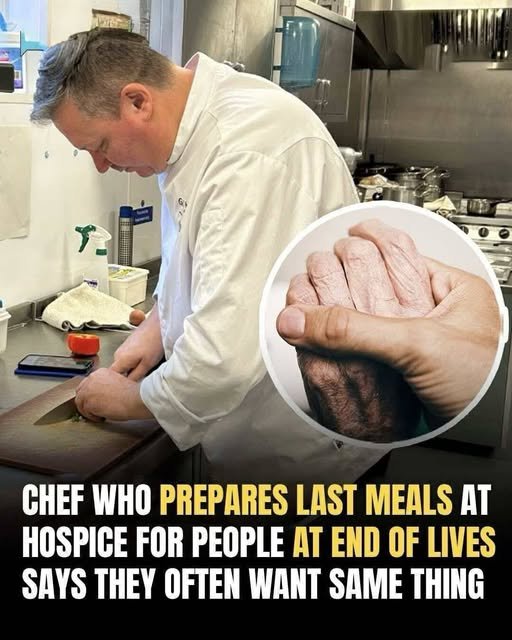
The viral graphic features a chef preparing food alongside an inset photo of hands holding, framed around the sentiment that hospice patients frequently request the exact same comfort foods in their final days. In end-of-life care, healthcare professionals and hospice chefs routinely observe that patients gravitate toward simple, nostalgically significant foods—most notably ice cream, warm soups, milkshakes, and childhood traditional dishes.
Emotional and Physiological Factors in Hospice Nutrition
- Emotional and Sensory Connection: Near the end of life, food serves an emotional rather than nutritional purpose. Childhood staple foods provide psychological comfort, evoking warm memories of family, safety, and home when sensory pleasures become limited.
- Ease of Consumption and Swallowing: As bodily systems slow down, swallowing becomes increasingly difficult (dysphagia). Soft, smooth, and easily palatable foods like ice cream, custards, or pureed soups require minimal chewing effort and offer a soothing sensation for dry mouths.
- Loss of Appetite: Palliative patients typically experience a natural decline in appetite. When they do express a desire to eat, it is rarely for heavy, complex meals, but rather for small tastes or sweet flavors that are easy to process.
Fear-Based Emotion and Curiosity Engagement Tactics
Infographics featuring poignant themes of mortality alongside headlines like “CHEF WHO PREPARES LAST MEALS… SAYS THEY OFTEN WANT SAME THING” are common examples of emotional curiosity-gap clickbait.
Content creators leverage sensitive human experiences to drive online metrics:
- Withholding the Core Answer: By leaving the specific requested food unnamed in the image headline, the post forces readers to click through to external links or scroll through comments to satisfy their curiosity.
- Manipulating Emotional Triggers: Using poignant imagery—such as an elderly hand being held—triggers empathy, leading users to share, like, and save the post at significantly higher rates.
- Driving Comment Section Traffic: Readers often flood the comments sharing personal stories about the final requests of loved ones, artificially inflating post engagement to boost visibility on social media feeds.
While hospice nutrition focuses on dignified comfort and personal preference, emotional clickbait formats exploit these tender medical realities purely to farm user views and drive monetization traffic.
Leave a Reply