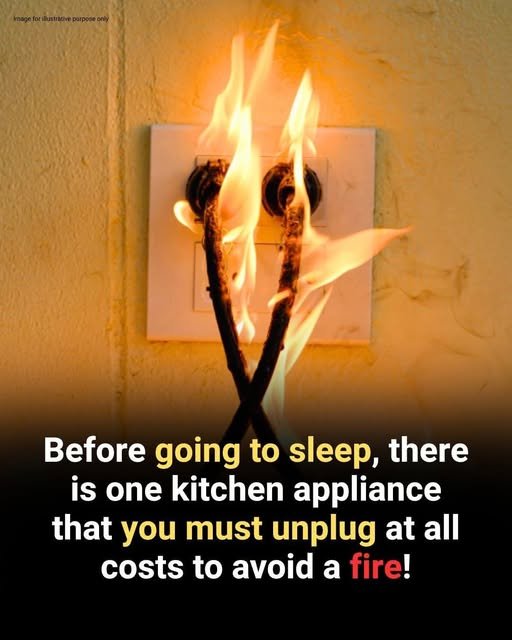
The image showcases a burning wall outlet and electrical cords paired with an urgent warning about unplugging a specific kitchen appliance before going to sleep. Fire safety experts frequently highlight countertop appliances—most notably toasters, toaster ovens, air fryers, and electric kettles—as major culprits for electrical fires when left unattended or continuously plugged in.
High-Risk Kitchen Appliances and Fire Hazards
- Toasters and Toaster Ovens: Crumb accumulation in the base tray, combined with heating elements that can accidentally switch on due to a faulty mechanical lever or internal short, makes toasters a top domestic fire hazard.
- High-Wattage Countertop Cookers: Air fryers, microwaves, and instant pots draw significant electrical currents. Damaged wiring, loose outlet connections, or overheating internal components can cause thermal buildup and ignite nearby flammable items.
- Coffee Makers and Electric Kettles: Automatic heating plates and thermal elements can overheat if an appliance malfunctions, runs out of liquid, or experiences a power surge while the household is asleep.
Fear-Based Clickbait and Engagement Farming
Viral graphics warning viewers that they “must unplug at all costs to avoid a fire” without naming the actual appliance rely on fear-inducing clickbait designed to maximize online engagement.
Content creators leverage household safety anxieties to manipulate social media algorithms:
- Withholding Key Details for Clicks: Omitting the specific appliance name forces concerned viewers to click on the post, open the comment section, or search external pages for the answer.
- Driving Comment Section Activity: Viewers frequently argue in the comments about which appliance is the most dangerous or debate electrical safety standards, generating high engagement metrics that boost the post’s viral reach.
- Monetized External Traffic: Prompts linked to these posts often redirect users to ad-heavy websites, click-farm articles, or promotional affiliate pages selling surge protectors and fire safety equipment.
Practicing routine electrical safety—such as inspecting power cords for fraying, keeping appliance surfaces free of grease and crumbs, avoiding outlet overloading, and unplugging heating appliances when not in use—provides effective protection against household electrical fires.
Leave a Reply